A very small butterfly, often seen feeding on low wildflowers. It looks like other small blue butterflies, but is slightly duller blue or occasionally violet from certain angles. The patterns of black dots and gray bars are used to identify this species. Its host plants are a variety of common wildflowers.
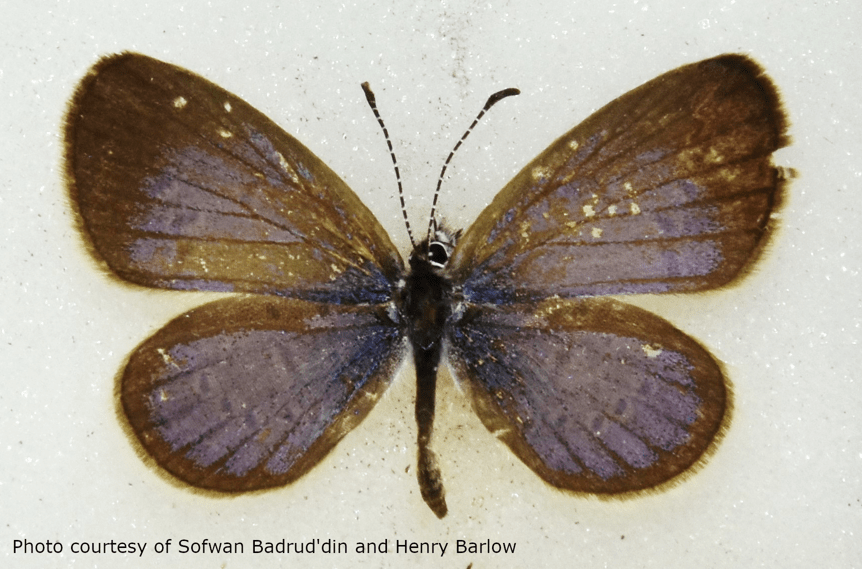
Very common but often unnoticed because of their size, these tiny butterflies are found in almost all green spaces and road verges. It looks like a dull gray butterfly from a distance, but its wings open to reveal reflective deep blue. This species can be differentiated from similar species based on the pattern of dots on the underside of the wings. Its host plants are low growing Desmodium and Semalu plants that are commonly found between grass in fields.
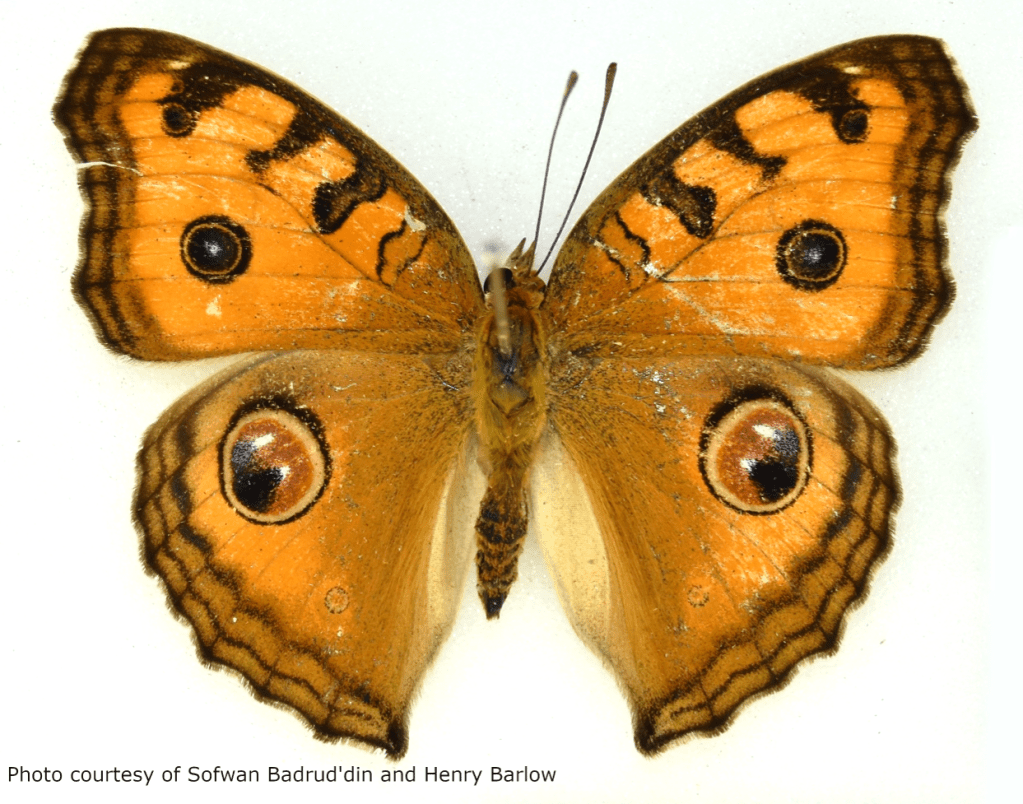
The underside of this butterfly is an unremarkable pale tan traversed with dark brown lines and dotted with a few black and yellow eye spots. The uppersides of the wings are a rich orange, with eye spots that are violet and deep red. Its caterpillars are known to feed on a wide variety of wildflowers and the adults can be seen in short fast flights within wildflower patches.
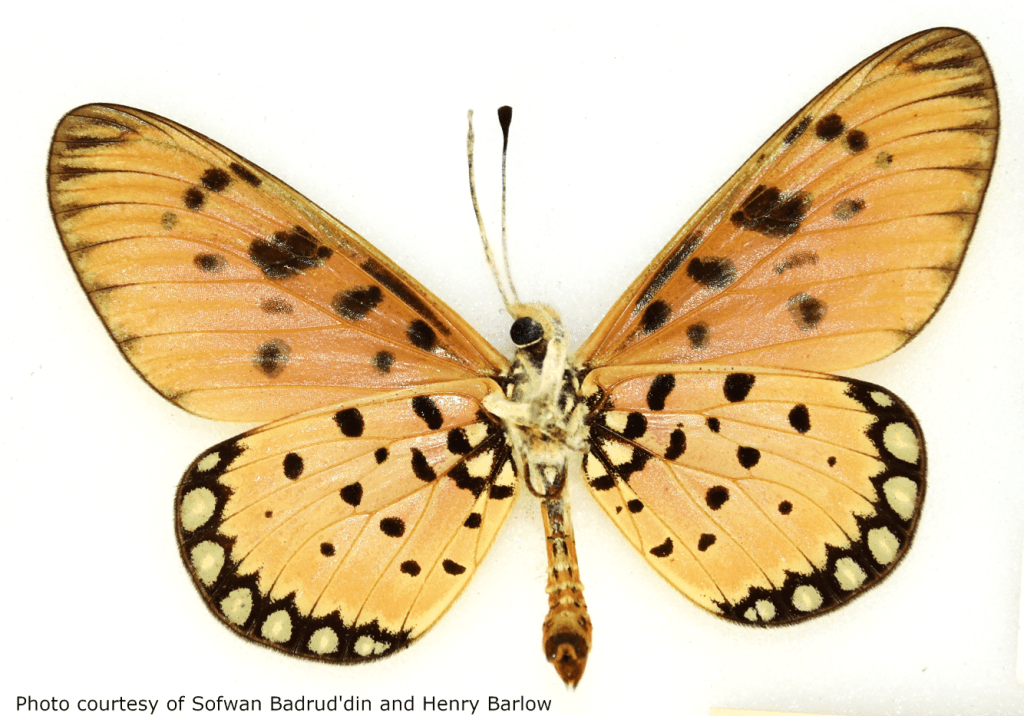
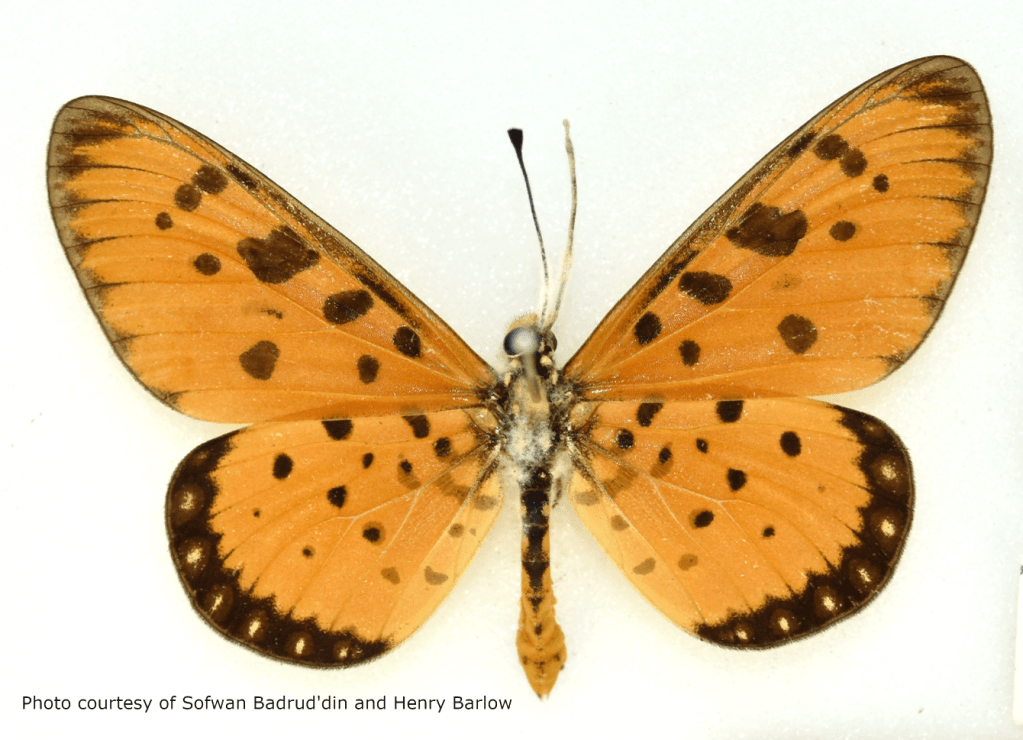
A bright orange butterfly with black spots, its hindwing fringed with a white and black border. It flies slow and not very high. Originating from India, this butterfly has naturally expanded its range since the 90’s to include Peninsular Malaysia. Now it is one of the most common butterfly species in cities. Its host plant is primarily passionflowers, but other hosts have also been reported. Adults are commonly seen feeding on sunflower family wildflowers.
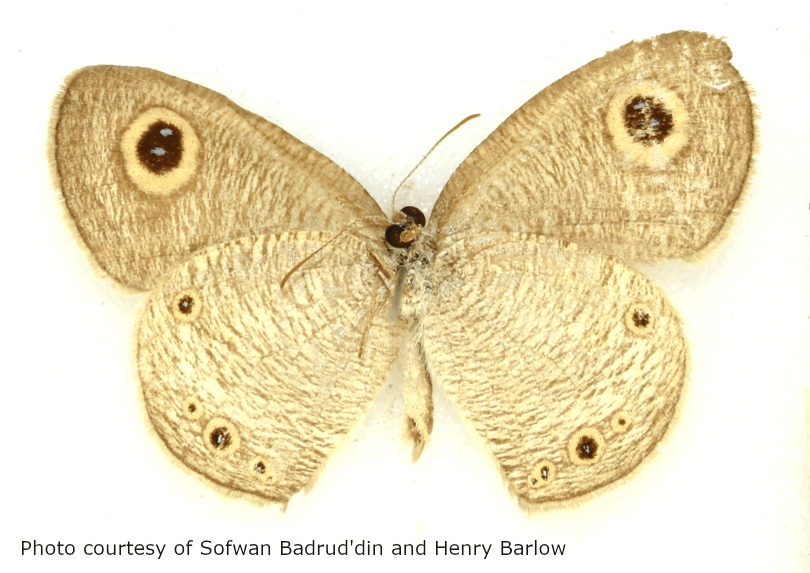
These low flying butterflies are a dull brown gray, but they are adorned with black and yellow eye spots that are used to confuse predators. It looks almost the same as the common three ring, but instead of three eye spots on the underside hind wing, it has four. Like other ring butterflies, its host plant is grasses.
At a glance, this gray brown butterfly may not be very attractive. But close inspection reveals yellow eye spots along the edge of the wing, some with dots of metallic blue set in a black pupil. This species is differentiated from the common four ring by only having 3 eyespots on its hindwing. This butterfly is associated with gardens and green spaces since its caterpillars feed on the fast growing Goat grass (Ischaemum muticum) which is usually used in lawns in Malaysia.
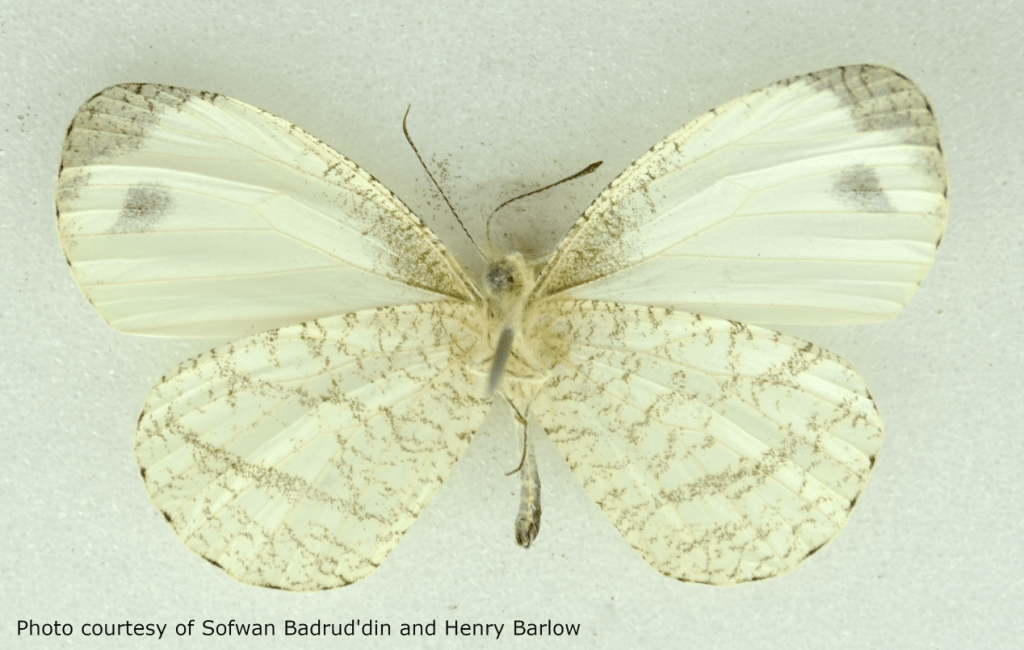
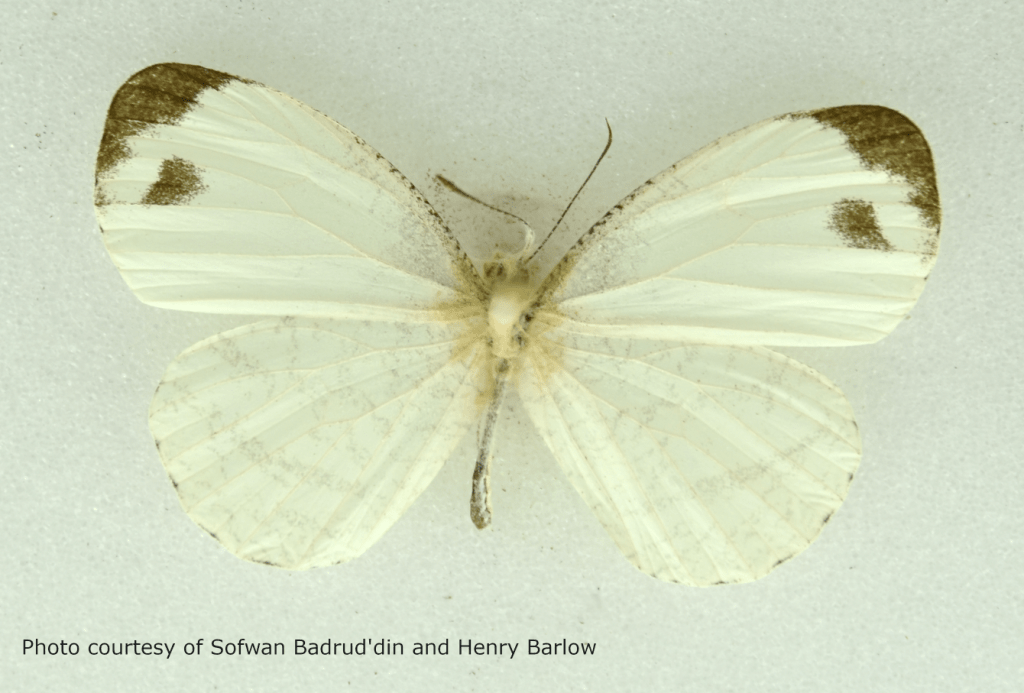
A little white butterfly with a single black corner and dot on the upperside of each wing. Its underside is covered in mottled green gray stripes. It flies at a slow relaxed pace, but is easily startled when approached. Usually it is found flying near shadier parts of gardens, visiting wildflowers like Coromandels. The host of this butterfly are Capers (Capparis) although it can also feed on Maman as well.
Flying low but cautious, the males wings are striped with black on a pure white ground. At the base of the forewing is a faint spot of yellow. The females are a less stark contrast, dark brown stripes are dusted on a gray tinged ground, with orange yellow diffusing through the hind wing. One of the easiest butterflies to attract to a garden, as the host plant is the common Maman Ungu wildflower.
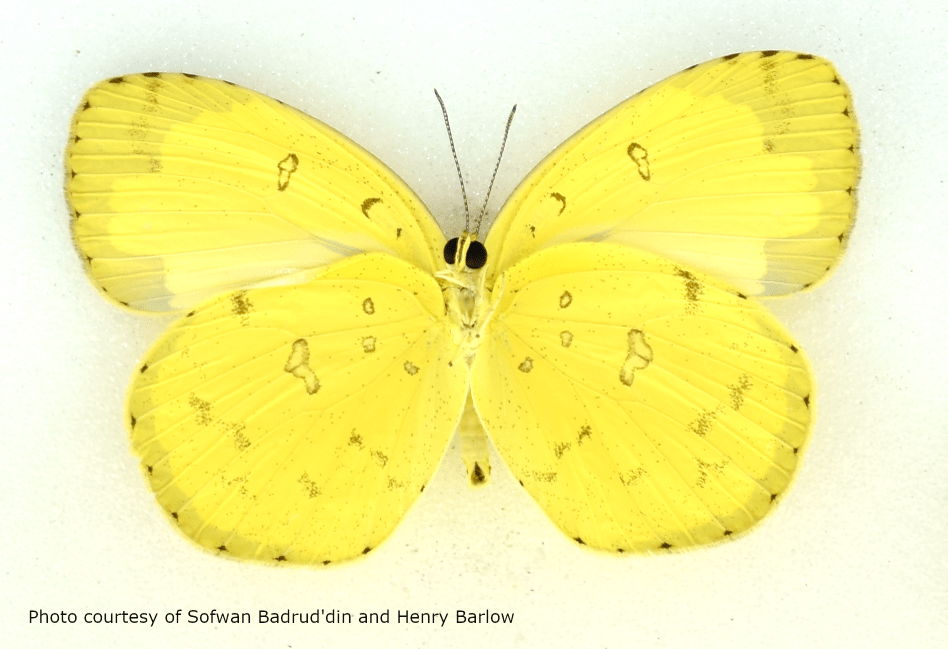
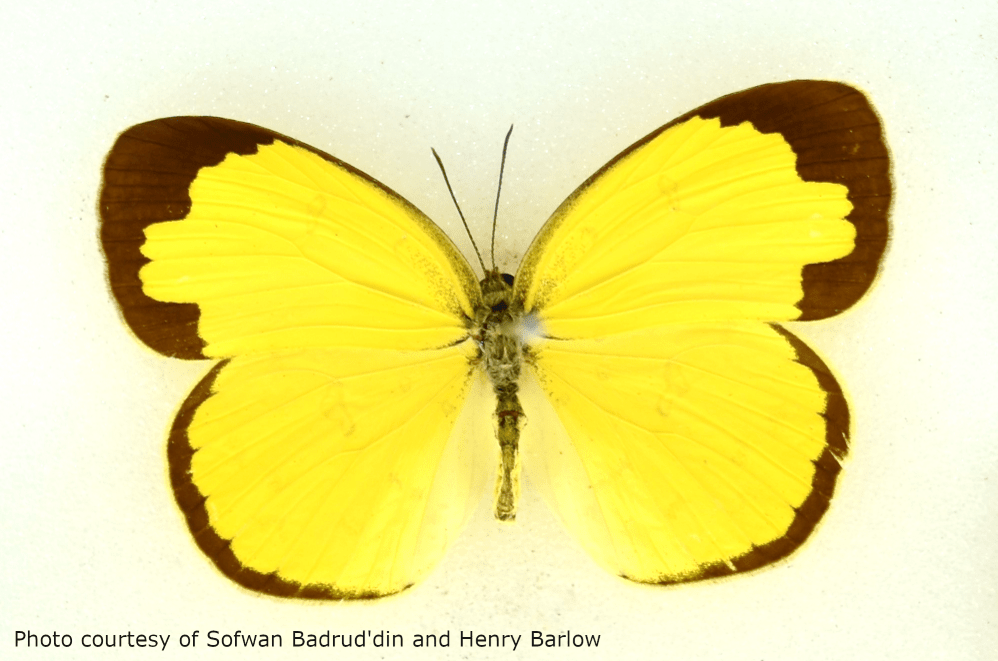
A flutter of light sulphur wings, this erratic fast flying butterfly is a commonsight in gardens. It has a variety of hosts, so it can take advantage of many ornamental and wild trees. Its yellow wings are dotted with brown spots on the underside and the upperside front wings have a dark chocolate brown corner.
A beginner’s butterfly garden uses host plants and flowering plants that grow wild. Shade is not an issue for many of these butterfly species here since they are adapted to living in hot open areas. Because this garden uses wild plants, it requires almost zero maintenance (except for occasional trimming).
For aesthetic value, you can hide the host plants behind or between ornamental plants, or use them as verges (edge or border plants).
Some of these butterfly species may already be present in your gardens. But enriching your garden for butterflies can bring them closer for you to view.
Target butterflies
This garden is suitable for sustaining populations of these species of butterfly.
Passionflower butterflies
These are recent introductions to Malaysia; they can use passionflower vines as a food source for their caterpillars
These butterflies can use common roadside trees as a host. This means that you don’t have to plant their host plants but they will still be attracted to your garden.
Common four rings use grass as a host plant. A pesticide free lawn is enough to sustain these butterflies
This is the list of host plants that can be planted in a beginner butterfly garden. You can choose to plant all or just some of them. A few of these are common urban wildflowers.
Passionflowers are creeping vines that can be grown on fences. Sometimes they can be found growing on the borders of drains or other plants.
Coromandel and Cleome are two easily grown wildflowers that are almost everywhere and require almost no maintenance. They grow low and won’t take over your garden, so a small patch or planting them between pots is possible. Both these plants produce seed pods that can be easily harvested from patches of wildflowers.
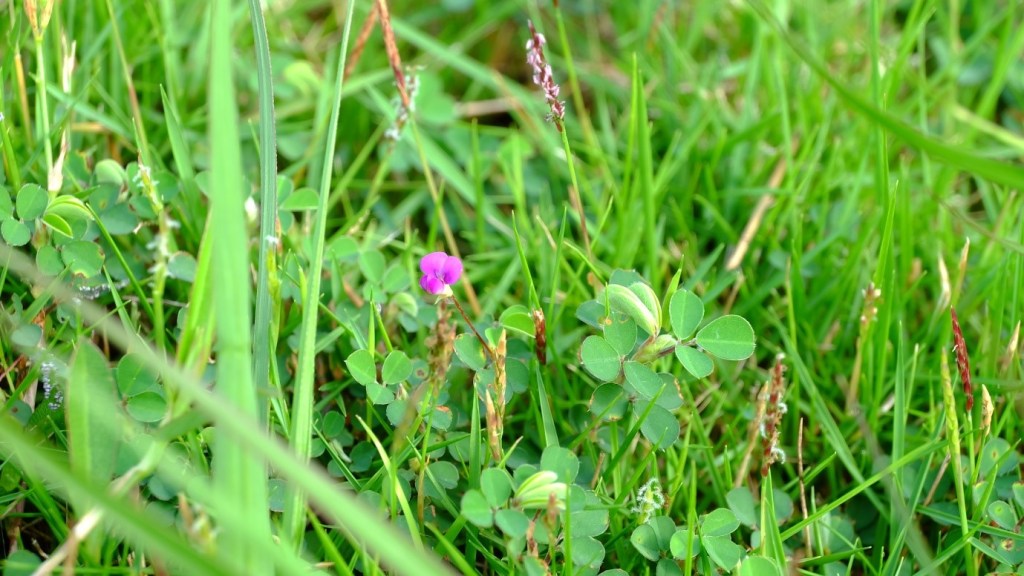
Lawn plants like grasses and some plants that grow together with grasses, such as Semalu and Desmodium, are also used by lawn butterflies.
Desmodium is a host plant for the Tiny Grass Blue butterfly. It also enhances soil fertility and can grow in between grass in a lawn.
As with wildflower patches, allowing other plants to grow in between the host plants helps to fertilise the soil and lower the need for maintenance. Let it grow wild without pesticides and you might get additional biodiversity such as stingless bees and ladybugs.
Flowering plants
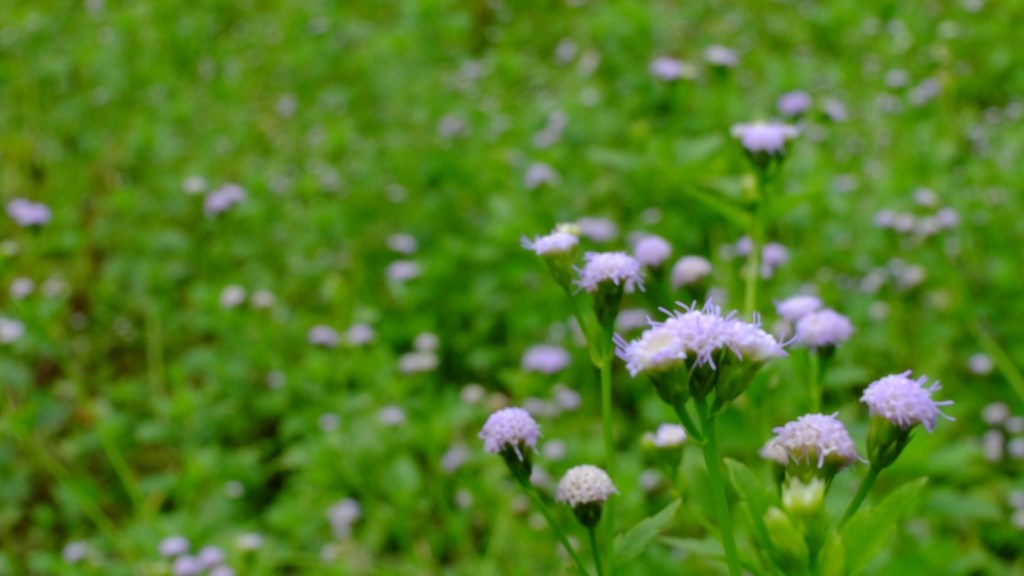
Little ironweeds can survive in degraded land and are very attractive to pollinators
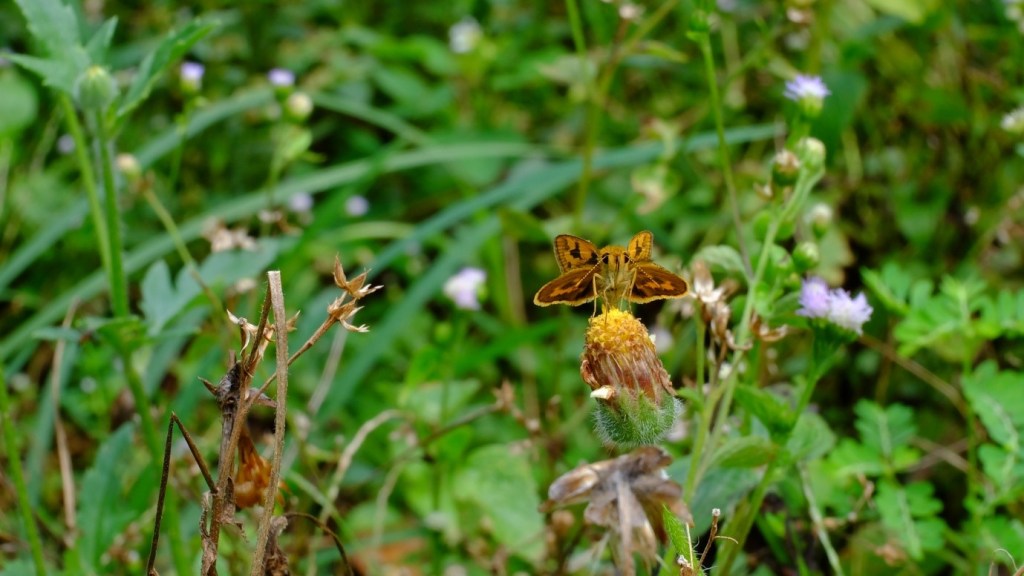
Coromandel flowers can double as a nectar source for adult butterflies. Easily grown wildflowers such as Goat weed, Cupid’s shaving brush, Tridax daisy and Beggarticks are suitable sources of nectar since they are almost always flowering. Since all of these are from the sunflower family, they produce dandelion like seeds that reseed the plot after the wilt.
The seeds can be harvested from wild patches and placed in a plot.
Tridax daisies are hardy plants that are used by a wide variety of pollinators









 Urban Biodiversity Initiative (UBI)