We tend to view our species as average, that cannot be further from the truth
As humans we view ourselves as nothing special. This thinking causes all sorts of problems for the wildlife around us, because humans are in fact quite extraordinary creatures, and when we design our spaces for extraordinary creatures we exclude the average animal.
If I was to describe the average animal species, it would be cold-blooded, it has a narrow diet, it is very small in size, likely it can fly and it would be negatively affected by artificial light.
Humans are fantastic at sweating and warming ourselves up. We have one of the best heat regulation systems in the natural world, and it is so good that we rarely think about it.
We can heat ourselves up when we are cold and sweat off any excess temperature. Many animals have to depend on their environment to be able to do so.
The average urban animal is closer to a small insect than a human.
But this leads us to build cities that are designed for amounts of heat that humans can handle, but many other animals cannot. We also carelessly use materials like concrete and glass that reflect a lot of heat, creating areas that are bearably hot for humans but lethal to some animals.
We eat a lot of things. Our diets are very wide, and we take food from many different levels of the food chain. Compare that to the limitations that most animals face: predators usually have a small set of prey that they can hunt or some herbivores are limited to only single host plant.
When designing habitat, we should consider that many animals have a limited set of items that they can feed on. Many butterflies need host plants to survive, and without these plants you can’t have enough caterpillars to sustain a population of insect feeding birds.
Many birds are limited by the design of their beak, if there isn’t the right types of fruit or seed available they might not be able to survive in an environment.
We are very much in the upper limits of animal size. We usually compare ourselves to megafauna we see on National Geographic, but considering that the smallest animals are smaller than specks of dust and most animals are actually less than a few centimeters in length, we’re really big. And this is a problem when we think about habitats, we assume that animals need as much space as us. In many cases they can do with less.
Frogs can live in a system that consists of a few ponds or streams, millipedes can spend their entire lives in a single log and populations of butterflies can survive in small parks or patches of forest.
Most animals are capable of flight.
The modern human lives in a 2-dimensional world, we rarely need to move upwards or downwards unless we are changing the level that we are on. Therefore we rarely think about 3-dimensional space, especially space that can be reached through flight.
Most species of animals can fly. Most insects are able to fly at least at one point of their lives, birds are capable of flight, mammalian bats can fly, even reptiles and amphibians have evolved the ability to glide.
This means that they can move in ways that humans can’t. Roads with heavy traffic may be an obstacle to humans, but not a bird. The ledges of buildings and the rooftops of our cities are all fair game for animal habitat.
We can create light and it doesn’t have a seriously negative effect on us. This is not the case for many animals with strict activity periods.
Artificial light can extend the activity of birds, causing them to use up more energy or become more stressed. It can be downright lethal to many insects since it affects their navigation and causes them to fly about lights until the die of exhaustion or get eaten by predators.
Humans are a special class of our own. And when we consider the needs of animals we need to consider that animals are very different from us, so we need to design with their need in mind as well. When we do that, there is a surprising amount of space for us and our animal neighbours.
To survive in urban environments, many organisms need to deal with extreme heat.
Most animals are what we would call “cold-blooded” (This is not a proper scientific term, it is more accurate to say they are exothermic and poikilothermic). Unlike humans, they can’t generate their own body temperature and depend on outside heat.
They are also less capable of dealing with higher temperatures, it can cause them to overheat. This means many of the hotter zones in our cities are barriers to their movement.
Concrete and asphalt are thermal barriers that can block the movement of biodiversity.
Our obsession with concrete, steel and glass, the modern designs of our cities don’t take into account the thermal environment. Combined with the tropical heat, our architecture creates an environment that is hostile to life.
Our cities are often too hot for invertebrates, except for hardy pest species. And when there are no other animals to control them, these pests can multiply out of control. But they often are not enough to sustain viable food chains.
Imagine a city where controlling the temperature is a goal, and biodiversity is one of the indicators of whether you can achieve that goal. Living things such as trees, rain gardens, green spaces and green walls can greatly help to dissipate heat.
Not only would it be healthier for all living things, but for humans as well.
Biodiversity is the variety of animals, plants and fungi in an area. It is also the variety of genes within each species.
One of the thousands of species of butterflies found in Malaysia.
Many don’t know that Malaysia is country with mega biodiversity, which means that compared to the rest of the world we have many times more diversity. For example in Malaysia we have 6000 species of moths, 2000 species of bees, 8000 species of ants and 200 species of dung beetles.
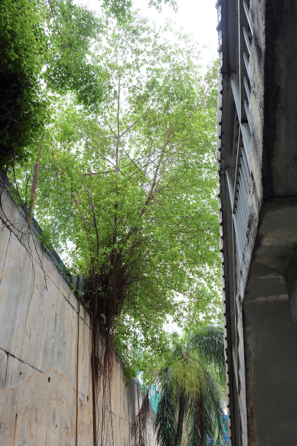
The ubiquitous banyan growing out of a concrete structure.
Of course in cities there are far fewer species. The study of urban biodiversity is about what can survive in our cities and the unique new ecosystems that emerge in them.
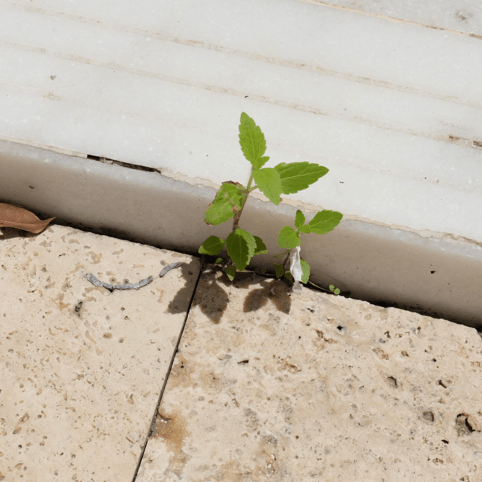
An example of urban biodiversity is the patches of pavement plants that grow next to our pathways, or the banyans that take over buildings as soon as they are abandoned. These become the foundation for food chains that allow pollinators or fruit eating birds to live in our cities.
In terms of genetic variety, a good local example is the different breeds of banana that we enjoy. Malaysia has a wide variety of wild and domesticated banana species, and these allow us to have a wide selection of pisang goreng as well as the genetic diversity to breed more resilient crops in the future.
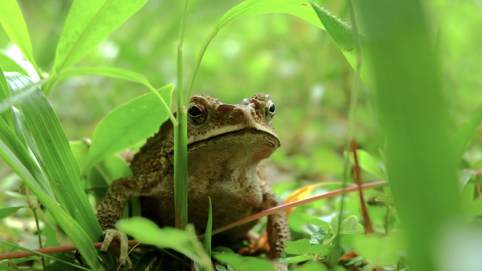
Even a garden can seem like a forest to small animals like toads.
There are practices that we can do to make our cities more friendly to wildlife, this website is a repository of information on how we can create cities that can serve more than just humans.
from Biodiversity Gardens Capacity Building Workshop with Dr Noraini Bahari
Dr Noraini Bahari is a member of MY Bee Savior. She was a landscape architect at USIM for six years and is currently a senior lecturer at UiTM, Perak.
Bees today
MY Bee Savior Association is an NGO that was established in 2015 to create public awareness of the importance of bee sustainability. It also aims to strengthen the efforts to increase bee populations and to empower corporate commercialisation in the field of bee keeping. Bees are highly important for crop pollination. These bees include Apis mellifera (western honey bee), native to Europe, and Apis cerana (eastern honey bees) which can be found in our country. They are highly managed in hives for crop pollination.
Populations of these agricultural pollinators are declining worldwide. This phenomenon, known as Colony Collapse Disorder, occurs when the majority of worker bees disappear. It first came to the world’s attention with reports of western honey bees disappearance in North America in 2006. But most beekeepers in European countries (especially in Northern Ireland) experienced a similar phenomenon in 1998, where there was a reported decline of 50% in bee population.
Now, this phenomenon has become global and affects some Asian and African countries as well. This shows the great need to protect, conserve and preserve our bee populations. We have to start worrying now before it is too late.
The possible causes of Colony Collapse Disorder include climate change, non-native species presence, pesticides and genetically modified crops. Discontinuous supply of flora resources, disease and habitat fragmentation all play a role in the decline of bee populations.
Bees need us. How can we help them?
From the perspective of a landscape architect, one of the ways which can help restore bee populations and preserve their habitat is establishing bee gardens. Cities hold the key to saving bees because cities encompass urban green spaces (UGS), for example, green roofs, public gardens, community gardens, allotments, domestic gardens, etc. The ability of these places to support biodiversity has been recently acknowledged. There is now a call to effectively integrate these UGS in biodiversity planning and management to ensure their full inclusion in biodiversity conservation.
The urban garden is one of the UGS that we are concentrating on now. It is preferred by bees because of the wide range of fruits, vegetables, flowers that can be found in the garden. Many studies find that urban gardens often attract up to ten times more bees than the places we might consider bee havens such as nature reserves, parks, cemeteries and other public green spaces. This is because bees are unable to thrive when there are only trees or turves. Thus, we should try to plant a variety of flowering plants that are richer in pollen and nectar.
Bees provide flowers the vital service of pollination, help us to produce healthy crops and maintain thriving ecosystems, which in turn ensure our health. In simple words, bees are important for the overall health of the environment.
Urban bees
Here are some of the bees that can be found in our cities:
honey bees (lebah madu)
stingless bees (lebah kelulut)
solitary bees (lebah tunggal)
bumblebees (lebah dengung)
(among the four types of bee, the bumblebee is perhaps the most glamorous because of the movie Transformers)
Establishing bee gardens in the city
Bees are unique insects. They play a major role in plant pollination due to their absolute dependence on flowers as their source of food. Therefore, bees that live in the cities seek out green spaces like parks and gardens. These green spaces in urban areas provide a proper habitat to the bees, thus helping in the conservation of bees.
When designing a bee garden, the flowers have to be in large patches because these would allow bees to dine at one spot for a long period of time. Otherwise bees would expend too much energy flying from one location to another, leading to stress. In one spot, we ought to have more than two species of plants. Researchers suggest a minimum of ten species of plants to be planted in one spot.
When there is limited space, a vertical bee garden can be one solution. We can use walls or trellis as media to hang the plants. We can also make cool ponds for bees to take water, adding features like pebbles in the water so the bees have something to land on and do not drown.
Typology of green spaces for bee gardens
There are many types of green spaces in the city. When considered collectively as wider infrastructure, they can create extensive and powerful recreational, cultural or community spaces and improve environmental quality as well as provide diverse and species-rich habitats.
Urban squares attract urbanites to get together and socialise, why not extend this function to let bees to have fun as well? By planting a variety of trees and plants in the planter boxes, and establishing green roofs at the gazebos, we can make urban squares key sites for conserving bee populations.
Bioswale or rain garden can be turned into ‘Beeswale’ gardens. While managing the stormwater, we can also take care of urban bees.
Vertical walls have an amazing and dramatic appeal. These walls are popping up in major cities all over the world. A large vertical wall can be covered by hundreds of plant species which are good for bees.
Bee pop-up gardens can be established anywhere in the city, even at the roadside or in parks. They beautify the environment while providing foraging habitat for bees in the city. One of the pop-up gardens in Sweden comprises hexagonal structures which act as planting vessels that contain plants and water. These gardens can be incorporated into edible gardens as well.
Other places include rooftops, residential gardens and small individual gardens.
The landscape structure of bee gardens
To sum up, the basic elements for creating bee habitats are softscape, hardscape and water features.
Softscape refers to a composition of native plants with varieties of bee-preferred species. These plants should have flowers that are rich in pollen and nectar. It is good if the plants flower all year round. The plants also have to be intensely fragrant and have vivid colours. Some choices include Cosmos caudatus (ulam raja), Portulaca grandiflora, Angelonia spp, Antigonon leptopus (coral vine or air mata pengantin), Jasminum sambac (jasmine), Nelumbo nucifera (lotus).
Hardscapes or hard structures such as planter beds, boxes or vertical walls support the plants. These structures are useful when you have limited garden space. We can also construct bee houses or bee hotels for solitary bees to rest, lay eggs and raise their young. Although these bees do not produce honey, they are excellent pollinators.
from Biodiversity Gardens Capacity Building Workshop with Tan Kai Ren
Tan Kai Ren was the project officer of the Rimba Project in University of Malaya where he conducted a series of urban biodiversity conservation and education programmes. He also organised the Klang Valley City Nature Challenge in 2019, a citizen science project that focused on collecting biodiversity data in the urban area. A former YSEALI Academic Fellow for Natural Resource Management and Environmental Issues, he is now an environmental officer at Club Med Cherating.
Kai Ren discusses how we benefit from biodiversity and how we can introduce elements that promote urban biodiversity.
Importance of biodiversity
Biodiversity provides us with oxygen and food, a fact that many of us seldom appreciate as we do not see the link between nature & human. It helps increase productivity as diverse soil microbes are involved in nutrient cycles where they break down organic matter underground and keep plants healthy.
Biodiversity also contributes to our health. Many pharmaceutical products are made with raw materials that come from many different plants in the forest. It contributes to our economy as well: places with high biodiversity become recreational destinations and attractions for tourism.
Biodiversity contributes to pest control too as it regulates the number of pests by natural processes through prey and predator interaction.
The keys to high biodiversity in your garden
High number of plant species results in high diversity of features and micro-climates that promote different kinds of wildlife. For example, companion plants grown alongside desired garden plants distract insect pests. This helps targeted plants grow more successfully.
Selecting local plant species for your garden attracts local animals as they seek their preferred food.
There is an easy way to look at how local wildlife can improve our life quality. The plants and animals such as the mammals, insects and birds in our garden interact among one another, forming food webs that regulate the population number of each species, including pests.
Many people think that more plants will attract more mosquitoes. In fact, once a whole ecosystem is established, there will be fishes eating the mosquito larvae and dragonflies eating the mosquitoes. As a result, less mosquitoes are found in the place.
The roles of a garden as a habitat
As urbanisation takes place, land that was covered almost entirely by natural forest habitats is replaced by high-rise buildings, roads and houses that lead to habitat fragmentation. Some animals find it difficult to survive in such conditions, especially those that need large spaces, e.g. elephants, tigers and other large mammals. Animal populations end up being threatened, some may become locally extinct, even the so-called common or urban species.
To re-introduce wildlife into our city, we can start growing fruit trees and wildflowers in our garden, as these plants attract butterflies and birds. We can view gardens as a shared space for ourselves and the wildlife. When we establish a balanced ecosystem in our garden, our garden serves as a place for animals to rest, nest and feed. Perhaps it is not for the relatively large animals, but the garden is still friendly to smaller and more mobile animals that contribute to the food chain.
We can view gardens as a shared space for ourselves and the wildlife.
We can try to make our gardens a bit wilder so as to attract wildlife such as the monitor lizard, bats and the Asian tree toad. Sometimes, when biodiversity comes to us, we push it away for reasons like guano from bats, for example. However, we can still try to find a solution to overcome these problems.
During the Klang Valley City Nature Challenge, over 2000 species of plants and animals were documented in Kuala Lumpur despite its urban setting. Urban gardens play a large role in supporting wildlife. Therefore, anyone can contribute to wildlife conservation, even in the city, by just growing a single plant in his or her garden.
Elements to encourage biodiversity
Sunlight. The essential element that plants can’t live without but there should not be too much exposure.
Shade. Shade is especially important for certain plants such as moss, ferns and orchids.
Water. Both continuous supply and temporary puddles are important to wildlife. Water features will attract frogs that eat mosquitoes.
Hideouts. The small lizards and frogs need these dark spaces, whether they are natural or artificial.
Plants. Have more plants that attract pollinators such as bees, butterflies as well as birds. The selection of plants depends on our expectations and objectives. Arrange plants in multiple layers to create spaces for shade-loving species. It is important to know the growing requirements of the plants. Choose plants that flower and fruit all year round. These plants are best for wildlife.
Decaying materials. Compost, logs, mulch that consists of dry leaves or wood chips increase biodiversity underground and keep plants healthy.
Feeding station. Provide grains for birds.
Ideas for a wildlife garden
Build an insect hotel by piling branches or rocks to create a moist and dark space for the insects.
Mulch plants to attract beneficial insects and earthworms that help release nutrients back into the soil. This will also attract more birds e.g. the wild junglefowl.
Create a small pond using plastic bottles or trays. Insert fish to inhibit breeding of mosquitoes. Small ponds help to increase biodiversity despite their size. It is also a good place for dragonflies to lay eggs.
Start composting. We produce food waste every day. The fruit peels or roots of vegetables can be turned into compost that help gardens grow.
Limit the use of insecticides as the toxins will cause long-lasting effects on non-target insects. Try alternative methods e.g. hand removal of the pest insects.
Plant fruit trees as most of them are perennial. Besides, they bear edible fruits for humans and animals.
Knowing your limits
Knowing the right microclimate is especially important for plants such as orchids and leafy vegetables. Also, make sure there are enough spaces for the plants to grow. The intensity of sunlight is a decisive factor for plant growth. We also need to have the suitable soil type to produce healthy plants that support wildlife.
Most importantly, make sure you have enough time to manage your own garden. More is not always better as nature can be messy sometimes. It is always about balance. Avoid dominance in terms of plants as well as animals.
This is a continuation of our series on pollinators. In this article I will cover flies, often overlooked pollinators of many plants.
As usual, keep in mind that a lot of the plant examples are not exclusively pollinated by a single pollinator. Often there can be several different pollinators visiting the same type of flower. For example anything that a fly can pollinate is usually also visited by bees.
Large Flies
I’m generalising larger flies into a single guild, and it is likely this group can be divided up into several sub-groups, but fly pollination is so poorly studied that we do not have a very broad picture of what flies are doing on flowers.
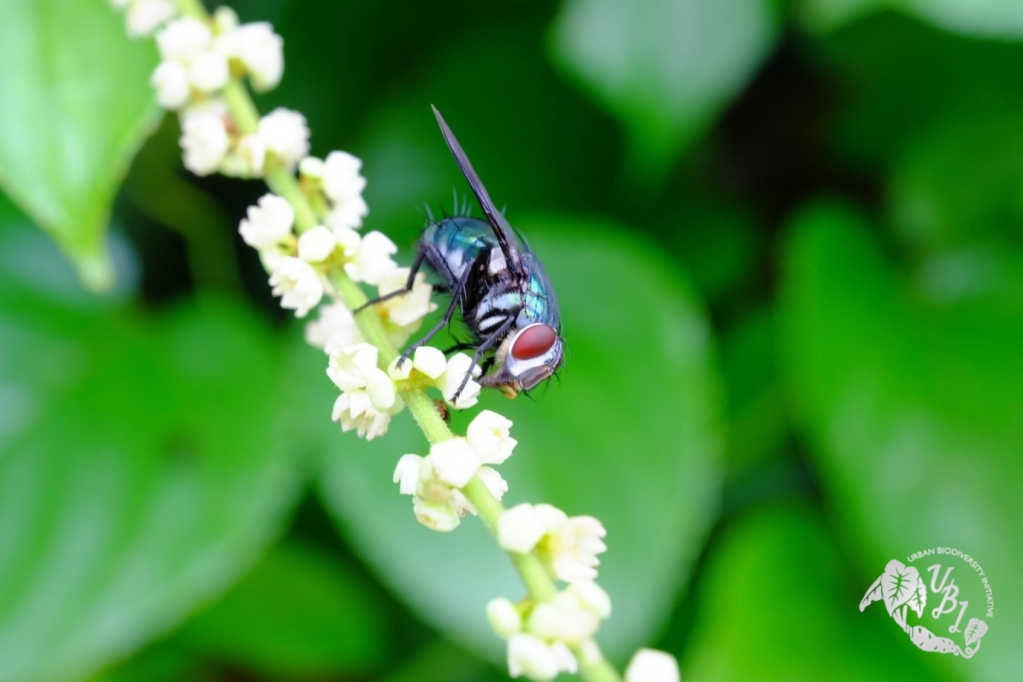
Flies usually feed on nectar when they land on flowers. Since they aren’t as fuzzy as bees, they don’t pick up as much pollen, but some are hairy enough to transfer pollen. Mango farmers take advantage of flies by putting prawn shells around their farms. This attracts carrion flies which then also pollinate the mango flowers.
Hoverflies are sometimes mistaken for bees. An easy way to tell hoverflies from bees is their flight pattern – they fly less frantically than a bee. They are not as fuzzy as bees and usually spend more time on flowers. They also tend to have shorter antenna compared to bees.
While pollinating they hunt for smaller insects and are good natural pest control.
Flower structure: Fly-pollinated flowers tend to be shallow and grow in clusters.
Plants that they pollinate: mangoes
Small flies and midges
Small flies are very important pollinators of important crops, without them we wouldn’t have cempedak, nangka or chocolate.
Some are very small and can hardly be seen while flying. These flies typically are attracted to downward facing flowers that are close to the ground. Some plants like Aristolochia have elaborate trap flowers that trap the flies for a while until they pick up enough pollen.
Examples: Small fruit flies (Drosophila spp.), Scuttleflies (Phoridae), Midges (Nematocera)
Flower structure: Usually not brightly-coloured, tube shaped flowers
Plants they pollinate: nangka, cempedak, cocoa, Aristolochia
Carrion feeders
This group of insects feed on carrion and other rotting material. Some plants take advantage of this by pretending to be rotting meat with foul-smelling and dark reddish or purple flowers.
While the confused insects, (usually carrion flies or carrion-feeding scarab beetles) crawl around the flower in search of food, sticky pollen gets all over them. When they give up and leave the flower, they bring the pollen to other flowers for pollination. Our famous Rafflesia flower uses this pollination system.
Flower structure: The structure of these flowers is surprisingly varied, but they have similar traits of foul smells and dark coloration
Plants they pollinate: Amorphophallus, Rafflesia, Tacca
References:
Ssymank, A., Kearns, C. A., Pape, T., & Thompson, F. C. (2008). Pollinating flies (Diptera): a major contribution to plant diversity and agricultural production. Biodiversity, 9(1-2), 86-89.
Often people ask me about how to make their gardens pollinator friendly. This is a tough question, because there are so many different types of pollinators. Guides usually don’t have all of them in one place.
Here, I’ll explain the categories of pollinators that visit plants, as well as the characteristics of the flowers that they pollinate. But be warned that a lot of the plant examples are not exclusively pollinated by a single pollinator. Often, there can be several different pollinators visiting the same type of flower.
To do this, I dug up a bunch of scientific papers and tried to summarise all of it in simple language here. Some of these categories correspond to categories used by scientists, while some have been simplified and combined for the general public.
Since there are so many pollinators I’ve split this up into a few different articles. This one will discuss bees and wasps.
Bees
Bees collect pollen on their hairy bodies and legs. There are 265 valid bee species in Malaysia. 62 species have been recorded in Kuala Lumpur alone (some of these may be undescribed). Bees can be divided into two guilds: large bees and small bees.
Large bees
These are your typical bees, locally called lebah or sometimes kumbang*. Only honey bees tend to sting, and only if aggressively disturbed.
They vary greatly in size, from 10mm to 40mm in length. Large bees tend to travel quite long distances in search of flowers, and due to this prefer flowers with more nectar.
Many of these bees are long tongued bees, they have long mouthparts that lets them suck up nectar that is deep in flowers. A subgroup of large bees are the very large carpenter bees, which tend to prefer larger flowers that can support their weight.
Flower structure: Usually these are not round and are somewhat tube shaped, often with a petal where the bee can land. However they also pollinate or steal pollen from round, shallow flowers by crawling around inside them.
Plants that they pollinate: tomatoes, eggplants, begonia, Senduduk, Coromandel, many wildflowers.
*In the Malay language, carpenter bees are kumbang kayu, although kumbang is also used for beetles.
Small bees
This is a more diverse group of bees, but easily missed due to their small size (2-12mm). They include bees that live in colonies like stingless bees or solitary bees like sweat bees.
These bees are slower fliers with less range than larger bees. Some of these bees have shorter mouthparts and cannot harvest nectar from very deep flowers. They feed primarily on pollen, and therefore tend to prefer shallow round flowers that they can walk in and collect pollen.
Flower structure: Shallow round flowers which are not tube shaped.
Plants that they pollinate: Basil, lotus, water lily, Lantana, sunflowers, Beggarsticks,
Wasps
Wasps are less furry and much thinner than bees. They can be identified by their thin “wasp waist”. While many are predatory, they sometimes pollinate flowers when they opportunistically feed on nectar or pollen. However they pollinate with less efficiency than bees because they lack the fuzz to trap pollen.
But there are flowers that are adapted to being exclusively pollinated by wasps, although a lot is still unknown about this type of interaction.
Examples: Hover wasps (Liostenogaster spp.), paper wasps (Ropalidia spp.)
Flower structure: Usually these flowers communicate with their pollinators by smell and taste of nectar (some of which cannot be detected by humans). Some orchids mimic wasps and transfer pollen as the wasp tries to mate the flower.
Plants they pollinate: Some species of Orchids such as Coelogyne sp., usually these have greenish-yellow colours. At the moment I can’t find any records of Malaysian plants being pollinated by non-fig wasps. (Any help on this would be appreciated)
Fig wasps
Fig wasps are an example of a keystone species that nobody thinks about. Without fig wasps the fruiting events of figs which sustain most birds in urban settings would not be possible. The reason being that fig wasps are the exclusive pollinator of figs.
Fig flowers grow inwards, forming round structures called synconium. The synconium has a small hole in it that is just big enough for a fig wasp to enter. Female fig wasps lay eggs within fig flowers, while also pollinating the flower so it produces a fruit structure that the larva can feed on. The new females emerge, mate with wingless males, pick up pollen and escape the fig fruit to continue the cycle.
Examples: Fig wasp (Ceratosolen spp.)
Flower structure: Synconium. Flowers that grow inwards and look like round fruit.
Plants they pollinate: Figs
References:
Cheng, J., Shi, J., Shangguan, F. Z., Dafni, A., Deng, Z. H., & Luo, Y. B. (2009). The pollination of a self-incompatible, food-mimic orchid, Coelogyne fimbriata (Orchidaceae), by female Vespula wasps. Annals of Botany, 104(3), 565-571.
Weiblen, G. D. (2002). How to be a fig wasp. Annual review of entomology, 47(1), 299-330.
Dr. Cyren is an ecological anthropologist and ethnozoologist who studies the relationship between human society and the natural environment. He is also a lepidopterist who specialises in the study of butterflies & moths. One of the chapters of his PhD research focuses on the butterfly naming and collection practices among Semai people living in Gopeng and Cameron Highland.
Why Butterflies?
Butterflies are a suitable flagship species for insect conservation because the adults share resources with a wide range of other beneficial insects such as flower flies and bees. As generalist feeders, many of the flowering plants for adult butterflies are also suitable to sustain populations of other pollinating insects.
Besides, both adult and larval stages of butterflies are very important food sources for a wide variety of animals including birds, reptiles and amphibians.
Also, many butterflies, especially the urban ones, are large, brightly coloured and easily recognisable. These characteristics make them prime candidates for simple observation. From an educational perspective, butterflies possess a strong cross-cultural appeal, across relatively broad demographics.
Another reason is butterflies are unable to cause physical harm through transmission of diseases, biting or stinging, which makes them excellent candidates for community science projects and amateur studies.
Plant Selection
To create a butterfly garden, the first thing you need to do is to make a distinction between larval-host plant and the adult-food plant. Larval-host plants are species of plants that are necessary for butterflies to complete their larval stages whereas the adult-food plants are flowers that butterflies prefer to feed on.
Food plants for adult butterflies
The great thing about butterfly gardening is that the different life stages of butterflies have different needs. You can partition your garden or create a segregated area in such a way that you have plots of more attractive flowers that butterflies can fly around, and put your larval-host plants somewhere hidden if you worry the site would be full of caterpillars or the leaves would be full of holes.
Fortunately, most butterflies are generalists. It is not that difficult to choose adult-food plants for the butterflies. Of course, there would be certain flowers that butterflies are more attracted to than others. These are flowers that meet the CEWL criteria.
C – cluster flowers
E – exposed nectaries
W – warmer colours
L – longer stamens
Cluster flowers
If you observe butterfly-attracting plants, one of their common characteristics is that they have flowers that bloom in a clustered pattern. These are plants where multiple flowers are grouped together on a single stalk. For example, flowers of Lantana, Ixora, Bauhinia, Saraca and Buddleia.
Exposed nectaries
Butterflies also prefer flowers with exposed nectaries. Flowers that have short nectar receptacles such as those of the family Asteraceae, i.e. daisy or daisy-like flowers, are usually excellent choices because most of them possess bright colours and short nectar receptacles. They are easy for butterflies to access.
Some people ask whether they can grow morning glory and butterfly pea to attract butterflies. The fact is butterflies do visit them but as a general rule, many tube-shaped flowers tend to be more frequently visited by bees compared to butterflies as their receptacle are too deep for many small or medium-sized butterflies. Therefore, they don’t prefer these flowers although they still visit them when there is a shortage of food sources.
Warm colours
In terms of colours, butterflies tend to be more attracted to colours on the warmer end of the spectrum as opposed to bees that tend to be attracted to colours on the cooler end of the spectrum. Butterflies tend to go for flowers that are in shades of pinks, reds, yellows, oranges, or even white. In fact, if you are in the forest and you want to see butterflies, you can lay down a piece of red cloth on the forest floor. You will find that many species of butterflies even the ones that usually just stay at the upper canopy level descend to investigate when they see the red colour.
Long stamens
If you are fortunate enough to notice larger butterflies in your area such as the swallowtail or birdwing butterflies, and you wish to attract more of these butterflies to your garden, you can also try to grow plants with longer stamens. The stamens and the anther are parts of the flower that stick out where the pollen is attached. Examples of flowers are Hibiscus, Clerodendrum, the pagoda flower, and Caesalpinia.
Larval-host plant
The other thing you need to know is how to select the larval-host plants. The adult-food plants and the larval-host plants are equally important if you want to sustain a stable population of butterflies.
It is definitely not enough to just grow flowers without a reliable food source (for their young) that they can breed on. The butterflies will not be able to sustain themselves in the long run and you will eventually see less and less butterflies as time goes by.
Try to observe and identify the butterflies that you see in your surrounding area and the plants that they visit, since butterflies are also found near plants that they reproduce on. You can do a bit of research on their interactions with the local flora. Look at the plants where butterflies stop and lay eggs. These plants are the first plants that you should be cultivating.
Unfortunately, many of these larval-host plants are what we consider weeds. You might not be able to buy the plants at a nursery. On the other hand, because many of them are weeds, upon discovering a larval host plant, you could just dig it up and bring it home.
Community-Assembly Approach
The thing to remember is that we are trying to build a sustainable habitat for a community of local butterflies and other pollinators. In nature, every species is a member of a community. It goes through a series of checks, balances and filters that ultimately decide whether the species is capable of adapting and integrating with other plants and animals that are already in that area. This process is what ecologists know as community-assembly theory.
In our urban gardens, every stage of this selection that would otherwise be driven by environment and inter-species interaction, is driven by us since we decide the plants to be grown and propagated in our gardens.
By controlling the species composition of plants to be grown, we also control what animals are capable of living and thriving in the spaces that we create. Therefore, when you are creating your butterfly garden, it is useful to think of it as living experiment and you get to decide what the final community structure would look like.
Dr Cyren’s advice is to always start small. Try to pay attention to not only how well your plants are growing in your garden but also whether the plants are attracting local butterflies or any other pollinators. If they are, you can add more of these plants in your garden. However, if the plants are not doing well or more importantly, if none of the local butterflies are interacting with them, then maybe it is time to get rid of the plants and try something else.
Challenges
The mindset that many people have today, especially if they are not wildlife enthusiasts or environmentalists, is that the human environment needs to be carefully designed, manicured and sterile. Even in these so-called green cities and communities, we tend to witness spaces with closely manicured lawns, and an abundance of non-native ornamental plants which are not really of any use to local wildlife.
You can see the beautiful green walls and trees. But, if you look closer, there is no sign of fauna interaction. Birds are not building nests in the trees. There is no insect munching at the leaves and no flower attracting butterflies and bees. There is very little space in our urban communities to set aside and allow nature to thrive, to run wild, which is precisely what the beneficial animals need.
The other important thing to consider is to try and just allow things to go a little wild. In fact, a lot of grasses and wild flowers that are very weedy or ‘semak’ to us play an important role and are irreplaceable. We cannot swap them out for ornamental ones as they have the vital position in the life cycle of countless species of native animals.
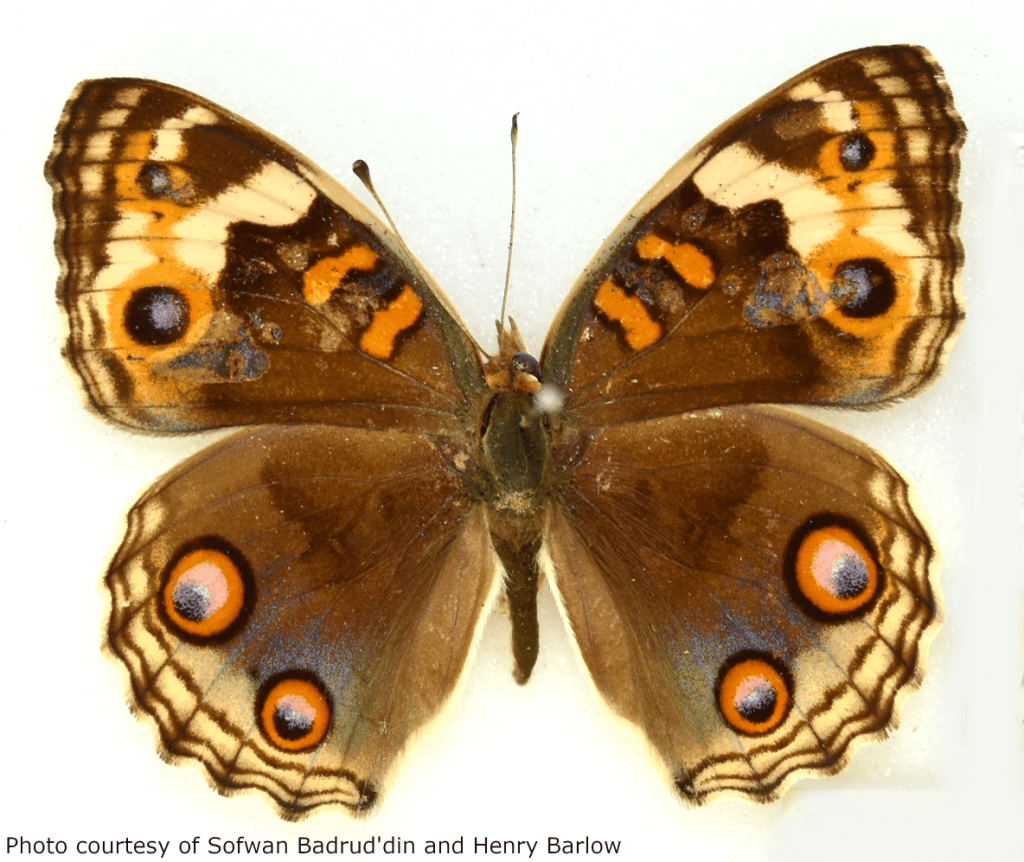
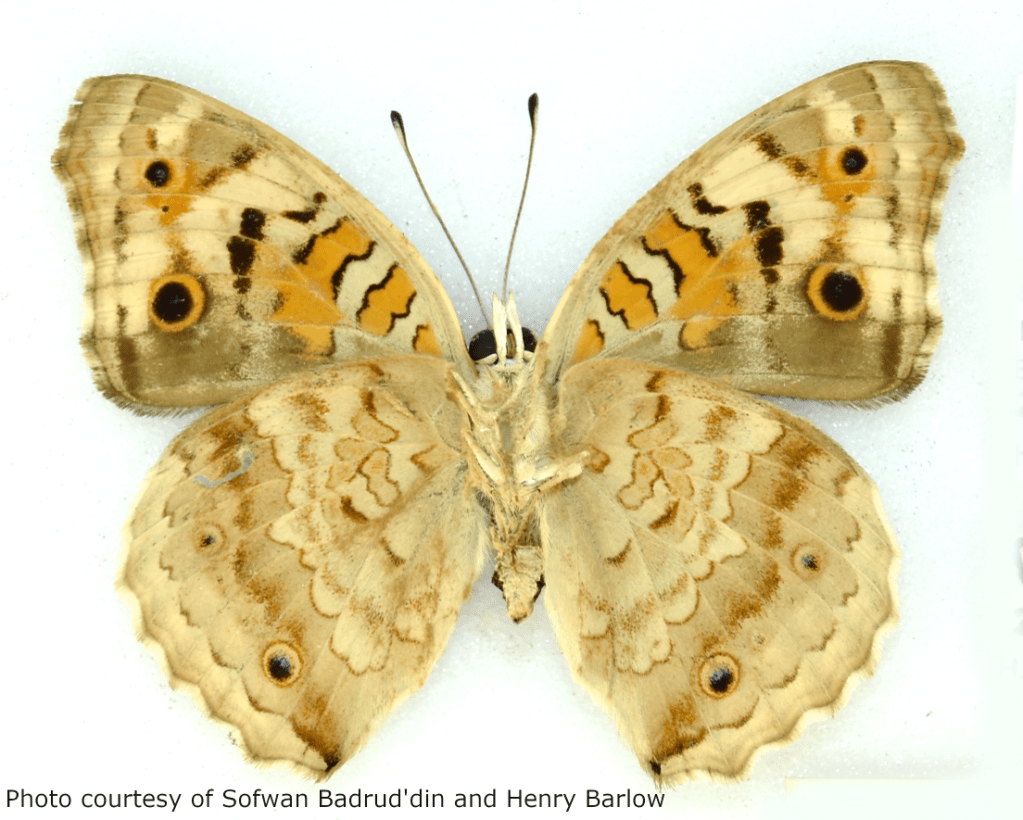
Unlike most butterflies this species prefers open fields, often perching on grass between short low flights. This butterfly has intricate patterns of velvet brown, sky blue, pale yellow and orange eyespots on its upperside. Its underside is a mix of pale yellow, brown and orange eyespots.








 Urban Biodiversity Initiative (UBI)