A moringa plant with its spreading, pagoda-like crown.
Common name: Moringa, Drumstick Tree, Horseradish Tree
Malay name: Gemunggai, Kacang Kelor, Remunggai
Scientific name: Moringa oleifera Lam.
Conservation status: Least concern, Cultivated, Naturalised, Introduced (India)
Description
A small, fast-growing tree that grows 8-10 m tall. Tree crown is umbrella-shaped. Leaves are divided into many small leaflets that move in the slightest breeze. It bears white, sweet-scented flowers. Fruits are long, pointed and three-sided.
Habit: Perennial shrub or tree
Cultivation: It is planted by seeds or cuttings
Ecological function: This plant is planted for erosion control. Its leaves are used to enrich the soil. It is used as living fence, windbreak, shade tree and support for climbing plants. As it is fast growing, it is a good pioneer species for reforestation. Its flowers attract pollinators.
Pollinator: Bees, sunbirds
Soil: Sand, loam, clay
Moisture: Well-drained, fertile soils
Shade: No shade
Use: Edible (flower, seed, seedpod, leaf), seed oil (perfumery, soap-making, lubricant for watches and other fine machinery), ornamental
The egg-shaped fruits of Spondias dulcis. Photo by Goh Shang Ming
Common name: Golden Apple, Ambarella, Jew Plum
Malay name: Kedondong
Scientific name:Spondias dulcis
Conservation status: Cultivated, Native to Malaysia
Description
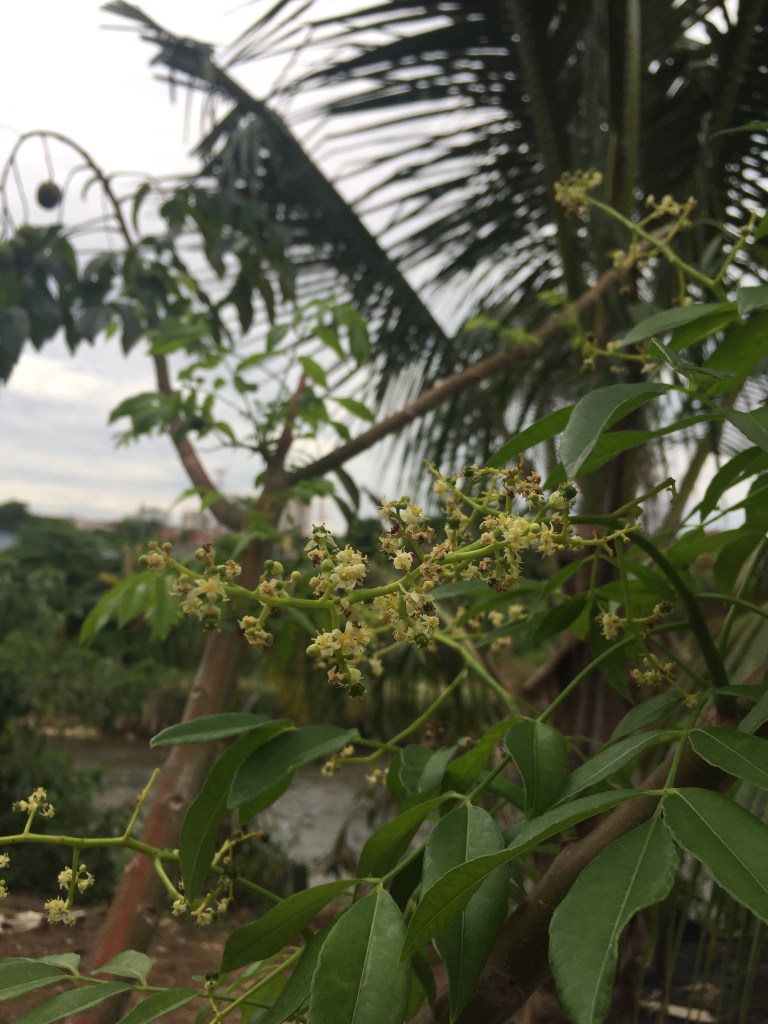
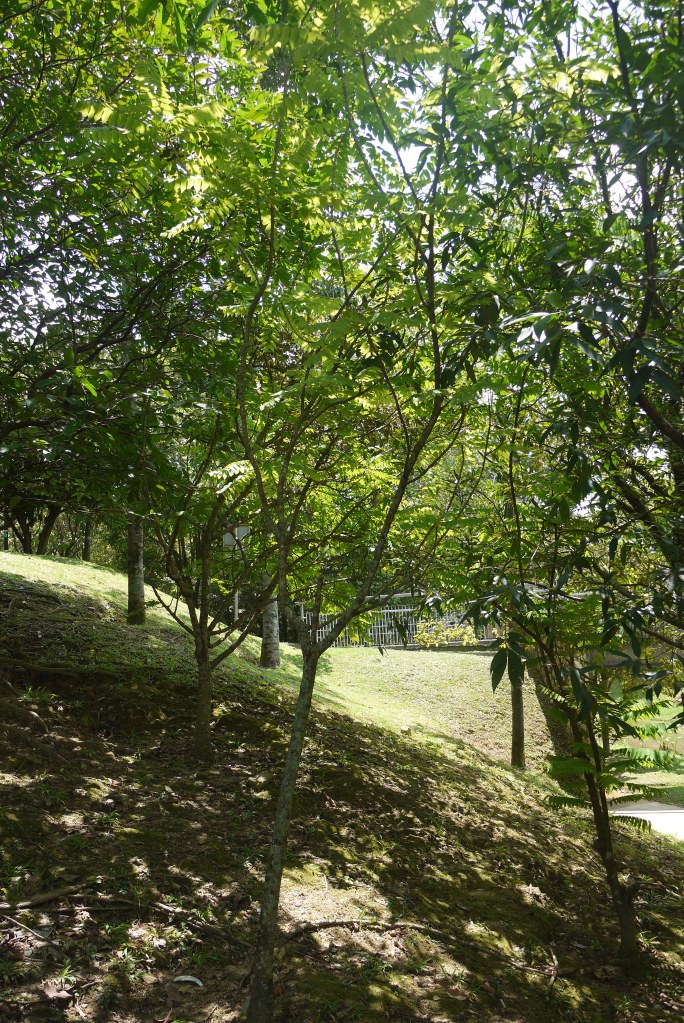
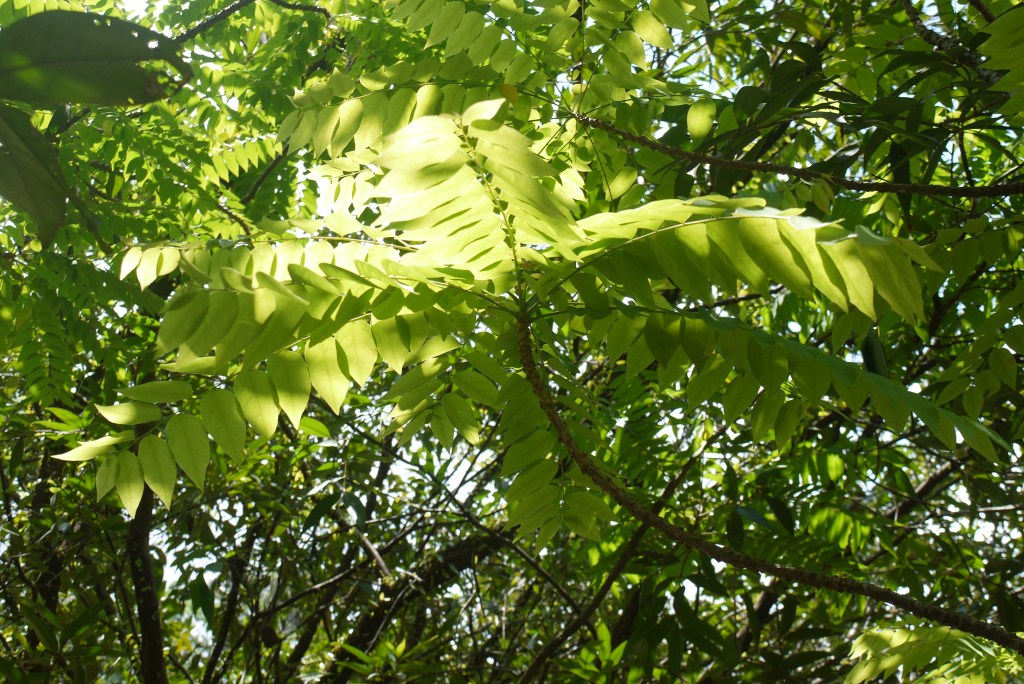
A small tree of 9-12 m tall. Leaves are divided into pointed leaflets. It bears small, white, clustered flowers. Fruits are egg-shaped, turn from green to golden yellow when ripe.
Flower cluster of Spondias dulcis. Photo by Goh Shang Ming
Habit: Perennial tree
Cultivation: It is planted by seeds, hardwood stem cuttings, stumps, air-layering or grafting
Ecological function: The flowers of this tree attract pollinators. It is planted as a living fence.
Pollinator: Bees
Soil: Sand, loam, clay
Moisture: Well-drained soils
Shade: No shade, semi-shade
Use: The fruits may be eaten raw, cooked or made into juice, jellies, pickles or flavorings. Young leaves are used as a seasoning or cooked as a vegetable. Mature leaves are used in salads.
A shrub or small tree that grows 3-10 m tall. Stems are slender and low-branching. Leaves are glossy, alternately arranged and give an offensive smell. The upperside of leaves is darker than the underside. Flowers are borne on trunk and branches. Flowers comprise 3 outer petals and 3 inner petals. The outer petals are fleshy, spreading and yellow-green, while inner petals are pale yellow and close-set. Fruit is somewhat egg-shaped, dark green when ripe and covered with soft, short spines.
A durian belanda tree with its spreading, upright branches. Photo by Goh Shang Ming
Habit: Perennial tree
Cultivation: It is planted by seeds or cuttings
Ecological function: The flowers of this tree attract pollinators. It is a caterpillar food plant.
A wrinkled fruit and two-parted leaves of Citrus hystrix. Photo by Goh Shang Ming
Common name: Kaffir Lime
Malay name: Limau Purut
Scientific name:Citrus hystrix
Conservation status: Cultivated, Native to Malaysia
Description
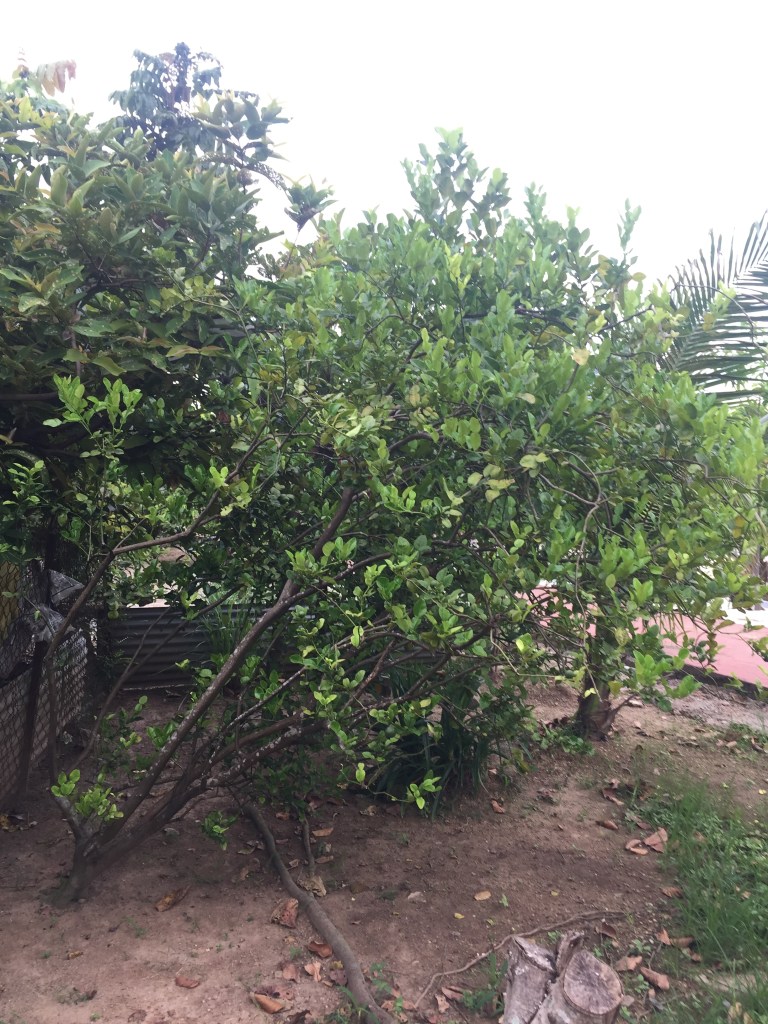
A shrub or tree that grows 3-12 m tall. Stems are thorny, crooked and thin. Leaves are dark green, glossy and pinched in the middle. Fruits are round to egg-shaped, often has a nipple-like structure at the tip. Fruit skin is wrinkled and bumpy, turns from green to yellow before dropping from the tree.
A shrubby, many-branched limau purut tree. Photo by Goh Shang Ming
Habit: Perennial shrub or tree
Cultivation: It is planted by seeds, cuttings or air-layering
Ecological function: It is a food plant for Atlas Moth caterpillar. The flowers of this plant attract pollinators.
Pollinator: Honeybees
Soil: Loamy soils
Moisture: Moist, well-drained, fertile soils
Shade: No data
Use: Fruits are edible. Leaves and fruit peels are used as flavouring.
Conservation status: Cultivated, Naturalised, Introduced (Central America and northern South America)
Description
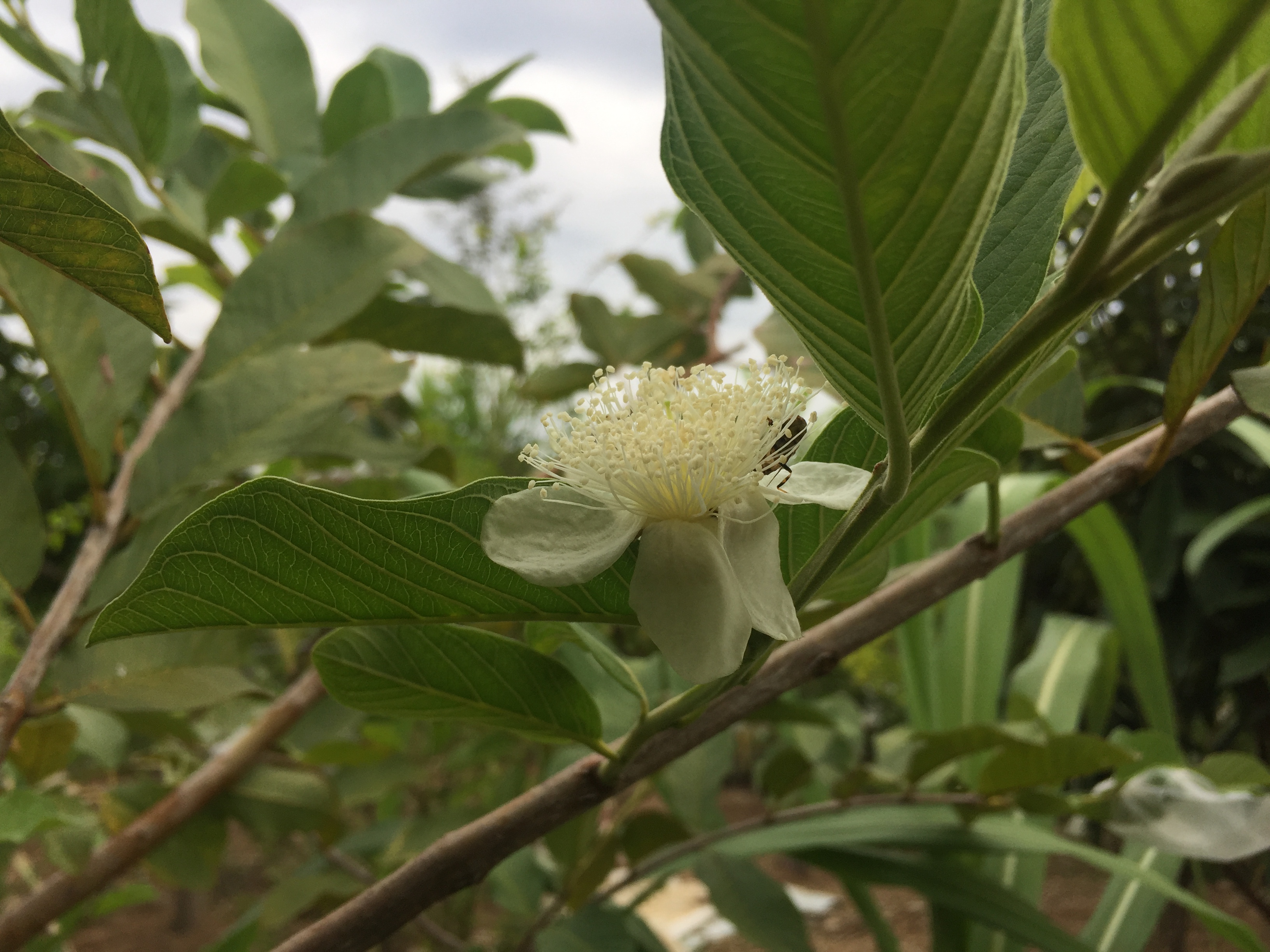
A tree that reaches up to 10 m tall. Tree bark is smooth and copper-coloured. Leaves are egg-shaped, fragrant and oppositely arranged. Flowers are white, with 4-5 petals. It produces round, egg-shaped or pear-shaped fruits with a crown-like structure. The fruits turn from green to yellow when ripe.
A flower of this guava tree is visited by an insect. Photo by Goh Shang Ming
Habit: Perennial tree
Cultivation: It is planted by seeds, cuttings or grafting
Ecological function: The flowers of this tree attract pollinators. Its fruits are eaten by fruit-feeding animals. It is hardy and drought-tolerant. It provides shade. It is useful for vertical layering in home gardens and permaculture.
Pollinator: Insects, mainly honeybees
Soil: Sand, loam, clay, organic soils
Moisture: Moist, well-drained soils
Shade: No shade, light shade
Use: The ripe fruit is eaten raw or served as salad or dessert.
Conservation status: Cultivated, Native to Malaysia
Description
A much-branched tree that is around 3-5 m tall. Leaves develop into smaller, oppositely-arranged leaflets. It bears lilac flowers which are grouped in small clusters. Fruits are waxy, yellow, star-shaped in cross section.
A belimbing tree. Photo by Goh Shang Ming
Habit: Perennial tree
Cultivation: It is planted by seeds or grafting
Ecological function: The flowers of this tree attract pollinators.
Pollinator: Bees, flies
Soil: Sand, loam, clay, organic soils
Moisture: Well-drained soils
Shade: No shade
Use: The ripe fruit is eaten raw or blended into fruit juice.
A rain garden is a temporary, water holding basin that captures water runoff from walkways, roofs, lawns or other impervious surfaces. It is a sunken area filled with water-absorbing plants and well-drained soils.
The main function of a rain garden is to manage inconsistent rainfall. A rain garden can soak up to 30% more water than a lawn. It helps to recharge groundwater supply, supports wildlife habitats and removes pollutants from water.
Planning and site selection
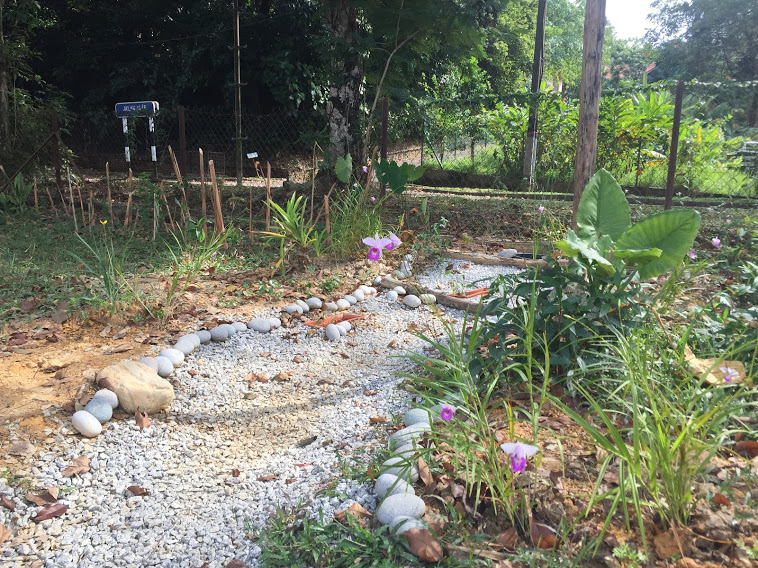
Create your rain garden on a slight slope so that it receives water easily. Keep it at least 3 m away from buildings. Try not to position the garden over septic systems and under trees as these places are easily damaged by high soil moisture. Avoid filled areas, steep slopes or sites with very sandy soils.
Design the garden with its longest end perpendicular to the slope to maximise the border that intercepts water runoff. The length of the garden should be twice its width to provide enough space for plants to absorb water. Make sure the outlet of the garden leads into an area that can handle large amounts of water at a time.
Digging a trench that directs water to the main drain. Photo by Siti Syuhada
The size of the garden depends on the size of the impervious surface draining into it. It should be 20% to 30% the size of the impervious surface. The deeper the basin and the greater the draining capacity of the soil, the greater the volume of water that a rain garden can accommodate.
Digging
A rain garden is usually 10-20 cm deep, depending on the soil type, slope and size of the garden. Make sure the garden bed is level to avoid water pooling on one side. A well-designed garden will drain within 12 to 48 hours. This ensures the health of the plants and prevents mosquito breeding.
Replace heavy soil with a fast-draining mixture that consists of one-half sand, one-quarter compost and one-quarter topsoil.
A brownish puddle after rainfall. Photo by Siti Syuhada
Pile stones and extra soil on the downhill side of the garden to act as a berm (raised edge) and create a bowl where water can pool to a depth of about 15 cm.
If water does not naturally flow to your rain garden, dig a trench, 7-10cm deep, from your downpipe to the garden. Line the trench with landscape fabric and cover it with stones to create a streambed effect.
Planting
Interestingly, a rain garden is not meant to be a place for wetland plants. Instead, you should grow plants that tolerate temporary flooding and drought, since water will come and go. Choose some hardy, preferably native, plants that require little maintenance.
Try to have a variety of plants with different forms and sizes. Trees and large shrubs deflect and slow rainwater flow. Tall grasses filter out impurities, suck up water and prevent silt from entering ponds or rivers. Short, deep-rooted plants maintain soil structure and direct water into the ground.
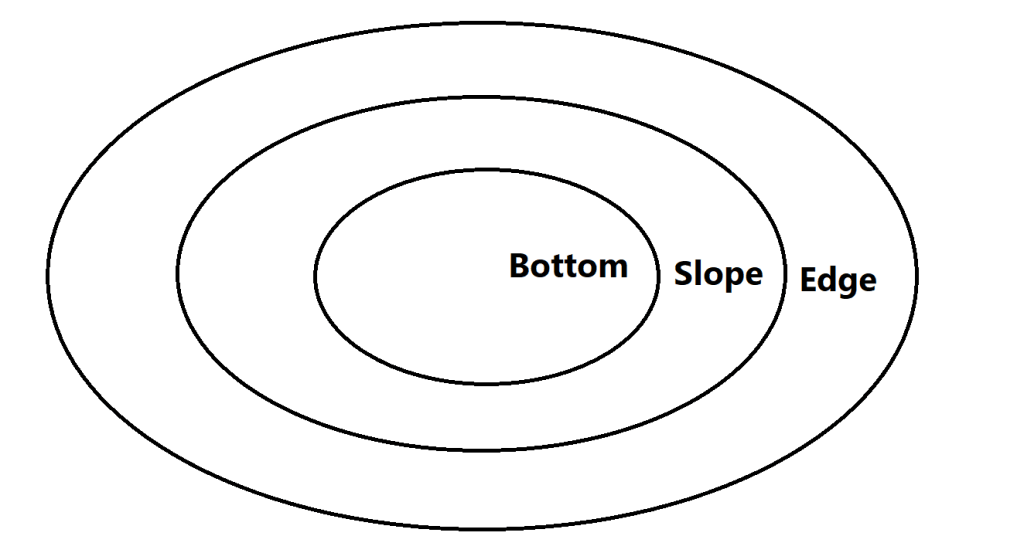
Generally, rain gardens have three planting zones that are characterised by soil moisture. Select plants for each zone according to their water needs.
Planting zones of a rain garden
Bottom: plants that tolerate wet conditions
Slope: plants that tolerate occasional standing water
Edge: plants that prefer drier soils
Maintenance
Mulch the garden with compost or shredded bark. Mulching helps to prevent erosion, conserve moisture and suppress weeds. If the water that flows into the garden washes out the mulch, place one or two rocks to break up the flow.
Water new plants regularly, including the drought-tolerant ones. This will encourage deep roots that absorb water more efficiently.
Weed the garden to allow the selected plants to get established. Prune plants that overgrow to keep the inlet and outlet clear of obstructions. Introduce groundcovers and decorative rocks to prevent soil erosion.
Asiatic pennywort is a good groundcover as it can withstand flooding. Photo by Siti Syuhada
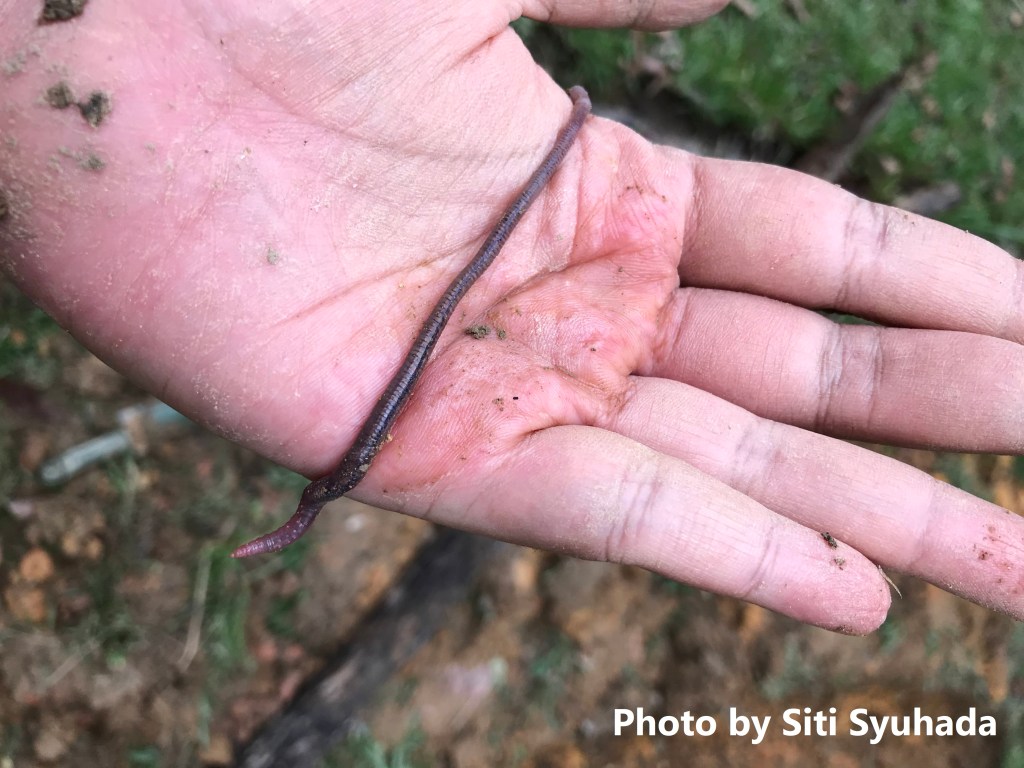
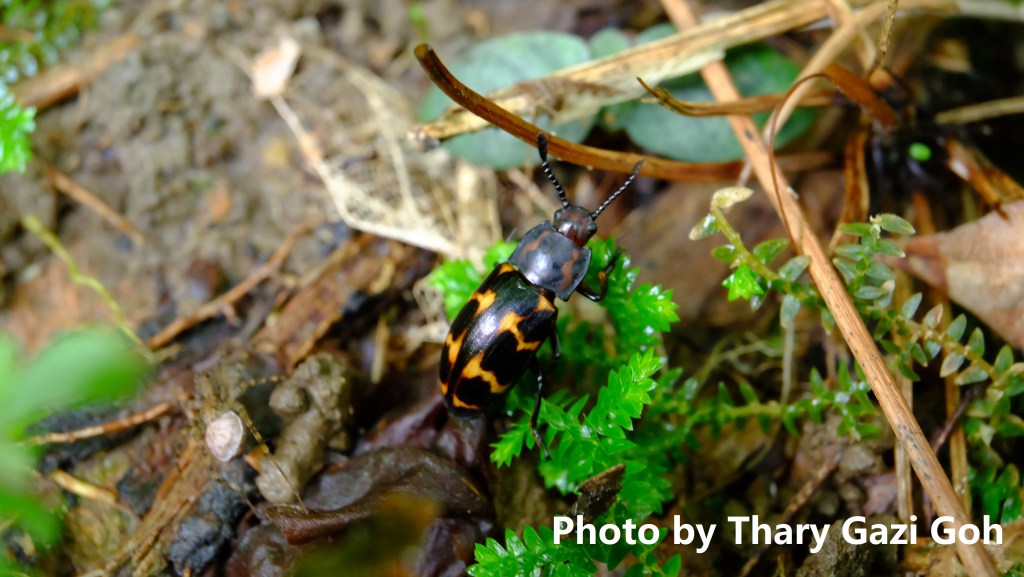
Level in food chain: Primary and secondary consumer
Feeding behaviour: Omnivore, detritivore
Food item: Seeds, fruits, plant saps, fungi, milk of aphids and other true bugs, insect eggs and larvae, small living or dead invertebrates
Microhabitat: Almost everywhere
Importance: Improve soil structure and fertility by feeding and nesting
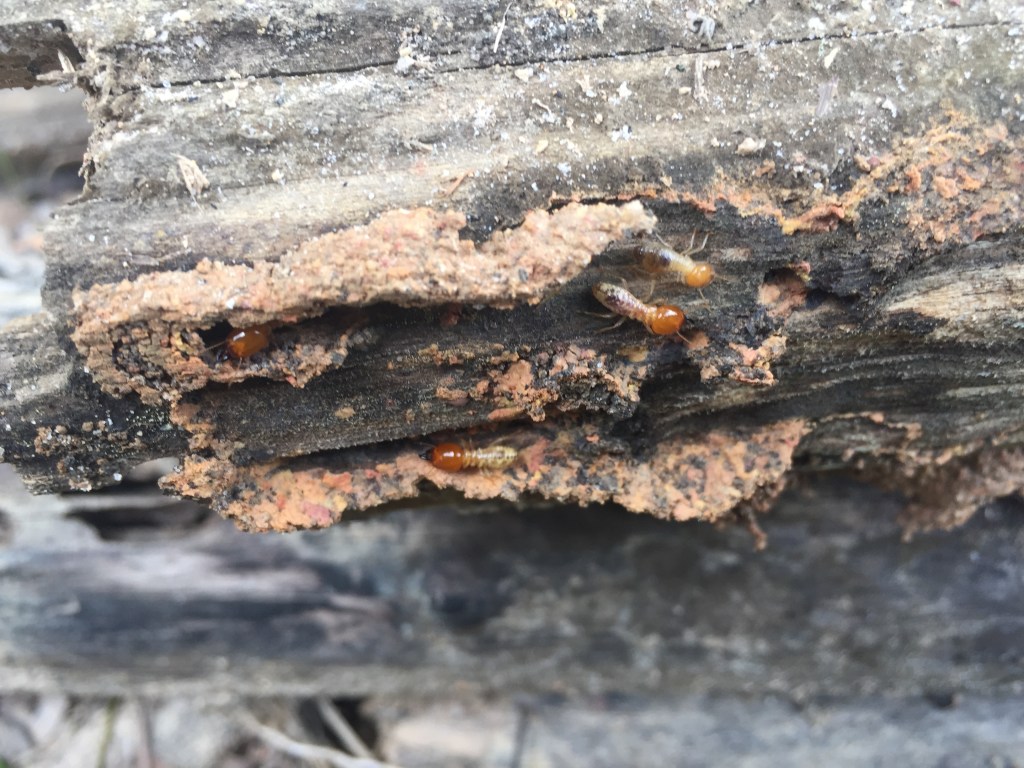
Termite, Anai-anai
They have thick waists, short legs and straight antennae. The workers and solders are wingless, soft-bodied and cream-white. The swarmers (reproductive adults) have two pairs of long wings and are covered by hard exoskeletons that are brown in colour.
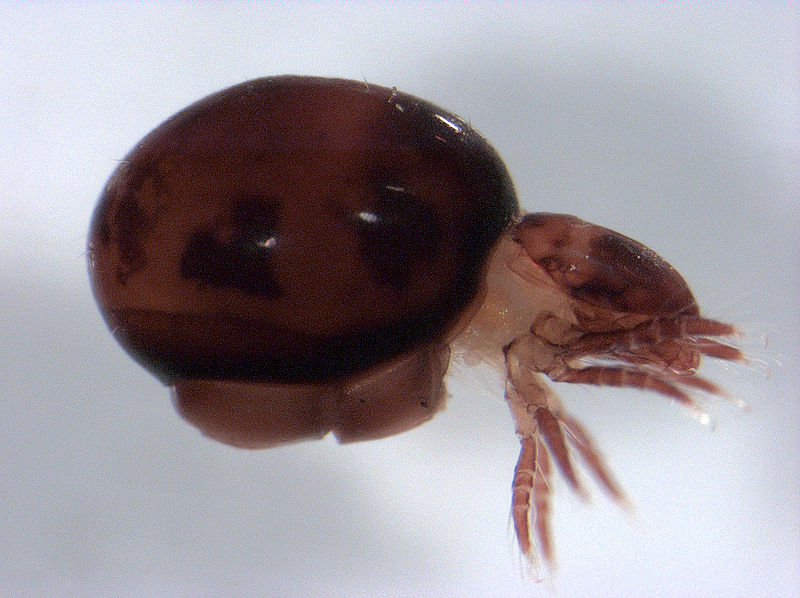
Also known as Collembola, they are wingless and soft-bodied soil dwellers. When disturbed, they extend their forked tails to spring into the air. They have a tube-like structure under their abdomen to take up water.
Local name: –
Ecological function: Detritivore, predator
Level in food chain: Primary and secondary consumer
Food item: Bacteria, fungi, lichens, algae, decaying vegetation. Some feed on dead animals, other springtails and small invertebrates, plant roots and young plants.
Microhabitat: Organic debris and places of high moisture; leaf litter, soil, sand, under stones or tree bark, in tree canopies, caves and nests of ant and termite
Importance: Promote nutrient cycling by feeding
Soil and Water Conservation Society (SWCS). 2000. Soil Biology Primer. Rev. ed. Ankeny, IA: Soil and Water Conservation Society.
Protozoa
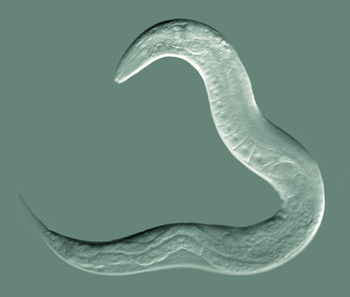
They are microscopic and one-celled. Most of them have hair-like structures or arm-like outgrowths for feeding and movement.
Their bodies are long, flattened and segmented. They have one pair of legs per segment. They use their modified front legs to inject venom into their prey.
Local name: Lipan
Ecological function: Predator, scavenger
Level in food chain: Secondary consumer
Feeding behaviour: Carnivore
Food item: Insects and other small animals; dead or decaying plants or animals
Microhabitat: Usually found in rotting materials
Importance: Improve soil structure by tunneling
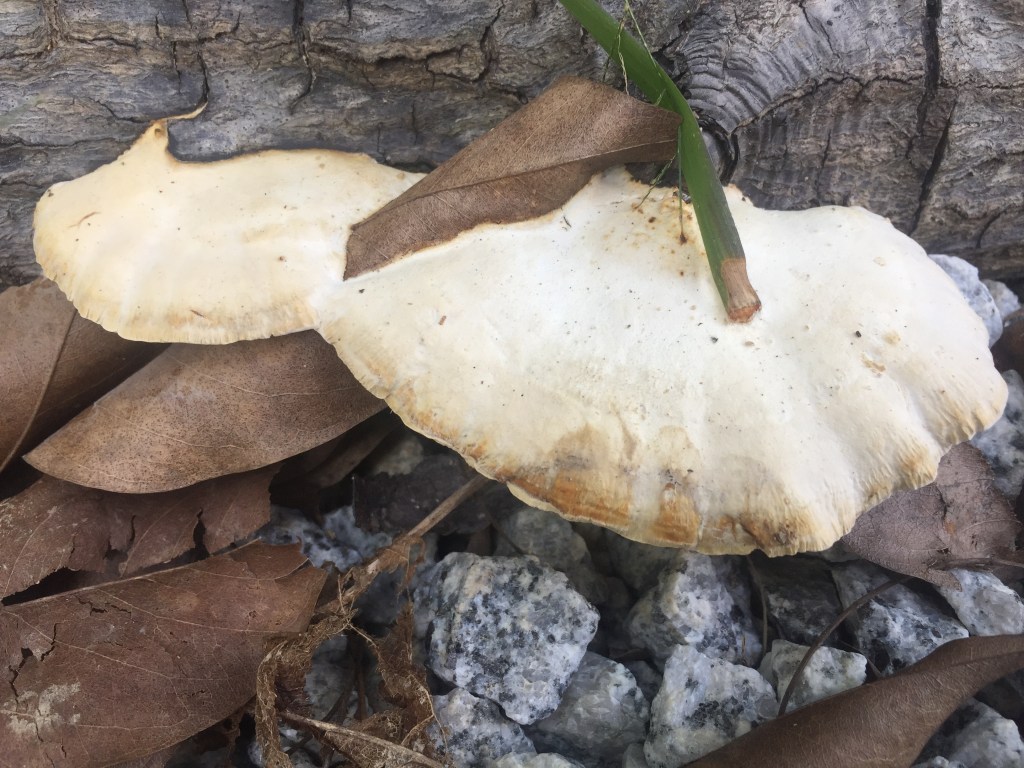
Fungi, Kulat
They do not move. Their bodies are made up of threadlike structures. They release digestive enzymes to break down their food and absorb nutrients.
Level in food chain: Decomposer; primary and secondary consumer
Feeding behaviour: Decomposer
Food item: Dead or decaying materials such as wood, leaf litter, paper, textile and leather. Mutualistic fungi work with algae or plants and get nutrients in return. Parasitic fungi invade living plants and animals and obtain nourishment from their hosts.
Microhabitat: Soil, litter, freshwater or marine
Importance: Promote nutrient cycling by decomposition
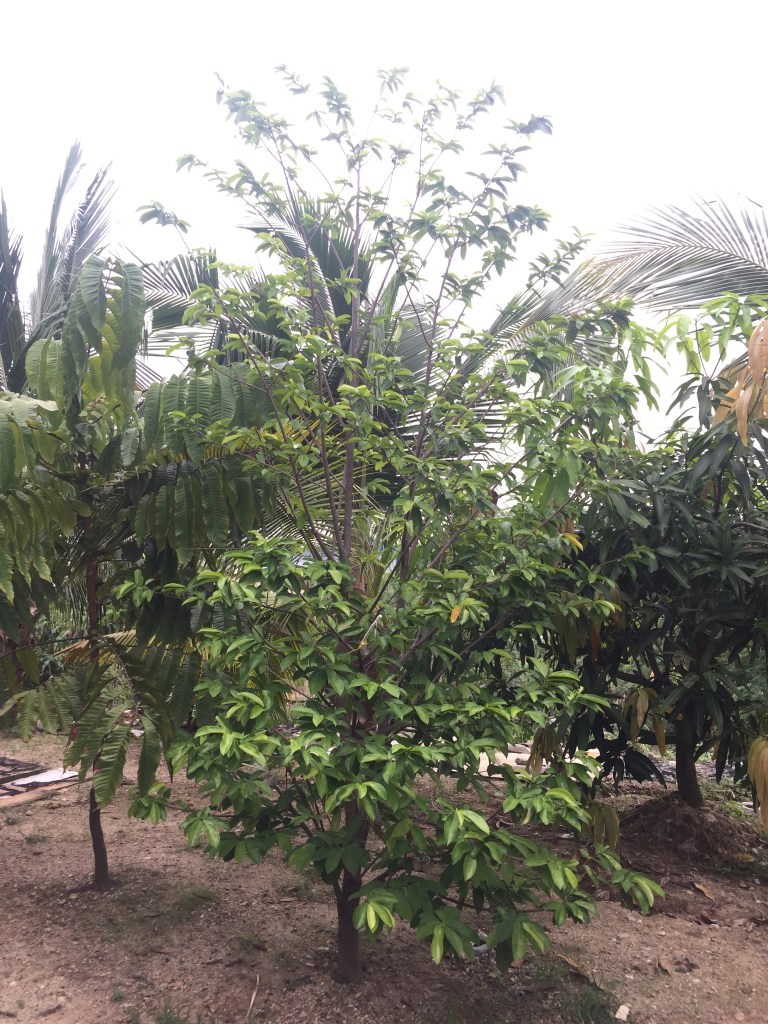
A shrub or small tree of 2-9 m tall. Leaves are egg-shaped and alternately arranged. Flowers are arranged in long clusters. Fruits are round, lobed, pale yellow when ripe.
The leaf arrangement resembles that of bilimbi (Averrhoa bilimbi) tree. Photo by Goh Shang Ming
Habit: Perennial tree
Cultivation: It is planted by seeds, buddings, greenwood cuttings or air-layering
Ecological function: The flowers of this tree attract pollinators. It is a caterpillar food plant.
Pollinator: Bees
Soil: Fertile loamy soils
Moisture: Moist, well-drained soils
Shade: No shade, part day shade
Use: This tree is planted as an ornamental plant. The fruits and young leaves of this tree are edible. Its bark is used as a tanning agent in India.














 Urban Biodiversity Initiative (UBI)
