Categories
Uncategorized

Disturbance and movement

Tree falls can create gaps and disturbance in rain forests.

Written by Thary Gazi Goh
Photos by Thary Gazi Goh & Langur Project Penang

The natural world is chaotic. Accidental events can happen that can affect a whole ecosystem, for example a fire started by lightning or a disease that kills off a species. In the worst cases, random events can cause the collapse of entire ecosystems.

The effects of random events on ecosystems become stronger the smaller the area is. This means that small isolated forest patches will take more damage from accidents than larger areas.ย 

So why have our forests not been completely wiped out by random events? Two factors come into play: Movement between different ecosytems and heterogeneity. 

Movement of biodiversity between separate patches helps to recover damaged ecosystems. When all the vegetation was removed from Krakatoa after a massive volcanic eruption, the surrounding islands contributed to the recovery of the ecosystem there.
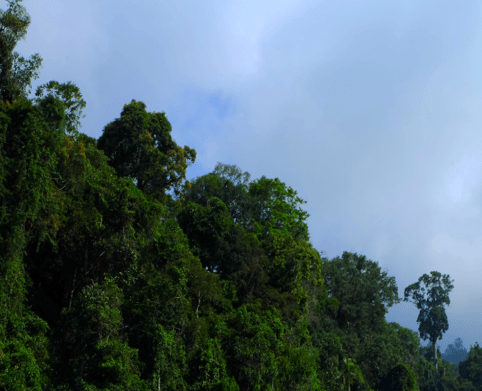
Natural rain forests are highly diverse.

Heterogeneity means more diversity of species. More heterogenous ecosystems are also more resilient. If a plant disease like fusarium wilt hits a monoculture banana plantation all the plants will be wiped out, if it hits a diverse rainforest there will be minimal damage.

This happens because there are more varied plants and they are far apart enough so disease doesnโ€™t spread like a wildfire. In fact literal wildfires tend to spread less effectively in heterogenous forests because different plant species have different reactions to fire and some patches can act as natural fire breaks.

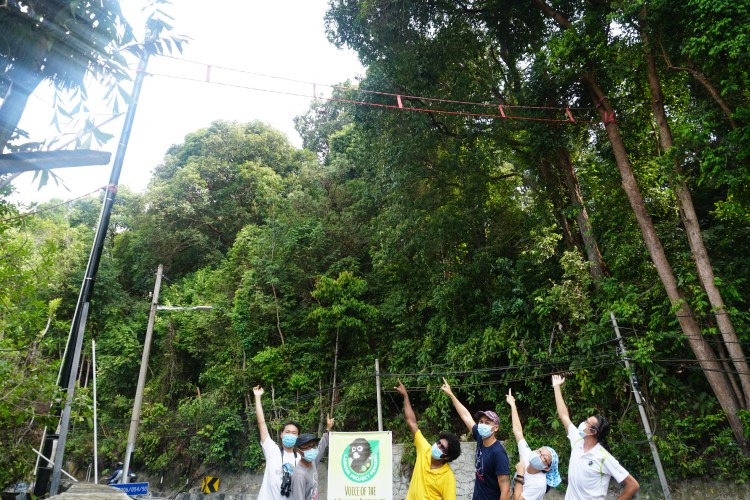
Canopy bridge stretches across roads with fast-moving cars
Malaysia’s first canopy bridge built by teams from Langur Project Penang and APE Malaysia

Photos credit to Langur Project Penang
Learn more on Malaysia’s road ecology and wildlife canopy bridge here
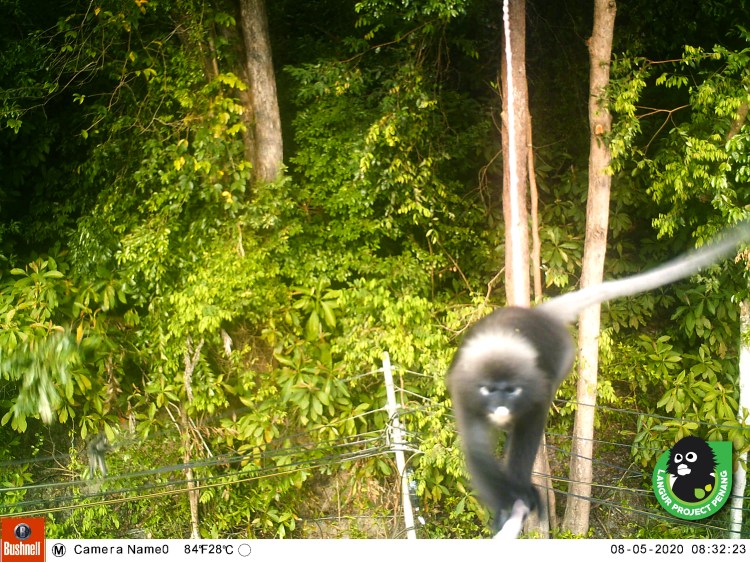
Canopy bridge provides a safer way for animals to cross a busy and dangerous road
Photos credit to Langur Project Penang

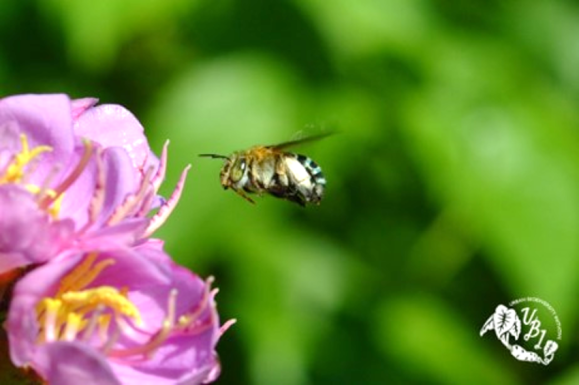
In terms of understanding how to apply this to our cities, it is really important to not just preserve forest patches, but to allow for some form of connection. This can be through bee lanes (margins planted with flowers to allow for pollinator movement), viaducts (tunnels that allow the movement of ground animals) or canopy bridges (rope bridges that allow movement of arboreal animals).

This is not just a matter of building structures, barriers can be removed through collective action like closing roads on certain days of the month or turning off non-essential lights during a migration or mating season.

In Kuala Lumpur most of our forest patches are abandoned rubber plantations, we can increase their resilience by planting a greater variety of tree species and slowly transitioning away from a monoculture plantation to diverse secondary forests.
Categories
Soil

What is soil?

Soil, being the foundation of life, is of great importance to human and nature

Written by Ethlyn Koh
Photos by Goh Shang Ming

Every day as you lay your feet on the ground and walk the earth, have you ever wondered what lies beneath? Soil. This material exists on the outermost part of Earthโ€™s crust, forming the surface of land and sometimes regarded as โ€œskin of the earthโ€.ย 

The uses of soil are endless. 

Soil is an important natural body as it supports agriculture. Most of the food we consume can be traced back to soil because it is the original source of nutrients needed to grow and produce food. Soil also plays a crucial role in the water cycle. Not only does soil store and filter water, providing a clean supply of water, it too improves our resilience to floods and droughts, especially in the face of climate change. On top of that, soil is a habitat for a wide variety of organisms. It houses microscopic organisms to soil fauna of larger sizes โ€“ for example, earthworms, springtails, burrowing rodents, etc. Soil is undeniably an extremely valuable and vital ecosystem that delivers ecosystem services, enabling life on Earth, fundamental to our survival.

So what exactly is soil? 

The Soil Science Society of America defines soil as the unconsolidated mineral or organic material present on the immediate surface of earth, serving as a natural medium for the growth of land plants. Others describe soil as layers of generally loose mineral and/or organic material that are affected by physical, chemical and biological processes at or near the planetary surface and usually hold liquids, gases, and biota (living things) and support plants. 

Composing of a mixture of minerals, water, air, organic matter, and decaying remains of living things that once lived, the components of soil fall into two distinct categories: biotic and abiotic factors. The biotic factors encompass both the living and dead โ€“ for instance plants, insects and even soil microorganisms such as archaea, fungi, algae and more. The abiotic factors on the other hand represent non-living things which include minerals, water and air. Commonly found soil minerals such as nitrogen, phosphorus and potassium are amongst the essential nutrients needed for healthy plant growth followed by calcium, magnesium and sulphur. The combination of these factors ultimately determine the properties of soil โ€“ its texture, structure, porosity, chemistry and colour. But thatโ€™s a topic for another day. 

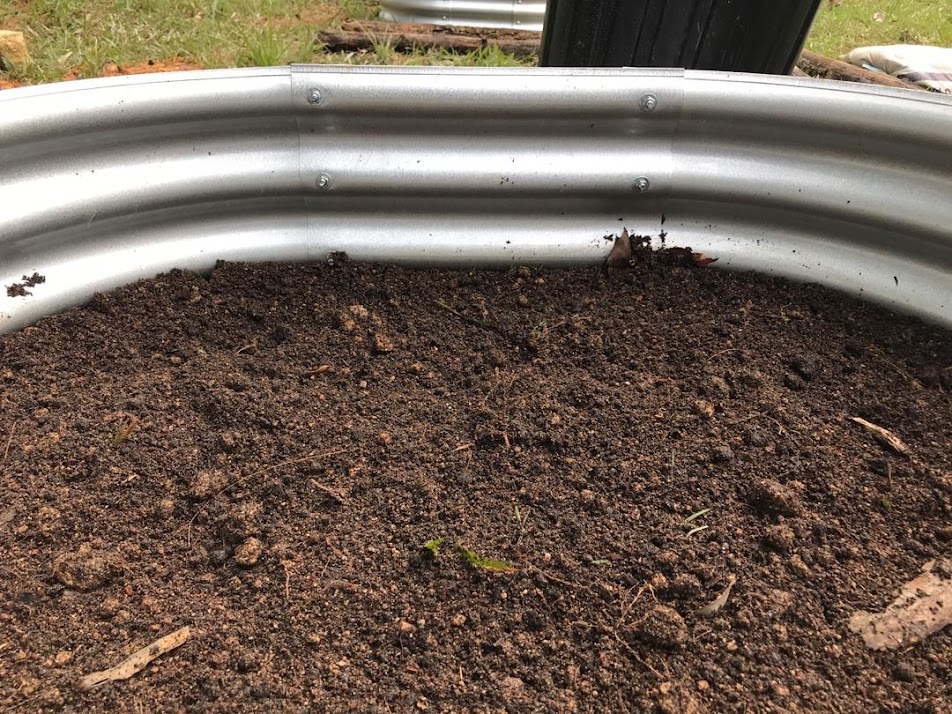
Healthy soil is crumbly and darker in colour due to the abundance of organic matter in it.

Undoubtedly, soil builds and supports the foundation of a community, a nation, and basically any form of life. The giving nature of soil provides us and other forms of life with an abundance of resources. 

Soil can also be described as a repository of memory, holding records of the past of our planet, our evolutionary history of how far we have come. It may also store secrets and possibilities that have yet to be discovered to a sustainable future. 

Essentially, all life depends upon the soilโ€ฆ There can be no life without soil and no soil without life; they have evolved together.

Dr Charles E. Kellogg

So while you keep your feet on the ground, stay grounded and stop treating soil like dirt.

References

Certini, G., & Ugolini, F. C. (2013). An updated, expanded, universal definition of soil. Geoderma, 192, 378โ€“379. https://doi.org/10.1016/j.geoderma.2012.07.008

Es, H. (2017). A New Definition of Soil. CSANews (Madison, Wis.), 62(10), 20-21. https://doi.org/10.2134/csa2017.62.1016

Categories
Workshop

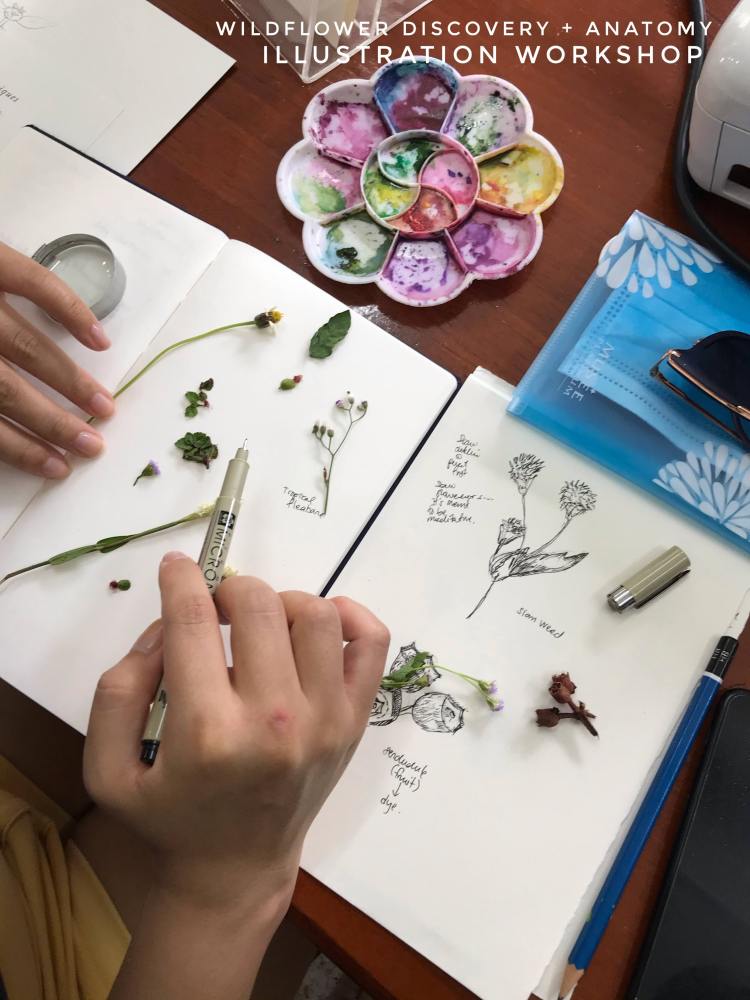
Wildflower Discovery + Anatomy Illustration Workshop

Wildflower Discovery + Anatomy Illustration Workshop


with Syarifah Nadirah

COMING SOON

Categories
Species Guide: Urban Invertebrates

Millipedes and Centipedes

Millipede, Ulat gonggok

Millipedes have two pairs of legs per segment and move slowly. Millipedes protect themselves by coiling up and producing a yellowish poison.

Local name: Ulat gonggok, sepah bulan, mentibang

Ecological function: Decomposer

Level in food chain: Decomposer

Feeding behaviour: Detritivore

Microhabitat:  Usually found in rotting material

Centipede, Lipan

Centipedes have one pair of legs per segment. Centipedes have modified front legs that inject venom into their prey.

Local name: Lipan

Ecological function: Predators

Level in food chain: Secondary consumer 

Feeding behaviour: Carnivore

Microhabitat:  Usually found in rotting material

Categories
Species Guide: Urban Invertebrates

Snails


Giant African land snail, Siput babi
Achatina fulica

This invasive species is the largest snail in urban Malaysian gardens. Its shell can grow up to 15-20cm tall but relatively smaller in gardens. It has a brown, striped shell with tall spire. This snail feeds on decaying plant materials and fresh plant shoots.

Local name: Siput babi

Activity pattern: Nocturnal

Ecological function: Prey-predator relationship, detritivore

Level in food chain: Primary consumer

Feeding behaviour: Herbivore, detritivore

Food items: Leaves, dropped fruits, decaying tree trunks and branches; fresh vegetables

Microhabitat:  Hides in cool and wet environments like under rocks, flower pots, in crevices, in leaf litter under trees. Sometimes climbs and adheres to tree trunks at fairly high areas above ground.


Glossy garden snail
Sarika sp.

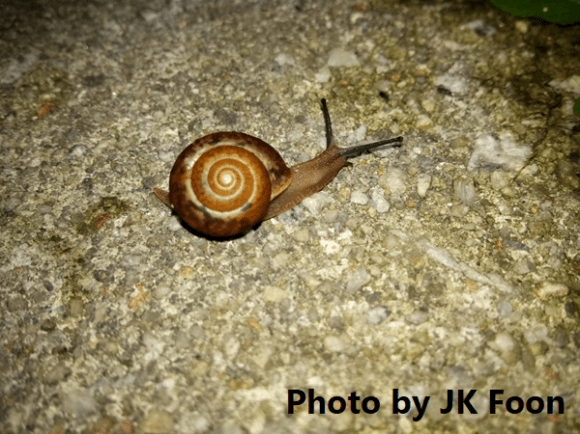
It has a very flat shell with flat spire. The shell is brown, glossy and has many whorls (spirals). The size of shell varies from 2 to 4 cm wide. It has worm-like appendages organ called the mantle lobe that extends from its main body and wiggles on the outer surface of the shell. Not much is known about the role of this mantle lobe but it is suspected to be useful for the snail to maintain a clean, healthy and glossy shell. Free vacuum service, am I right?

Local name: –

Activity pattern: Nocturnal

Ecological function: Prey-predator relationship, scavenger

Level in food chain: Primary and secondary consumer

Feeding behaviour: Omnivore, detritivore

Food items: Leaves, dropped fruits, decaying tree trunks and branches; fresh vegetables; dead animal meat

Microhabitat:  Hides in cool and wet environments like under rocks, flower pots, in crevices, in leaf litter under trees.


Asian tramp snail
Bradybaena similaris

It has semi-globular shell with flat spire. The shell is brown with occasional dark brown band at periphery. Shell size is around 1 to 2 cm wide. This snail is a hermaphrodite i.e. it has both male and female reproductive organs! During mating, one will stab the other with its love dart to inject hormones that encourage each other to mate and exchange genetic materials.

Local name: –

Activity pattern: Nocturnal

Ecological function: Predator, prey-predator relationship

Level in food chain: Primary and secondary consumer

Feeding behaviour: Omnivore

Food items: Fresh leaves, fungi, snail eggs

Microhabitat:  Hides in cool and wet environments like under rocks, flower pots, in crevices, in leaf litter under trees. Sometimes it climbs on low trees or shrubs, adhering to underside of leaves.


Bioluminescent garden snail
Quantula striata

The only bioluminescent land snail in the world. It has a special organ on its head that flashes a yellow-green light especially during juvenile stage. However, this phenomenon is rarely observed despite the snail being common in Malaysia. This snail has relatively flattish shell with somewhat tall spire. The shell is many whorled, dark to light brown at the top and whitish at the bottom. Size is around 3 to 5 cm wide.

Local name: –

Activity pattern: Nocturnal

Ecological function: Predator, prey-predator relationship

Level in food chain: Primary and secondary consumer

Feeding behaviour: Omnivore

Food items: Decaying plant materials like leaves, dropped fruits, decaying tree trunks and branches; snail eggs

Microhabitat: Hides in cool and wet environments like under rocks, flower pots, in crevices, in leaf litter under trees during the day. Sometimes climbs on low trees or shrubs, adhering to underside of leaves.

Barrackpore hive snail
Kaliella barrakporensis

It is a microsnail. It has a conical, high-spired shell. The shell is many whorled, glossy and brown in colour. The size of shell is up to 5 mm in height.

Local name: –

Activity pattern: No data

Ecological function: No data

Level in food chain: No data

Feeding behaviour: No data

Food item: No data

Microhabitat: Often on low trees or shrubs, adhering to underside of leaves. Sometimes on rock and concrete walls in gardens.

Two-toned gullela snail

Huttonella bicolor

It has elongated, tall-spired shell with many whorls. Shell size is around 6 mm. Shell is translucent white when it is empty; soft body is orange-yellow. The opening of shell has many teeth-like structures. Sometimes prey on members of its own species. Some scientists suspect the distinctive teeth-like structures of its shell aperture is a barrier to prevent cannibals and other predators from eating the individual.

Local name: –

Activity pattern: No data

Ecological function: Predator, prey-predator relationship

Level in food chain: Tertiary consumer

Feeding behaviour: Carnivore

Food item: Usually small land snails like the miniature awlsnail; sometimes larger land snails too but is usually not fatal to such large prey

Microhabitat: Hides in cool and wet environments like under rocks, in leaf litter under trees during the day.

Miniature awlsnail

Subulina octona

It has elongated, high-spired shell with many whorls. Shell size is up to 3 cm. Shell is glossy, translucent brown to white when it is empty; soft body is yellow. The opening of shell is lack of teeth-like structures. Mature adults often retain their eggs within their shell. It is possibly to increase chances of survival for the young snails before they are deposited in the soil and hatched.

Local name: –

Activity pattern: Nocturnal

Ecological function: Prey-predator relationship, detritivore

Level in food chain: Primary consumer

Feeding behaviour: Detritivore

Food item: Decaying plant materials like leaves, dropped fruits, decaying tree trunks and branches

Microhabitat: Hides in cool and wet environments like under rocks, flower pots, in leaf litter under trees during the day.

Yellow-shelled semi-slug

Parmarion martensi

It has a small, yellowish, glossy shell on its back that can be partially covered with a fleshy mantle, making it look like it is carrying a backpack. Soft body is brown. It can reach up to 5 cm in length when animal is stretched out

Local name: –

Activity pattern: Nocturnal

Ecological function: Prey-predator relationship, detritivore

Level in food chain: Primary consumer

Feeding behaviour: Herbivore, detritivore

Food item: Decaying plant materials, flowers, dropped or ripened fruits

Microhabitat: Hides in cool and wet environments like under rocks, flower pots, in leaf litter under trees during the day.

Categories
Species Guide: Urban Invertebrates

Spiders


Spiders, Labah-labah

They have eight legs. Some make webs while others hunt by jumping or ambushing their prey. They are important for controlling insect populations.

Local name: Labah-labah

Ecological function: Bio-indicator, prey-predator relationship

Level in food chain: Secondary consumer

Feeding behaviour: Carnivore

Microhabitat:  Almost everywhere

Categories
Species Guide: Urban Invertebrates

True Bugs

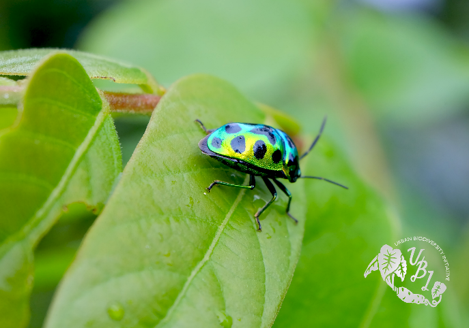
Jewel bug (Chrysocoris stollii)


True bugs

They are mainly predators and herbivores. Their shells do not have a line in the middle. Many produce a stinky smell if disturbed.

Local name: –

Ecological function: Herbivore, predator

Level in food chain: Primary and secondary consumer

Feeding behaviour: Herbivore, carnivore

Microhabitat:  Near trees and shrubs

Categories
Species Guide: Urban Invertebrates

Beetles

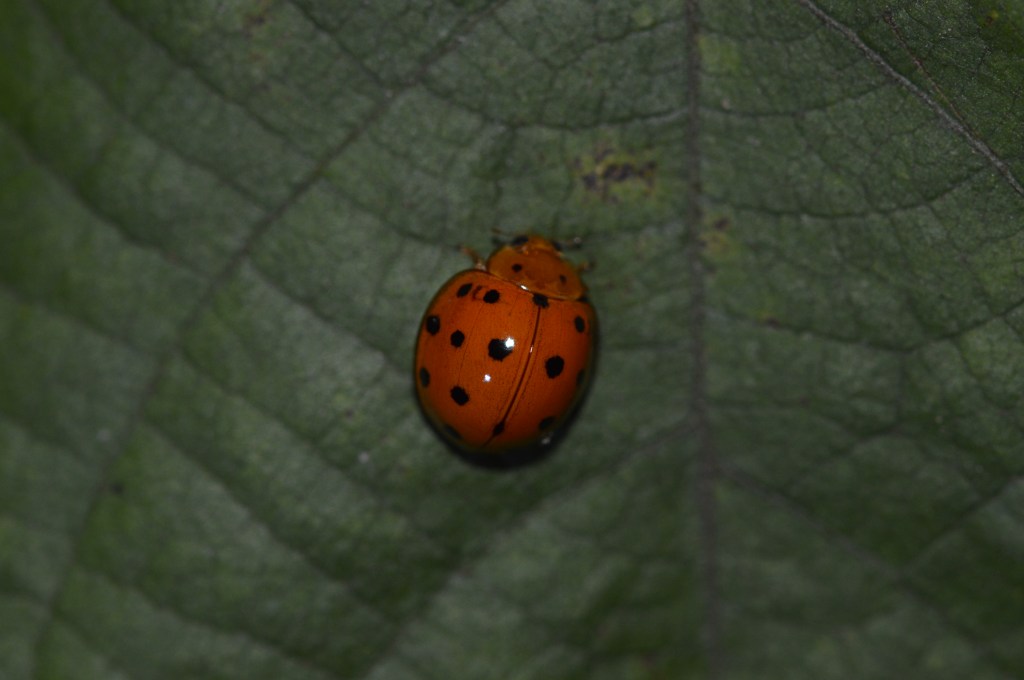
Lady beetle (Epilachna indica)


Beetles, Kumbang

Beetles are an incredibly diverse group. The shell has a line in the middle where the wings open.

Local name: Kumbang

Ecological function: Pollinator, decomposer, scavenger, predator, predator-prey relationship

Level in food chain: Primary and secondary consumer

Feeding behaviour: Omnivore

Microhabitat:  Almost everywhere

Categories
Species Guide: Urban Invertebrates

Flies, Midges and Mosquitoes

Blowfly


Flies, Lalat

They usually have a round body and large eyes. They are important pollinators, decomposers and food items for insectivores.

Local name: Lalat

Ecological function: Pollinator, decomposer, scavenger

Level in food chain: Secondary consumer

Feeding behaviour: Coprophagous, necrophagous

Microhabitat: Near rotting material

Midges

They can be mistaken for mosquitoes, but they do not suck blood. Their hind legs are not larger than the front legs. Midges do not have a long needle like mouth-part. They are important pollinators.

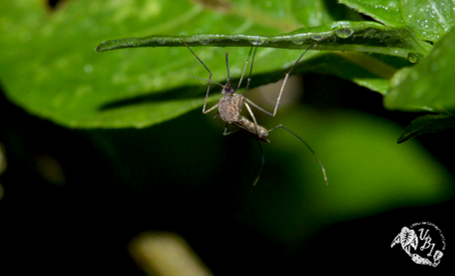
Mosquitoes, Nyamuk

Their hind legs are larger than their front legs. Females will feed on blood when they need to lay eggs, but male mosquitoes do not suck blood and are useful pollinators. Mosquitos are important prey to many insectivores.

Local name:

Ecological function: Pollinators, decomposer, 

Level in food chain: Secondary consumer

Feeding behaviour: Carnivore, detritivore, nectivore, coprophagous

Microhabitat: Damp areas with a lot of shade

Local name: Nyamuk

Ecological function: Parasite, pollinator

Level in food chain: Secondary consumer

Feeding behaviour:  Nectivore, blood feeder

Microhabitat: Damp areas with a lot of shade

Categories
Species Guide: Urban Invertebrates

Bees, Wasps and Ants

Blue-banded bee (Amegilla cingulata)

Bees, Lebah

They usually have a hairy, round body and their legs are usually hidden when flying. They only sting when provoked.

Paper wasp

Wasps, Tebuan

The body is slender and narrow-waisted, with little to no hair. Their legs hang down when flying. They only sting when provoked.

Weaver ants (Oecophylla smaragdina)

Ants, Semut

They have a thin waist and are usually wingless, sometimes divided into smaller workers and larger soldiers. โ€˜Ant bitesโ€™ are usually the acidic stings of ants.

Local name: Lebah

Ecological function: pollinators

Level in food chain: primary consumer

Feeding behaviour: nectarivore

Microhabitat: sometimes live in colonies in hives

Local name: Tebuan

Ecological function: prey-predator relationship, pollinator

Level in food chain: secondary consumer

Feeding behaviour: nectarivore, carnivore

Microhabitat: sometimes live in colonies in grounds or in roof spaces

Local name: Semut

Ecological function: decomposer, scavenger

Level in food chain: primary and secondary consumer

Feeding behaviour: detritovore, omnivore

Microhabitat: almost everywhere