Categories
Species Guide: Common Fruit Trees

Durian

A small durian fruit with its green, thorny husk. Photo by Goh Shang Ming

Common name: Durian

Malay name: Durian

Scientific name: Durio zibethinus L.

Conservation status: Cultivated, Native to Malaysia

Description

A large tree that grows up to 25-40 m tall. It has aboveground roots. Tree crown is large and irregular. Leaves are pointed and alternately arranged. The upperside of leaves is green and glossy while the underside of leaves is silvery or bronze. It bears clusters of bright yellow flowers on branches. The flowers bloom at night and emit a strong odour. Fruits are coated with a hard, thorny husk which is greenish brown.

A large durian tree standing at the roadside. Photo by Goh Shang Ming
The upperside and underside of leaves are different in colour. Photo by Goh Shang Ming

Habit: Perennial tree

Cultivation: It is planted by seeds or grafting

Ecological function: The fruits of this tree attract wildlife.

Pollinator: Bats

Soil: Sand, loam, clay

Moisture: Moist, well-drained, fertile soils

Shade: No shade

Use: Ripe fruits are eaten raw or cooked. Seeds, flowers, young leaves and shoots are cooked.

Categories
Species Guide: Common Fruit Trees

Pisang

A clump of banana plants growing near a drain. Photo by Lee Li Chong

Common name: Banana

Malay name: Pisang

Scientific name: Musa sapientum L.

Conservation status: Cultivated, Native to Malaysia

Description

Somewhat palm-like, this plant grows up to around 3 m tall without a woody trunk. The leaves sheaths are spirally arranged and contracts into sturdy midribs, which divide the leaf blades into two halves. When it is flowering, the plant forms a complex structure that includes the flowers that will develop into fruits.

A cluster of bananas that are partially hidden by leaves of the plant. Photo by Goh Shang Ming
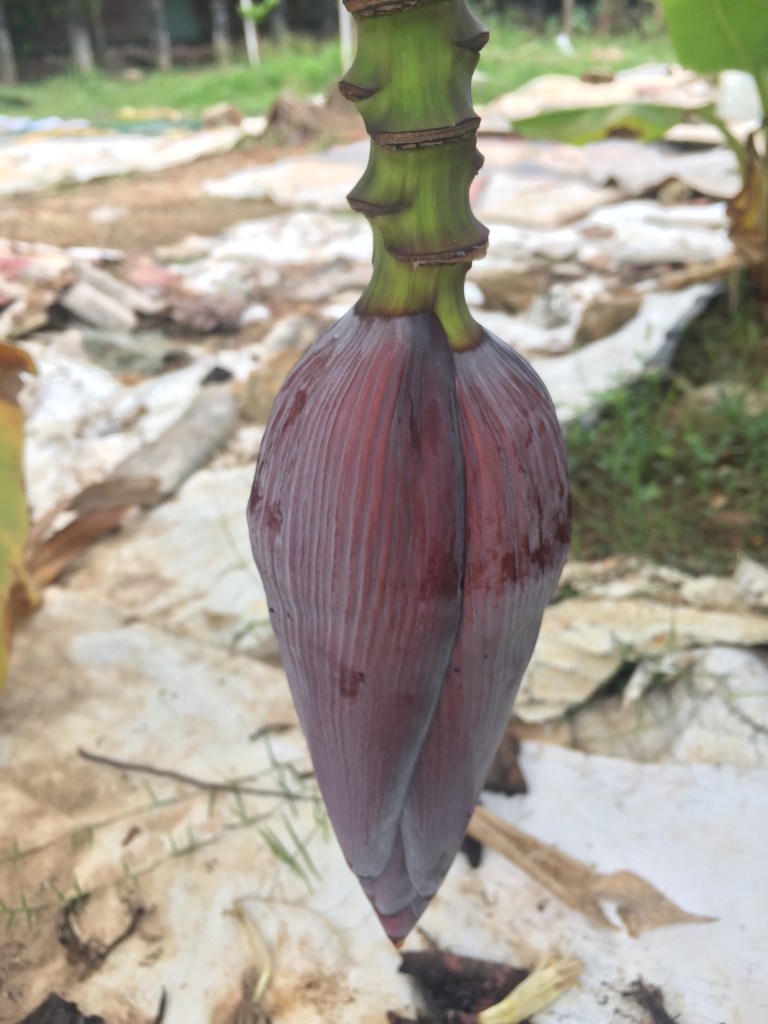
A flowering head of banana plant. Photo by Goh Shang Ming

Habit: Perennial herbaceous plant

Cultivation: It is planted by seeds, underground stems or suckers (secondary shoots that give rise to new plants)

A new sucker growing next to the mother plant. Photo by Goh Shang Ming

Ecological function: As it flowers and fruits all year round, the flowers provide constant source of food for pollinators while the fruits and seeds feed the wildlife. The leaves of this plant provide shelter or materials for nests or roosting wildlife. Its root system converts minerals in soil into forms usable by other plants.

Pollinator: Birds and bats for wild bananas

Soil: Sand, loam, clay, organic soils

Moisture: Moist, well-drained, fertile soils

Shade: No shade, partial shade

Use: The ripe fruits and blossoms are edible. The leaves are used for packing, wrapping and decorative purposes.

Categories
Species Guide: Common Fruit Trees

Betik

These green papayas will turn orange when ripe. Photo by Goh Shang Ming

Common name: Papaya

Malay name: Betik

Scientific name: Carica papaya L.

Conservation status: Cultivated, Naturalised, Introduced (tropical Americas)

Description

A tree-like herb that grows straight and usually have no branches. Leaves are clustered towards the top of plant. Leaves are lobed, smooth and with toothed margin. Flowers are whitish, have five petals. Fruits are oblong, yellow to greenish-orange in colour.

A papaya tree with its umbrella-shaped crown. Photo by Goh Shang Ming

Habit: Perennial herbaceous plant

Cultivation: It is planted by seeds

Ecological function: The flowers attract pollinators. Its fruit is food for birds. This tree is suitable for tropical agroforestry systems

Pollinator: Bees, moths, wind

Soil: Organic soils

Moisture: Well-drained soils

Shade: No shade

Use: The unripe fruit is made into pickles while the ripe fruits are eaten raw or made into dessert.