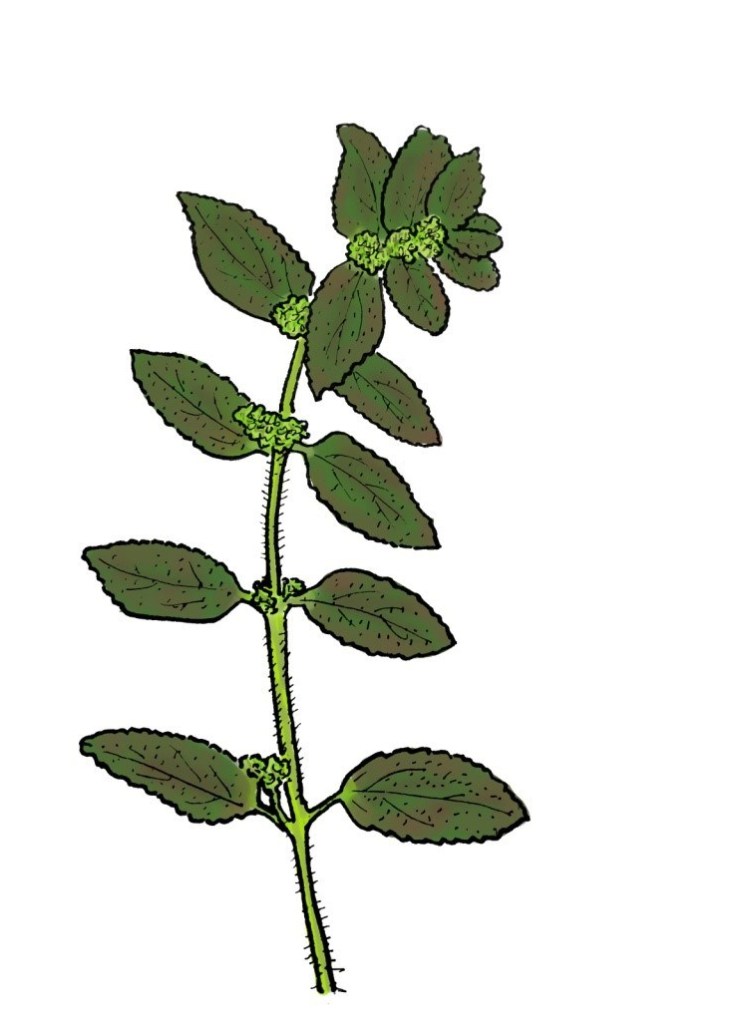
A small, hardy plant with dull green or purplish-green leaves. The leaves are arranged opposite each other and have toothed margins. Its flowers are tiny and green, growing in clusters between the leaves. It grows on lawns and roadsides.
Status: Least concern, Naturalised (Possibly Indian origin)
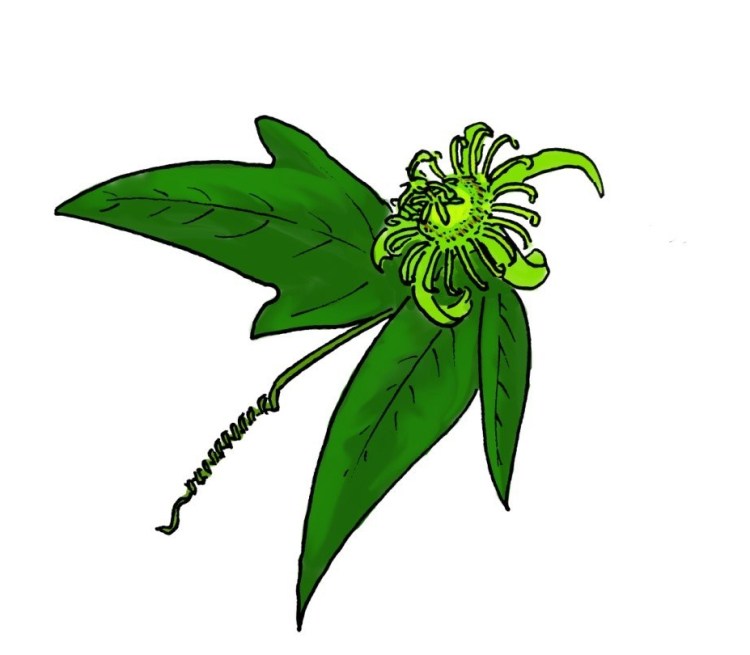
A common vine with pale green flowers. It has coiled tendrils for gripping and sometimes grows over other plants, smothering them. Its leaves have different shapes: some are long and narrow, and others are three-lobed. It produces dark-blue, berry-like fruits.
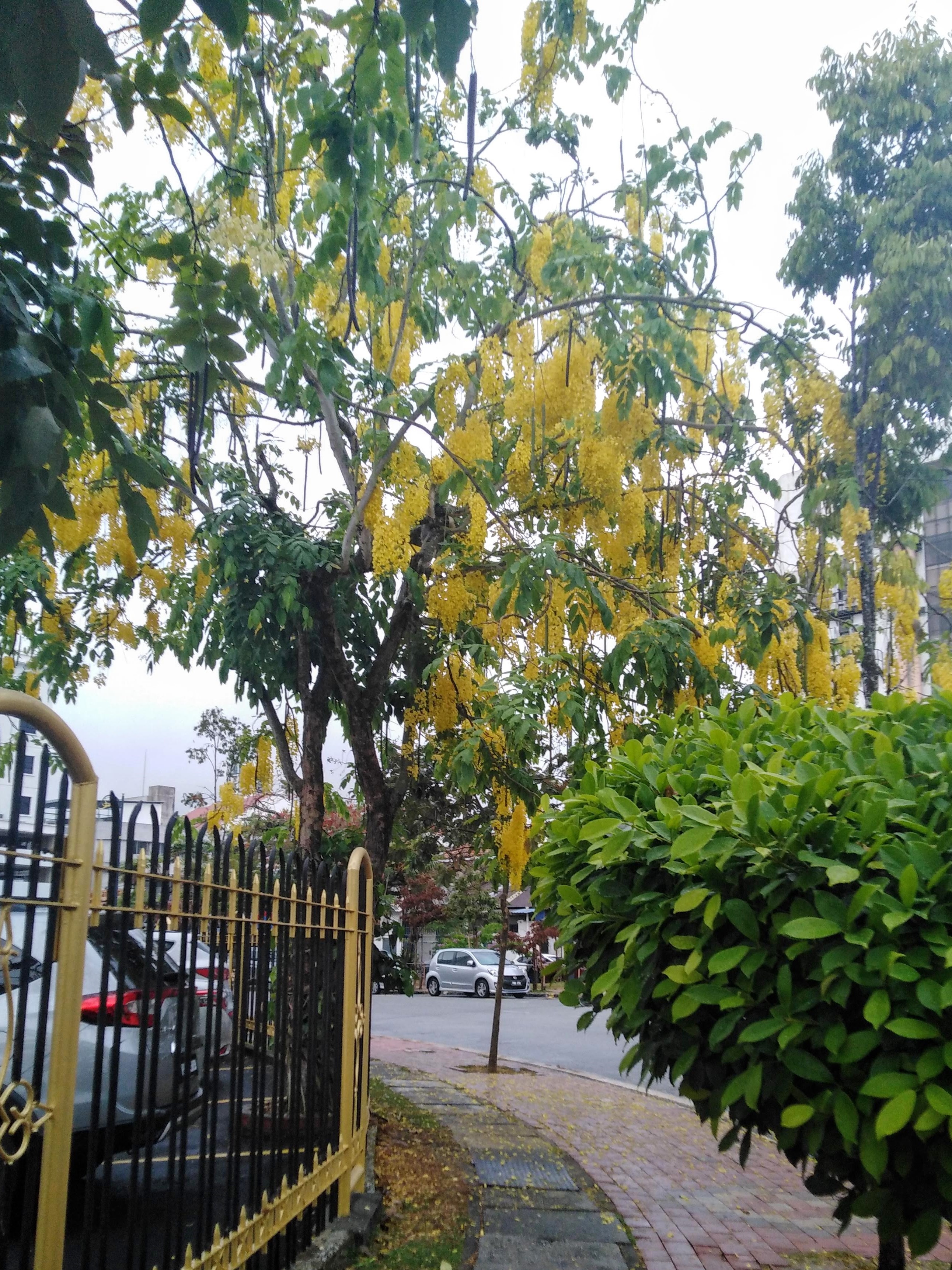
Most days, a city tree is just a tree. It stands there, out of the way, but close enough if you need a shaded parking or walk. Other days, a tree will make one pause and wonder.
Cities all over the world remember to add trees to their streets and build parks from scratch to bring some nature closer to citizens. Parks and city gardens will have collections of beautiful trees which, much like a city’s inhabitants, are brought together from near and far.
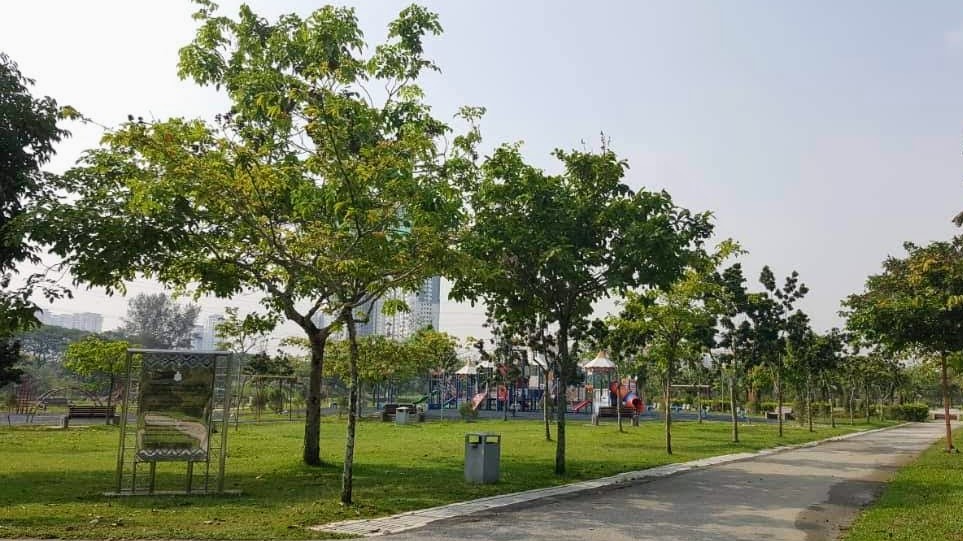
Tall, elegant palm trees along the side of roads, or trees with spreading crowns so people can walk beneath; flowering trees that add hints of color, and trees with round crowns to soften the city landscape.
How do we choose which trees move to the city with us?
Tree choices can tell us something of the history and importance of a place, and the nature of the tree.
Cities built in the colonial era have plenty of introduced trees, sometimes because more was known about them than native trees. Newer parts of an urban area might have trees that mature fasterso they are ready to adorn the city.
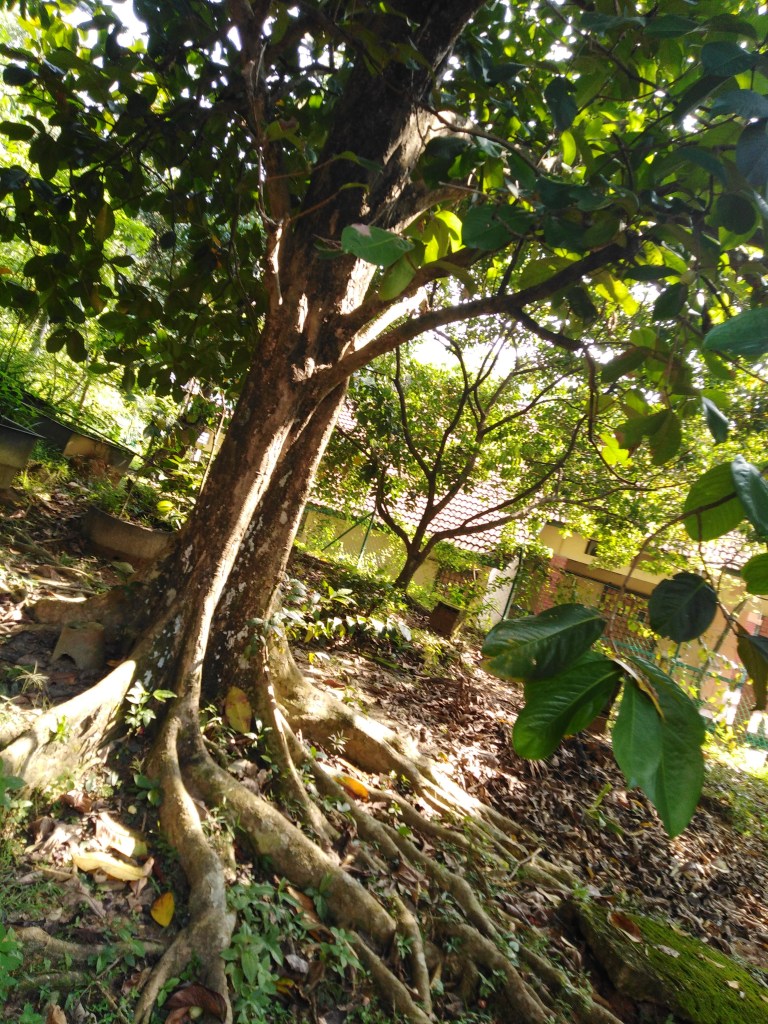
Trees that make it to the city are usually tougher, so to speak, chosen for their ability to withstand disturbances like road vibrations and strong winds, and their tolerance for fumes. There are also practical considerations. Trees that bear heavy, falling fruits or have large roots near the ground surface are not good choices where they pose hazards to people, property or infrastructure.
Urban trees are also chosen for their aesthetic or distinguishing qualities, especially those we find in public parks, open spaces or around prestigious public buildings. They are chosen depending on the context to produce a certain effect: comfort, grandeur, delight.
How trees benefit cities
Just like in their natural habitats, the roles that trees play in urban ecosystems are much more than meets the eye. Like all plants, they help keep excess carbon out of the air within their trunks and roots; their leaves and textured wood filter particulate matter and gases that are released by engines.
Our building materials and activities in cities make urban temperatures higher than they would be otherwise. Trees can cool cities as they release water vapor through their leaves and also by creating shade cover. The right tree selection and arrangement can also help block some of the noisewe create as we travel, build and work in cities.
Trees and urban biodiversity
Urban trees also cater to the city wildlife. Tree flowers offer nectar to many kinds of bees, butterflies and moths, and fruits and seeds feed birds, squirrels and shrews. Tree branches and canopies provide spaces for nests and shelters and oftentimes, convenient transit throughout the city.
Trees also make it possible for more plants to flourish in cities as they offer shade for young shoots growing beneath their canopies and support for ferns and climbing plants.
City view
Perhaps cities can offer trees something in return too.
City residents can experience and appreciate trees in a slightly different way than they would in the wild.
A bird’s-eye view of massive trees from atop the LRT, or high rise windows that offer a view of tree tops laden with tiny flowers and hidden nests.
And the luxury of time to watch and follow a sapling’s growth into a grand tree that flowers and fruits, nurtures and shelters, in a suburban backyard.
It is where we get materials essential to our survival. It is soil that supports the growth of plants, the producers of the food chain and the sources of fibre, fodder, and fuel.
At first look, it seems static and lifeless. In fact, soil hosts millions of life forms including bacteria, fungi, insects and other invertebrates, that all interact and perform complex activities. Some of these consume other life forms, others compete for space and resources, and certain organisms form collaborative relationships to access resources.
Earthworms are important members of the underground soil community affecting physical structure of soil
Underground life forms collectively form the soil biota and continuously re-construct the soil environment. These underground farmers are important to ensure healthy development of a plant, as the roots of the plant are a part of the soil ecosystem.
The Mutualistic Relationships between Plants, Soil Microbes and Fungi
The underground parts of plants carry out nutrient and water uptake from the soil. The root system of a plant is involved in plant-microbe interaction whereby the plant provides carbons and shelter to the microscopic soil organisms (microbes). The microbes in turn supply minerals and trace elements in a modified form that can be used by the plant.
An example of such interaction is that of legume plants (peas, beans) and nitrogen-fixing bacteria. The bacteria in the soil convert nitrogen from the air into a form that legume roots can absorb from the soil.
Plants also develop symbiotic associations with soil fungi, that is, the relationship benefits both the plants and the fungi. These fungi reside near to or within the root cells of the plants.
Soil fungi use the organic nutrients and sugars that are produced by the plants. In return, they benefit plants by improving the plants’ ability to absorb nutrients and water, and their resistance to unfavourable conditions like pollution and diseases.
The Alteration of Soil Structure and Composition
Over recent decades, large-scale industrial farming and land conversion have resulted in great change of soil structure and composition. The clearing of trees, shrubs and grasses, the digging and overturning of topsoil using machinery, as well as application of chemical insecticides, herbicides and fertilisers have had disastrous impacts on the underground food web.
The soil environment has become less conducive for the organisms to survive. The soil microbial communities lose connection with plant roots that provide carbons and shelter, and in turn the plants’ capacity for taking up water and nutrients declines. The soil ecosystem is losing its viability and robustness.
Promoting healthy soil ecosystems
In order to revive the fertility of soil, we need to bring back the carbon to the soil. This is important for ensuring food security and sustainability of agricultural activities. Here are two ways we can do this:
Plant different varieties of plants–each plant variety releases a unique set of biological compounds to the surrounding of its root system, and signals different underground microbe community and fungi. The greater the plant variety, the greater the variety in soil microorganisms which improves soil water-retention capacity and nutrient availability. Besides soil improvement, more plant varieties result in a greater variety of insects, including predatory insects that feed on pests. The predators help control pest numbers and thus reduce physical damage to the crop plants.
Soil ecosystem consists of life forms that live within the soil but it also provides food to above-ground organisms Image credit: USDA (CC-0)
Limit the use of chemical fertilizers—The application of NPK fertiliser has to be reduced, so that soil microbial communities have the chance to thrive and re-connect with the plant roots. Instead of relying on chemical input, plants have to derive these essential elements from the underground microbial communities and in return, channel their carbons to the soil. The increase of soil carbon would boost the soil communities, improve nitrogen uptake and also help maintain the structure of soil. The removal of excess fertiliser reduces the formation of nitrous oxide (a greenhouse gas) in waterlogged or compacted soil.
Summary
If we understand soil and the life it teems with, we can grow healthier plants and do so in a sustainable manner. We can avoid the excessive chemical and water use that is a growing concern.
Plant growth is influenced by the health of the soil and it also influences life around it and beneath it. Having more plants of different varieties helps conserve underground ecosystems. As the soil carbon (provided by plants) increases, the soil microbial community is revived, and the underground farmers can improve the structure and composition of the soil to support more plants.
Sometime in the 19th century, Ernest Haeckel, a naturalist, came up with the word ‘ecology’ to draw attention to something that he thought was important: the ‘entire relations’ of an organism. By this, he meant that it was not enough to study one plant or animal species at a time. He believed it was important to study not only the organism but also its relationships with other living organisms and how it interacts with non-living things like climate, water, soil and light.
This came from the idea that an organism’s home (habitat or surroundings) has a great influence on its form (what a plant or animal looks like) and its behaviour (how it grows, moves, communicates and so on).
Tropical rainforest trees have shallow roots access nutrients found closer to the surface, unlike temperate trees that have deeps roots for nutrients found deeper in the soil.
Ecology is derived from the Greek ‘oikos’ which means home or household. It is the study of the relationships that exist among living things and between living things and their environment. This includes both non-living things like water, soil, climate and minerals, and other organisms that are of the same or different species.
All plants, animals, fungi and microorganisms form a complex web of relationships—an ecosystem—that supports their survival. Interactions occur at many levels and there are different types of relationships.
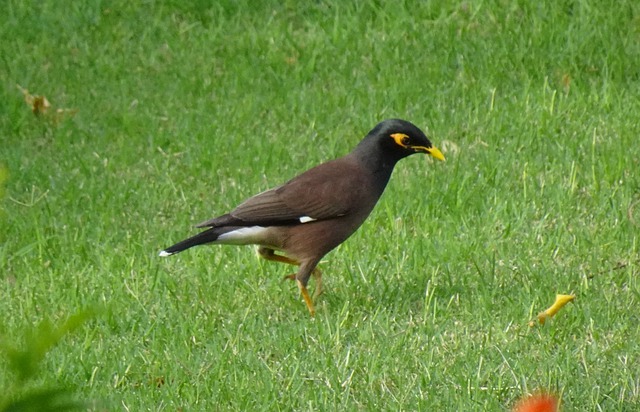
A group of the same species living in an area make up a population. Think, for example, of the myna birds you see anywhere near your home: together they make up your neigbourhood’s myna population.
Ecologists can study populations of organisms, examining their behaviours, their adaptations to their habitats, and how their numbers change over time and geographic regions. Some ecologists will spend years studying individuals in a population. They will record their births and deaths, diets, movements, and the impact they have on their surroundings.
Plants or animals also interact with other species in their habitats. A community is a set of several, different species that occupy a given area.
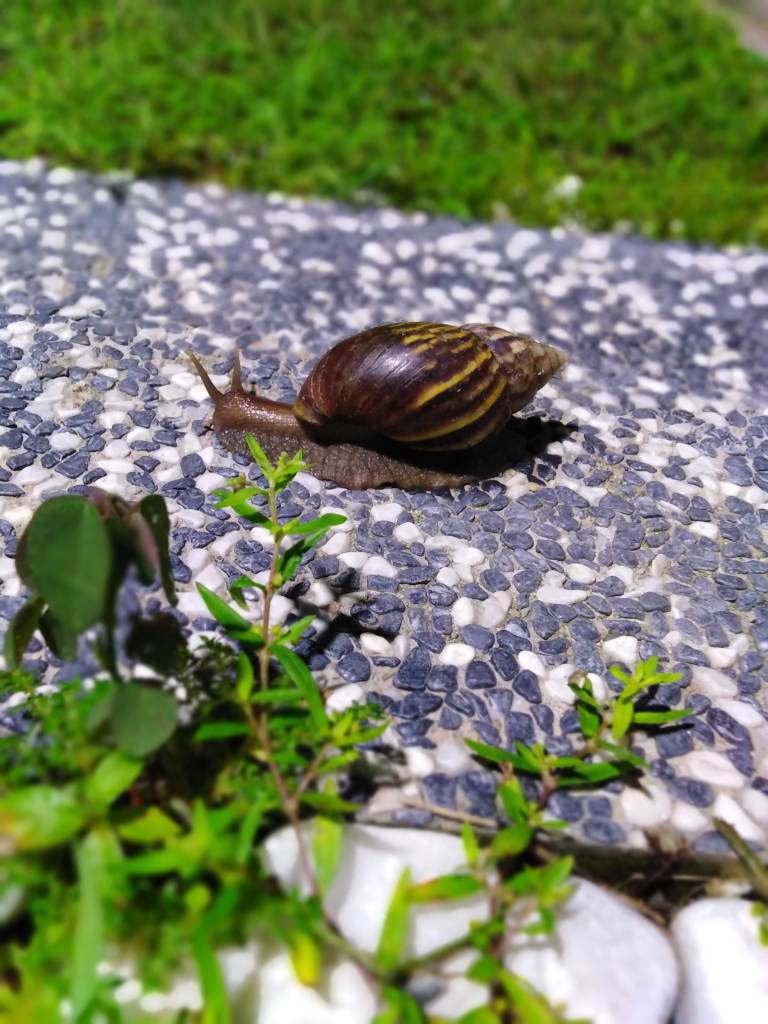
Take a simple house garden. Its trees, flowering shrubs, grass, worms, birds, bees, butterflies, snails, moss and mushrooms form a small community. As a community, they interact with each directly (bees feeding on flower nectar) and indirectly (worms dig through soil and this makes it better for plants to grow later).
Communities can be as small as that of a thinly-populated backyard garden or be found within huge national forests.
Interactions within communities involve processes like pollination, decomposition, and feeding. These benefit the organisms and also provide many services for us. Ecosystem services include:
food and fuel provision
fresh water supply
pest and pathogen control
soil improvement
climate regulation
Ecologists study such relationships and their outcomes, exploring how ecosystems are formed and how they are sustained. Thus, ecology studies contribute to a wide range of fields and practices including agriculture, conservation, natural resource management and sustainabledevelopment.
Here are some of the questions that ecologists try to answer:
How do behaviour and physiology change in response to the physical environment?
How do organisms use the resources in their habitats?
How will ecosystems respond to human activities?
How can we restore degraded ecosystems?
As the world deals with changing environmental conditions, pollution, food security and species loss, ecology helps us understand ecosystems and how to protect them—for our own well-being and that of the planet.
References
Egerton, F.N. (2013), History of Ecological Sciences, Part 47: Ernst Haeckel’s Ecology. The Bulletin of the Ecological Society of America, 94: 222-244. doi:10.1890/0012-9623-94.3.222
In recent years, ecologists have begun to take a second look at plants and animals appearing in cities. There seems to be more ‘nature’ in urban areas than one would expect. Cities are supposed to be human territories—steel, brick and concrete—not exactly welcoming to wildlife. But urban places display a variety of species and habitats – biodiversity—in places we did not plan for them.
This makes us ask some questions:
Why are these plants and animals surviving in human settlements while others disappear? How and when did they move in? How many of them can survive in our cities?
Urbanized areas often share characteristics like:
hard surfaces (roads, pavement)
roads and buildings that break up natural, vegetated spaces
bright light at night, loud sounds, water and soil pollution
All of these are known to make it difficult for ‘natural’ habitats to survive near cities.
But there are also ‘built’ green spaces like public parks and private gardens that cultivate a wide range of native and exotic plants. These can form the bases of food chains that attract consumers (like ants, grasshoppers, bees, beetle, squirrels) and their predators (lizards, birds, and monkeys), without our approval. If left uninterrupted, patches of wild ecosystems can be established within these built spaces.
But exactly which species of birds, bees and trees settle in cities? Where in a city are you more likely to come across wildlife? And, how come I can see kingfishers in one district but not another?
Another attribute of cities is the diversity of the habitats (or shelters) they can, unintentionally, form. Within one city, you can find
abandoned lots-turned-grasslands
waterways
old buildings that create dark and cool shelters
long stretches of roadside vegetation
food gardens
golf courses
remnant forests
Each of these will have unique structural features, creating different kinds of habitats.
For instance, reptiles that inhabit open spaces within their original forest habitats will probably adapt well to places in cities that have widely spaced trees and vegetation.
Wildflowers too benefit from the abundant sunlight and absence of competition (bigger plants) in urban patches. These are conditions not found beneath dense, natural forest canopies.
A more familiar example is the ubiquitous city pigeon. Have you ever wondered why this bird in particular flocks in cities worldwide? One reason might be the similarity between its original habitat – rocky cliffs – and the hard, ledged surfaces of city buildings that offer it space for nesting.
There is also another feature of cities that might be important for supporting biodiversity – the greater amount of food available. For species that are not very particular about their diet, gardens, cafeterias, litter, bird feeders, ornamental trees and nutrient-rich waterways offer abundant food resources.
So what does this mean for us?
One reason that ecologists are interested in urban wildlife is the benefits associated with biodiversity.
In natural ecosystems, there is abundant tree and vegetation cover, and processes like pollination, seed dispersal and decomposition that are carried out by large and small animals. All of these contribute services like food production, climate and water supply regulation.
These benefits (also known as ecosystem services) are important for us. If cities can support biodiversity, then they can help in species conservation and contribute these services that keep our environment healthy.
Urban biodiversity still poses many questions for ecologists to explore.
How much green space is enough for biodiversity conservation?
What ecosystem services can we expect from urban biodiversity?
How are urban plants and animals different from those in natural habitats?
How and why do biodiversity patterns vary among cities and geographical regions?
Answering these questions will take time and require that we pay closer attention to the other lives unfolding parallel to ours.
Resources for further reading:
Müller, N., Ignatieva, M., Nilon, C. H., Werner, P., & Zipperer, W. C. (2013). Patterns and trends in urban biodiversity and landscape design. In Urbanization, biodiversity and ecosystem services: Challenges and opportunities (pp. 123-174). Springer, Dordrecht.
Schilthuizen, M. (2019). Darwin comes to town: How the urban jungle drives evolution. Picador.
The term rewilding has been thrown about a lot quite recently but in many cases, the term has been misused to just be about planting trees. Here I explain how ecologists view rewilding, as well as important concepts required to understand rewilding. This is somewhat a summary of a review paper by Perino et al. (2019). If you want to read something more technical you can find the details of that paper in the references below.
Rewilding is not only about introducing wild things to where they can’t be found anymore. To quote Dave Foreman:
“I meant rewilding to instead be about wilderness restoration – restoring wildness with native species and processes. So, let us all remember that rewilding comes from wilderness recovery (or restoration).”
In other words, the goal of rewilding is to restore functions to ecosystems through the reintroduction of native species. This is the main difference between rewilding and ecological restoration, which focuses on the restoration of ecosystem functions without the emphasis on reintroducing native species. This does not mean that ecological restoration is worse; in locations where invasive species are impossible to eliminate or native species cannot be reintroduced, ecological restoration is a more viable option.
What is an ecological function? An example would be a butterfly, which as an adult serves as a pollinator for flowering plants, while, as a caterpillar, it functions as prey for insect-eating birds and a host for parasitoid wasps.
Restoring ecological functions drives 3 processes (simple terms are in bold, scientific terms are in brackets):
Food chains (Trophic complexity)
Disturbance (Stochastic disturbance)
Movement (Dispersal)
Plants, fungi and animals with a lot of ecological functions create a complex web of interactions. Among these interactions are food chains. This is the process in which energy is stored and moved throughout the ecosystem. The more complex the food chains or food webs, the more stable and resilient the ecosystem will be. This is why rewilding efforts can start with first reintroducing predators back into ecosystems. For example, in Yellowstone National Park in the United States, wolves were reintroduced back into the park first, to regain ecosystem balance. By doing so, you add another level to the food chain and the lower levels of the food chain are regulated by the predators on the upper levels.
We tend to think of disturbance as a bad thing, but that is not always the case in a dynamic system. Random disturbance events help to make ecosystems more diverse and stable by ensuring that no one organism can dominate. For example, in rainforests, large trees will grow and block sunlight from reaching the understory. If the large trees do not die – through falling over, disease, lightning strikes or fire – then there will not be any new space for younger trees to grow. So a forest is not a permanent collection of trees, but it is in a constant state of change in which large trees fall and new trees fill the gaps. This prevents a single tree species from taking over in a rainforest, as many different species fill the niches that become available after a tree fall.
Random disturbance events help to make ecosystems more diverse and stable by ensuring that no one organism can dominate.
Movement is crucial for maintaining the food chains when disturbance happens. Ecosystems are often patches of resources that animals, fungi and plants can use. Usually, this results in patches with different compositions of species. For example, if there are many species in a single large patch, it can help to rescue populations in other smaller patches through the movement of organisms between patches.
This is why creating networks of patches that enable movement between patches is important. It helps to maintain the food chains in all the connected patches by buffering the random disturbance.
On a large scale, preserving ecological functions pays humans back in the form of ecological services. The previous example of a butterfly supplies the supporting service of pollination. This is necessary for the provisioning services which create food and raw materials for people.
Overall ecological services can be categorised into 3 benefits:
Non-material
Material
Regulating
Non-material benefits are things like improvements to human health and wellbeing that can be gained through interactions with nature. Non-material benefits also extend to profits from services such as tourism.
Material benefits are things that you can harvest from nature, such as wood or food. Malaysians have a very close relationship with many species of plants that are used in our culture and cuisine.
Regulating benefits are things that are controlled by having nature around. These include natural disasters like floods and landslides, regulation of heat and climate, and reduction of dust and pollution.
When you have many ecological functions, all these interactions create an ecosystem. Ecosystems, by definition, are living and non-living components interacting in a shared space. The goal of rewilding should always be to restore ecosystems, and that is why we have to be careful about how we use this term and not use it as a buzzword that means only planting trees.
In the next article, I give an example of a successful case of urban rewilding in relation to food chains and interactions, and the lessons we can learn from it, especially from a functional ecology perspective.
Perino, A., Pereira, H. M., Navarro, L. M., Fernández, N., Bullock, J. M., Ceaușu, S., … & Pe’er, G. (2019). Rewilding complex ecosystems. Science, 364(6438), eaav5570.
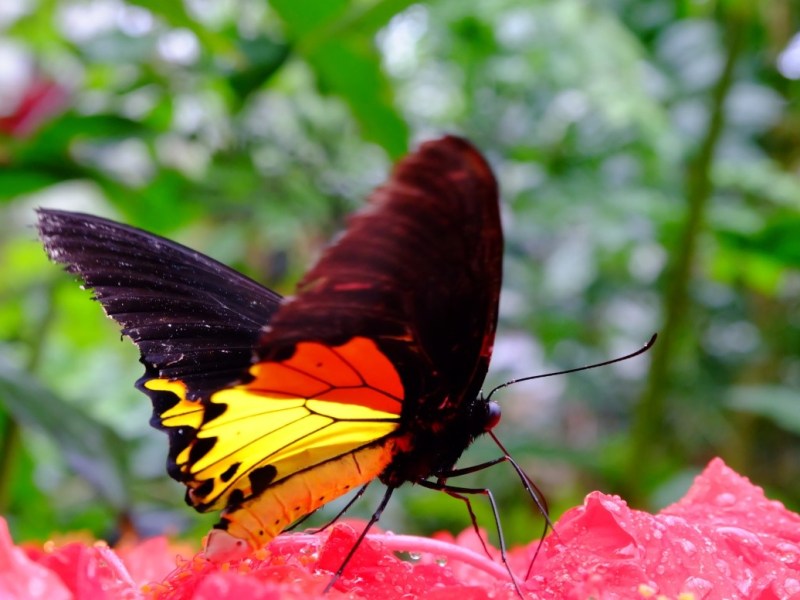
Here I explain how you can think about ecosystems and how to restore them. The case study of the Golden Birdwing Butterfly, which can be found in the urban forest patch that is Rimba Ilmu Botanic Garden located inside the University of Malaya. Merely reintroducing a species does not produce long lasting results. Butterfly farms…
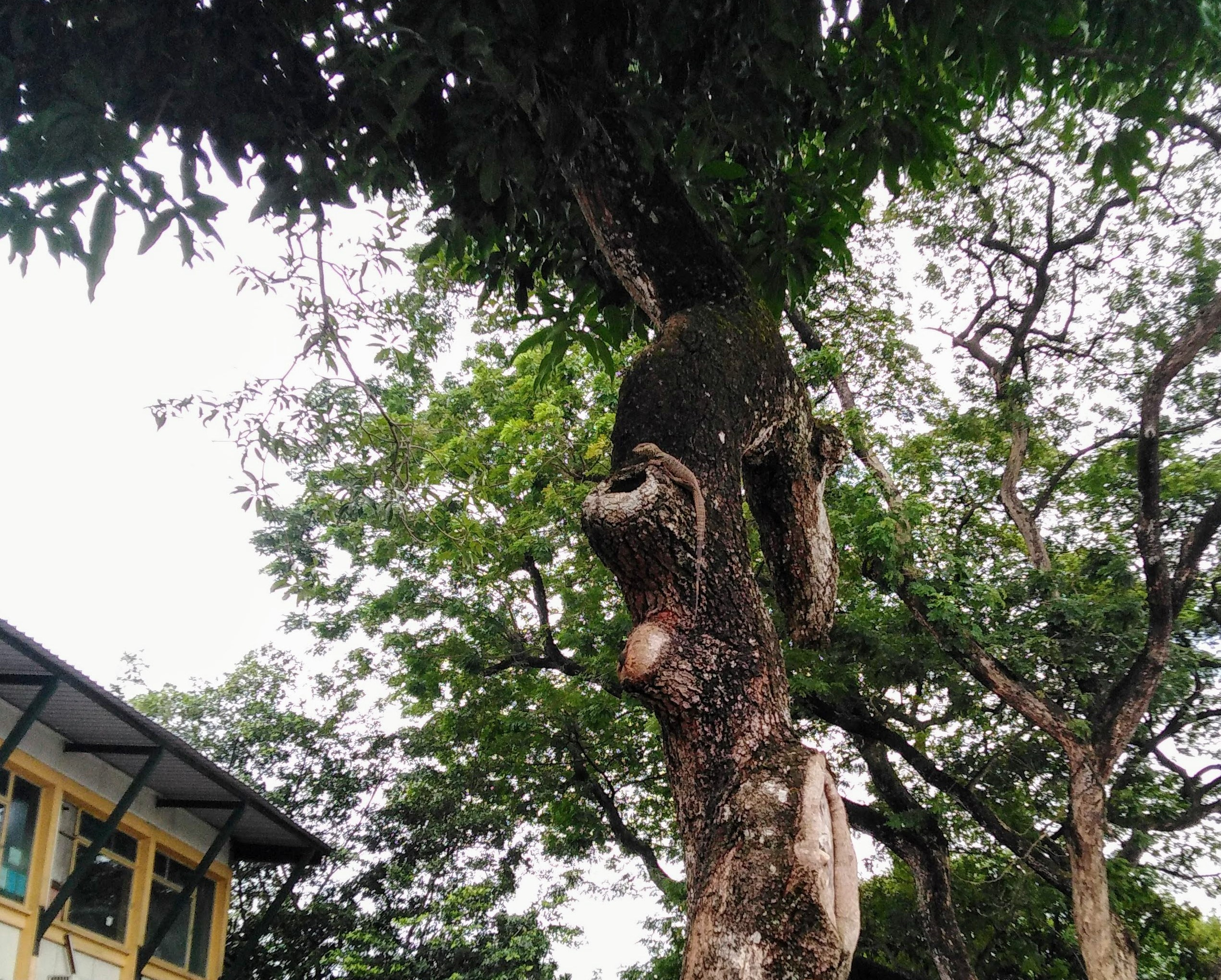
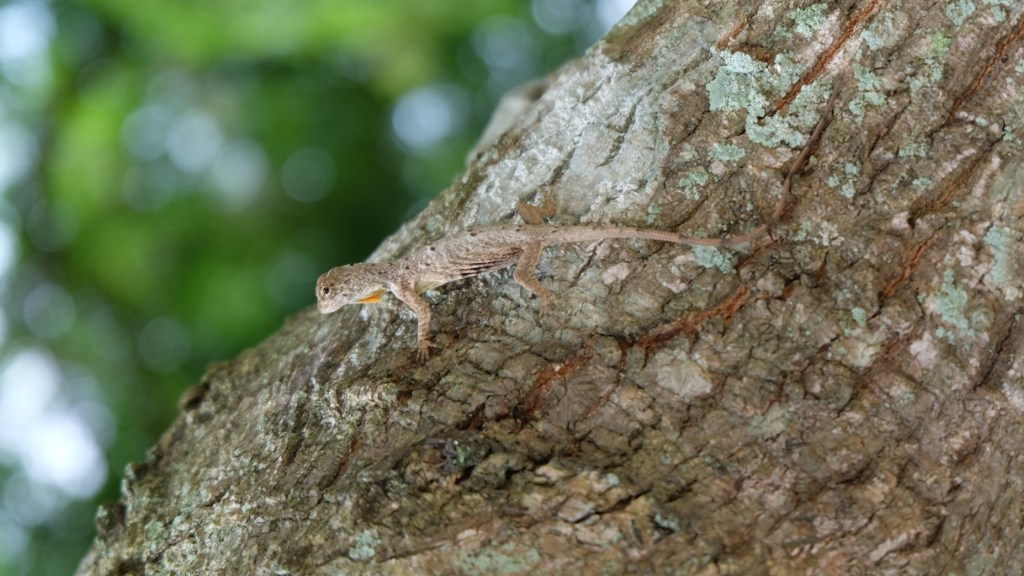
Draco gliding lizards are interesting tropical animals. They have ‘wings’ that fold out from their ribs and allow them to glide from tree to tree. They also have a small flap under their chins that acts as both a flag to communicate and like the tail of a plane to stabilise their flight. When I read about them as a kid, they always struck me as incredibly exotic animals that would be really hard to find. It turns out that they are quite well adapted to living in our cities.
There are 11 species of Draco in Peninsular Malaysia. In the natural world, they tend to be found in forest clearings where there is space between trees and not too much dense vegetation. These gaps between trees are usually created by tree fall events. In a mature rainforest, trees fall very often, either due to old age, disease, or unstable soil. Rainforest trees are often connected to other trees by vines or lianas, so when one tree goes down, it can pull down others and crush anything smaller in its path. This is a natural disturbance that creates gaps in the otherwise dense canopies of the rainforest. Young trees and saplings use this opportunity to fill the gap and start the cycle over again.
Liana have long, woody winding stems that climb up vertical structures like trees, thus extending from the ground to high canopies
Many species are known to take advantage of these forest gaps, including gliding lizards. The constant disturbance of tree falls creates more diverse patches of forest, where trees of different species and ages are always going through tree falls and regrowth, nothing staying permanent. This, in turn, creates space for all sorts of gap species that are adapted to these environments. The layperson may view change and disturbance as something undesirable or negative, but these are necessary processes to keep the ecosystem in balance.
In cities, humans are the main force of disturbance. We cut weeds and shrubs and maintain clear gaps between trees. While this may not be good for animals that prefer some shelter, the lack of dense vegetation seems to be a boon for gliding lizards. They can bask in the sunlight created by our sparsely planted trees and glide in between them with ease. Scientists call this pre-adaptation – an organism is predisposed to survive in certain habitat structures, allowing it to take advantage of new habitats with similar features.
A lot of our urban species have, by luck of the draw, found a place for themselves in our urban spaces. So perhaps we should ask the question of how we should use disturbance as a tool for biodiversity and healthier ecosystems, instead of maintaining landscapes just for the sake of maintaining aesthetic practices.
References:
Whitmore, T. C. (1984). Tropical rain forests of the Far East. Oxford University Press, Oxford.
Grismer, L. L. (2008). A revised and updated checklist of the lizards of Peninsular Malaysia. Zootaxa, 1860(1), 28-34.
Conservation Status: Least concern, Cultivated, Naturalised species
Description
The name of the plant means ‘king of ulam.’ Its scientific name is Cosmos caudatus. Therefore, it is also known as cosmos in English. This plant is indigenous to tropical America, and was introduced by the Spaniards into the Philippines, possibly because it was used by them as a vegetable at sea. Now it is pantropical, including Southeast Asia, where it is cultivated but also occurs in a naturalised state.
This erect, herbaceous plant can reach up to 2 metre high. It has grooved, purple-tinged stem with opposite leaf arrangement. The leaves are pinnatifid, and emit strong fragrance when crushed. The plant bears inflorescence at the tip of stem. The flowering stem is 5-30 cm long. The cluster of flowers consists of yellow tubular flowers and pink, spreading petal-like flowers. The inflorescence is slightly scented.
Culinary use
The leafy part of Ulam raja is commonly consumed with rice, budu, sambal belacan, tempoyak and cincalok. Its grassy taste is accentuated by a subtle peppery tinge. It is believed that by consuming this plant one can enhance his or her blood circulation as well as protect their bones.
Planting
It is good to plant it in pot or bed as the plant grows vigorously. Just sow the seeds at soil surface or fine texture mulch. It prefers sunny places and fertile, moist, well-drained soil. This annual is quite short-lived as it dies after flowering and seed production. However, the plant will self-sow and re-grow in the same plot.
Propagation: Seeds
The author is measuring the diameter of flower clusters. Photo by Shang Ming
Benefits to biodiversity
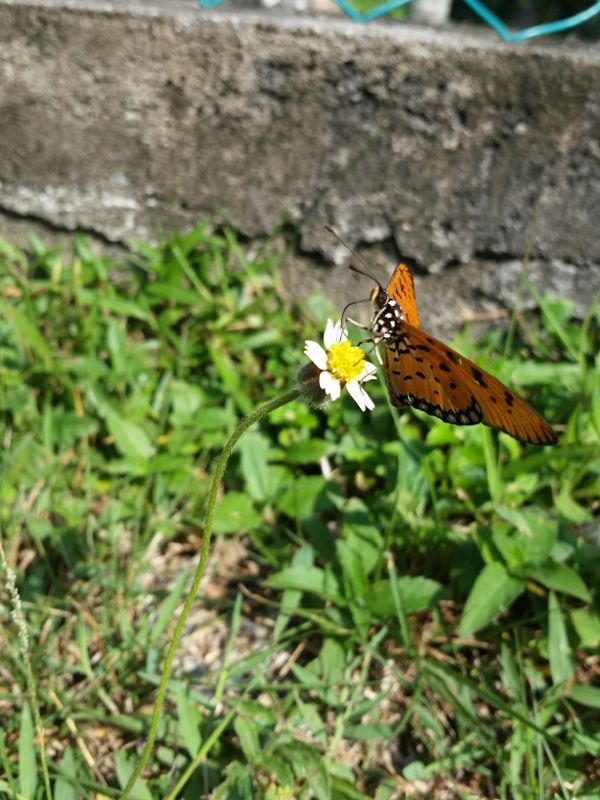
The flowers of Ulam raja attract a variety of day flying pollinators. These include several species of butterflies such as Tawny costers (Acraea terpsicore), Chocolate albatross (Appias lyncida), Julia heliconians (Dryas iulia) and Sulphurs (Eurema spp.) as well as long tongued bees such as stingless bees and honey bees. As with most composite flowers, it likely harbours thrips as well.
As a low shrub, it also helps to provide shelter for small animals and create ground cover to protect against soil erosion. It can be planted in mixed beds with native plants, but because of its rigorous growth it has a tendency to crowd out other native plants.
Flower cluster and umbrellalike leaves of pegaga. Photo by Goh Shang Ming
Common name: Asiatic pennywort, Indian pennywort
Malay name: Pegaga
Local name: Gotu kola (India)
Scientific name: Centella asiatica (L.) Urb.
Distribution: East, South, and Southeast Asia, as well as Australia
Conservation status: Least concern, Cultivated, Naturalised
Description
Pegaga is originated from the Asian and East African regions such as India, Sri Lanka and Madagascar. It spreads out to many countries such as Malaysia, Pakistan, China, Japan, West Indies, South America and Australia. It is a perennial creeping herb commonly found in moist places. The plant spreads quickly by the roots, producing long stolons up to 250cm in length. These root are at the nodes and form large carpets of growth. The green leaves are of kidney-shape or disc-like, with a deep basal sinus. The margin of leaves are rounded-tooth i.e. crenate or smooth, sometimes with scattered hairs on upper part of leafstalk. Flowers are inconspicuous and formed in short clusters.
Precaution
The plant is toxic in large overdose or as a result of long-term application. Pegaga is POSSIBLY SAFE for most people when taken by mouth for up to 8 weeks. It may cause nausea and stomach pain. Rarely, Pegaga may also cause liver problems if taken by mouth.
Culinary uses
It is widely used in salads and cooked as a vegetable. Besides serving the whole bunch raw with sambal, the stem and leaves can also be made into a refreshing juice. Traditionally it is believed to help ease symptoms of hypertension and migraine. Please click on the following link to get recipe of Pegaga salad with carrot.
Planting
Pegaga survives well on sandy loam to sandy clay. Most species survive well in open areas while others need some shade. Propagation can be done through either seeds or cuttings. If circumstances are favourable, the first harvest can be obtained 2 – 3 months after planting. Fresh leaves harvested as a vegetable are tied together in small bundles and need to be consumed quickly, as they wilt rapidly.
Biodiversity Benefits
Pegaga form dense mats of short plants that are a good low maintenance ground cover. Due to its natural habitat Pegaga is resistant to flooding, therefore it can also be used as a pond or an aquarium plant. This provides shelter for aquatic or amphibious animals.










 Urban Biodiversity Initiative (UBI)