
Categories
Category: Uncategorized

Common name: Pinto Peanut, Yellow Peanut Plant
Malay name: Kacang hias, Kacang Pintoi
Scientific name: Arachis pintoi
Conservation status: Cultivated, Naturalised, Introduced (South America)
Description
A low, creeping plant that forms a dense, ground-hugging mat. Leaves are divided into egg-shaped leaflets. It bears yellow, pea-like flowers.
Habit: Perennial herbaceous plant
Cultivation: It is planted by seeds or cuttings
Ecological function: This plant can be used as a groundcover. It fixes nitrogen in soil. Its flowers attract pollinators.
Pollinator: Insects
Soil: Sand, loam, clay. It tolerates poor soils and high levels of aluminium and manganese.
Moisture: Moist, well-drained soils
Shade: No shade, semi-shade, full shade
Use: Ornamental
Categories
Soil Organisms
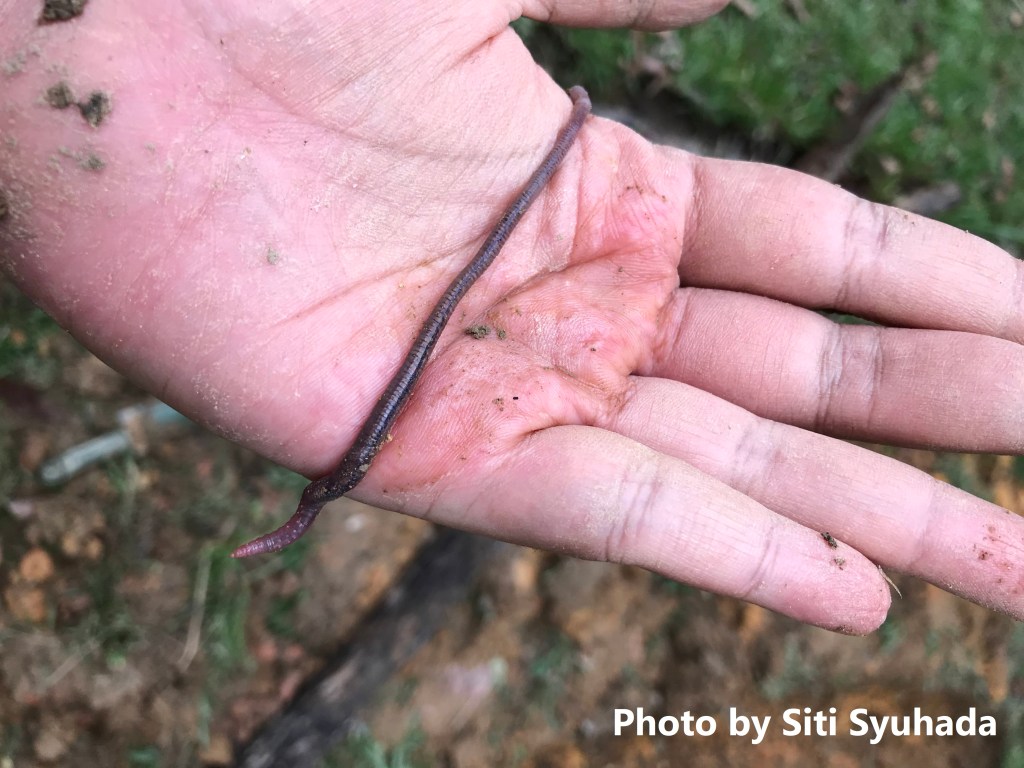
Earthworm, Cacing tanah
They has no legs. Their bodies are long, slender, soft and segmented. Although they cannot see or hear, they are sensitive to light and vibration.
Local name: Cacing tanah
Ecological function: Ecosystem engineer, detritivore, prey-predator relationship
Level in food chain: Primary and secondary consumer
Feeding behaviour: Omnivore, detritivore, geophagous (soil-eating)
Food item: Soil, decaying and living plant matter, fungi, bacteria and other microscopic animals
Microhabitat: Soil, litter
Importance: Improve soil structure and fertility by burrowing and casting

Ant, Semut
They have a thin waist and are usually wingless. They build nests in soil. They live in colonies and are divided into queens and workers.
Local name: Semut
Ecological function: Detritivore, predator, scavenger
Level in food chain: Primary and secondary consumer
Feeding behaviour: Omnivore, detritivore
Food item: Seeds, fruits, plant saps, fungi, milk of aphids and other true bugs, insect eggs and larvae, small living or dead invertebrates
Microhabitat: Almost everywhere
Importance: Improve soil structure and fertility by feeding and nesting
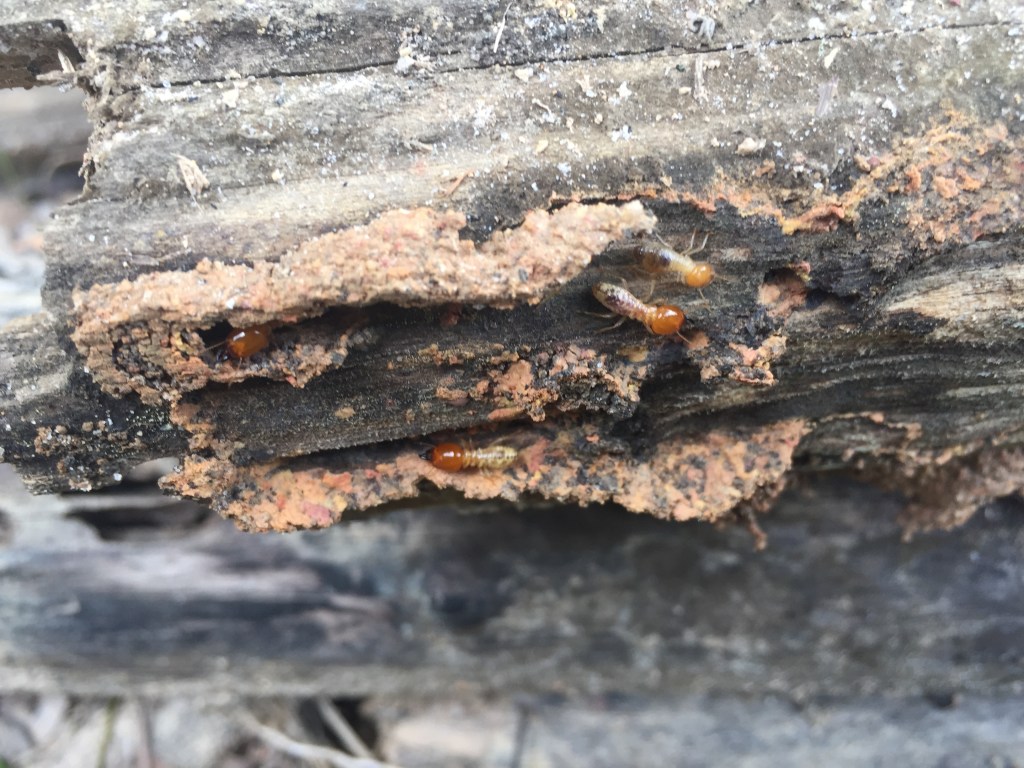
Termite, Anai-anai
They have thick waists, short legs and straight antennae. The workers and solders are wingless, soft-bodied and cream-white. The swarmers (reproductive adults) have two pairs of long wings and are covered by hard exoskeletons that are brown in colour.
Local name: Anai-anai
Ecological function: Detritivore, prey-predator relationship
Level in food chain: Primary consumer
Feeding behaviour: Herbivore, detritivore
Food item: Wood, grass, leaves, humus, manure of plant-eating animals, and materials of vegetative origin such as paper, cardboard and cotton
Microhabitat: Decaying wood, soil, man-made environments such as buildings
Importance: Promote nutrient cycling by breaking down woody materials
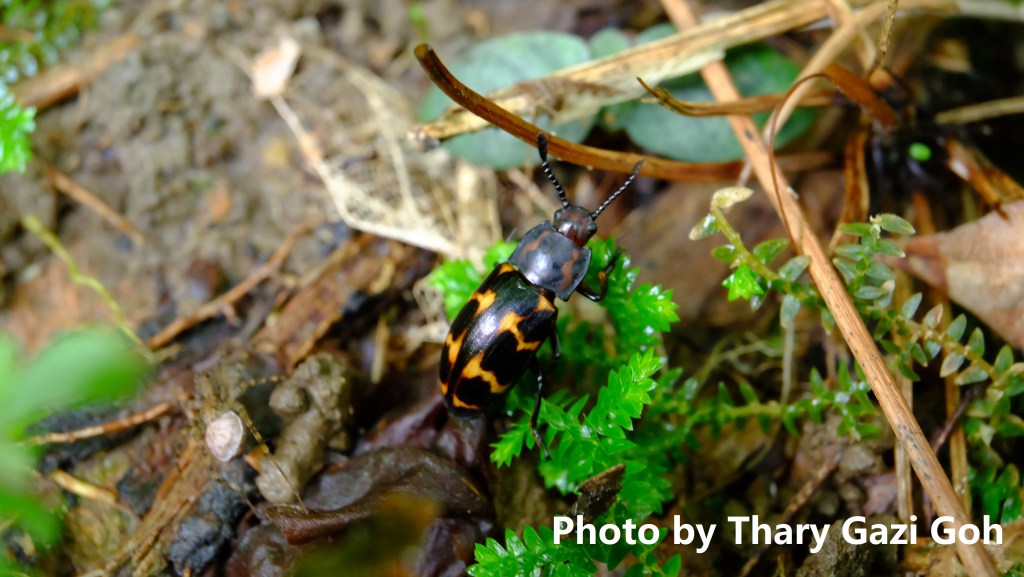
Beetle, Kumbang
They have two sets of wing. Underneath their thick, hard forewings are the folded, fragile wings for flying.
Local name: Kumbang
Ecological function: Pollinator, decomposer, scavenger, predator, prey-predator relationship
Level in food chain: Primary and secondary consumer
Feeding behaviour: Omnivore, detritivore, coprophagous (faeces-eating)
Food item: Living plant materials, fungi, eggs, faeces, other small animals
Microhabitat: Almost everywhere
Importance: Improve soil structure and fertility by feeding and foraging
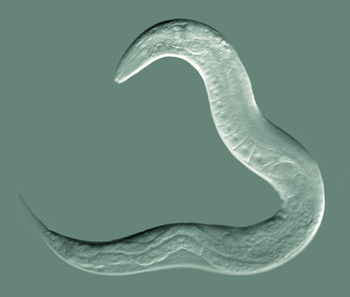
Nematode, Cacing gelang
They are long, slender, tapered at both ends. Their bodies are smooth and unsegmented.
Local name: Cacing gelang
Ecological function: Decomposer, parasite, predator, prey-predator relationship
Level in food chain: Decomposer; primary and secondary consumer
Feeding behaviour: Herbivore, microbivore, detritivore, omnivore or carnivore
Food item: Organic debris, plant roots, bacteria, algae, fungi, other nematodes
Microhabitat: Animals and plants, soil, freshwater and marine
Importance: Promote nutrient cycling by decomposition and feeding
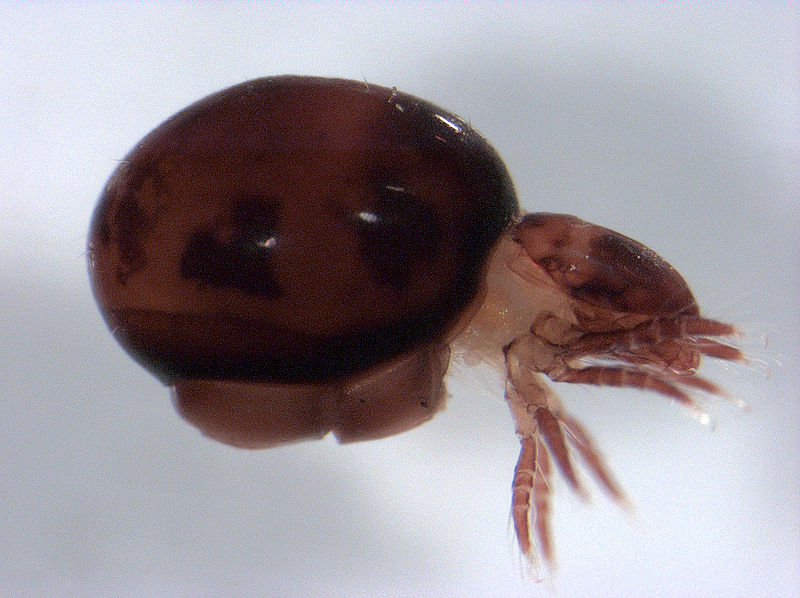
Mite, Hama
They have four pairs of legs. They may appear as tiny white dots moving across soil surface.
Local name: Hama
Ecological function: Parasite, predator, detritivore
Level in food chain: Primary and secondary consumer
Feeding behaviour: Herbivore, detritivore, microbivore, carnivore
Food item: Decaying organic matter, bacteria, algae, fungi, nematodes, other mites, various stages of insects
Microhabitat: Animals and plants, soil, freshwater and marine
Importance: Promote nutrient cycling by decomposition and feeding

Springtail
Also known as Collembola, they are wingless and soft-bodied soil dwellers. When disturbed, they extend their forked tails to spring into the air. They have a tube-like structure under their abdomen to take up water.
Local name: –
Ecological function: Detritivore, predator
Level in food chain: Primary and secondary consumer
Feeding behaviour: Detritivore, microbivore, carnivore
Food item: Bacteria, fungi, lichens, algae, decaying vegetation. Some feed on dead animals, other springtails and small invertebrates, plant roots and young plants.
Microhabitat: Organic debris and places of high moisture; leaf litter, soil, sand, under stones or tree bark, in tree canopies, caves and nests of ant and termite
Importance: Promote nutrient cycling by feeding

Protozoa
They are microscopic and one-celled. Most of them have hair-like structures or arm-like outgrowths for feeding and movement.
Local name: –
Ecological function: Mutualist, parasite, predator, prey-predator relationship
Level in food chain: Primary, secondary and tertiary consumer
Feeding behaviour: Microbivore, herbivore, omnivore or carnivore
Food item: Algae, bacteria, fungi, other protozoa and small invertebrates
Microhabitat: Marine, freshwater and soil
Importance: Promote nutrient cycling by mineralising nutrients and controling bacteria population

Centipede, Lipan
Their bodies are long, flattened and segmented. They have one pair of legs per segment. They use their modified front legs to inject venom into their prey.
Local name: Lipan
Ecological function: Predator, scavenger
Level in food chain: Secondary consumer
Feeding behaviour: Carnivore
Food item: Insects and other small animals; dead or decaying plants or animals
Microhabitat: Usually found in rotting materials
Importance: Improve soil structure by tunneling
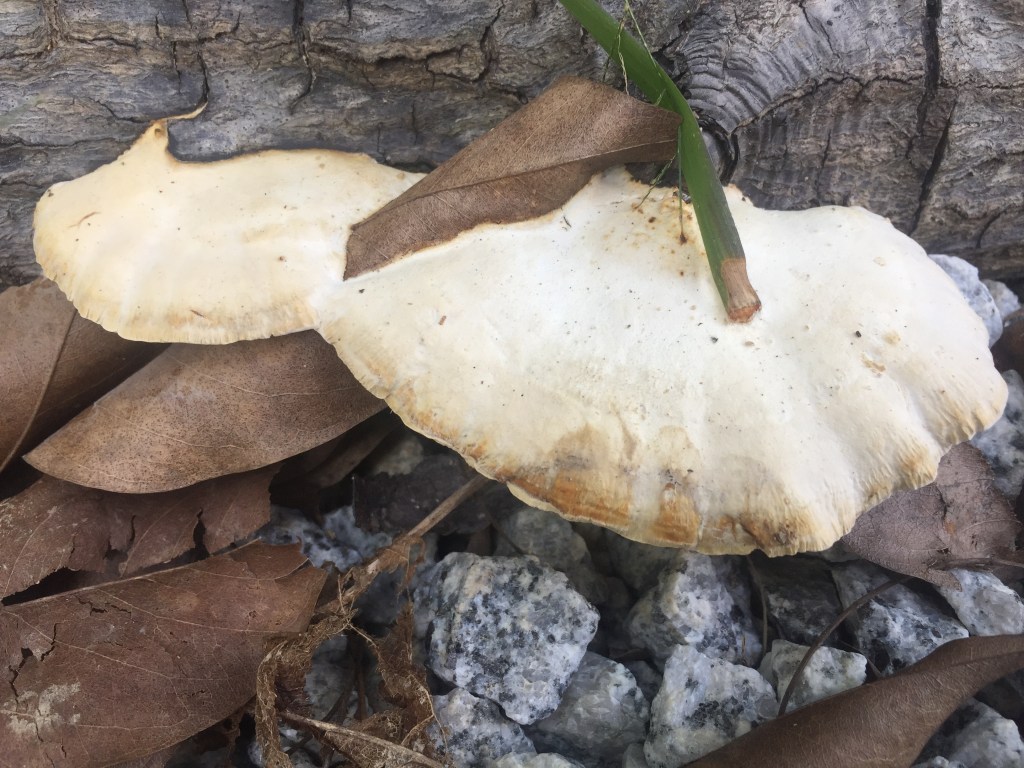
Fungi, Kulat
They do not move. Their bodies are made up of threadlike structures. They release digestive enzymes to break down their food and absorb nutrients.
Local name: Kulat
Ecological function: Decomposer, mutualist, parasite
Level in food chain: Decomposer; primary and secondary consumer
Feeding behaviour: Decomposer
Food item: Dead or decaying materials such as wood, leaf litter, paper, textile and leather. Mutualistic fungi work with algae or plants and get nutrients in return. Parasitic fungi invade living plants and animals and obtain nourishment from their hosts.
Microhabitat: Soil, litter, freshwater or marine
Importance: Promote nutrient cycling by decomposition
Categories
How to germinate fruit trees

Growing fruit trees from seeds is an adventurous and fulfilling experience. However, it requires knowledge, skills and hard work. Not all seeds successfully grow into trees. Seed germination succeeds only when there is a correct amount of light, temperature, moisture and aeration. Extra care should be given so that the plants can go through one of the critical stages of their life.
Seed selection
Choose seeds of plants that are adapted to tropical climates.
It is difficult for fruits like apples and strawberries to survive in the lowlands of Malaysia as they need cold weather to grow and fruit normally. You can start with common plants such as papaya and citrus. Or, you can try growing some exclusive, local candidates such as starfruit, cempedak and mangosteen.
Preparation
Before sowing the seeds, prepare a shady, sheltered environment. Get a seed tray or seed bed ready.
The depth of the seed tray is preferably about 10 to 12 cm (minimum 6 cm; maximum 15 cm). Make sure the seed bed is free from weeds and has good drainage.
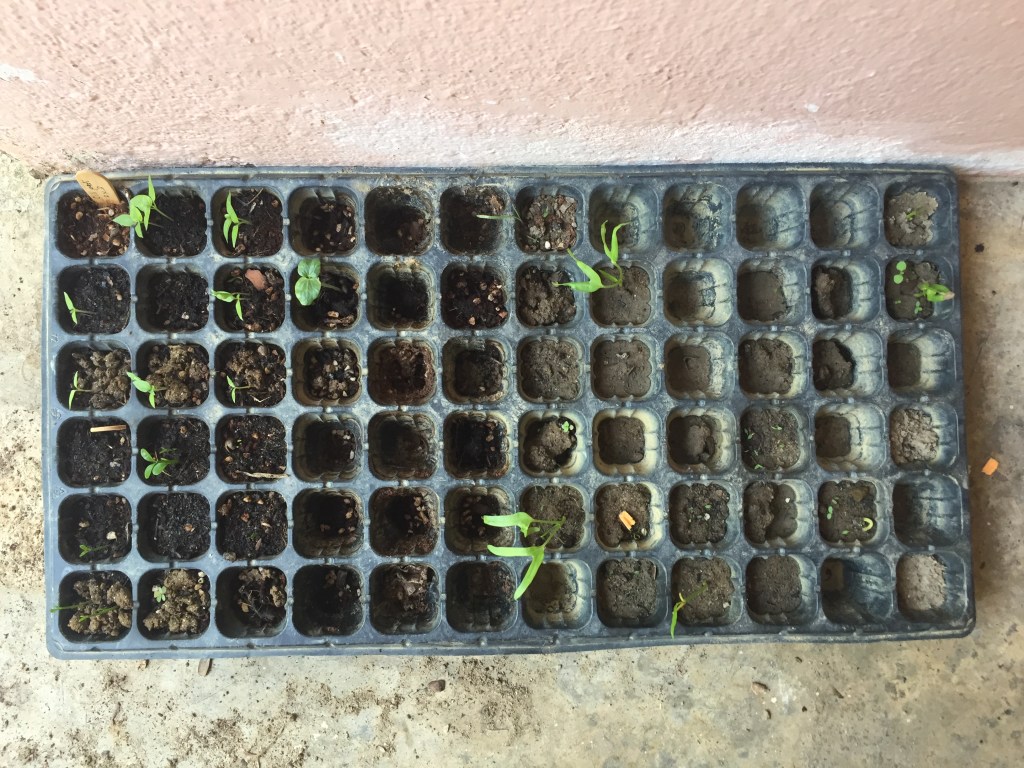
Mix up a germination medium for the plants.
A good germination medium is well-aerated, moist, loose and yet firm enough to support the young seedlings. Generally, use course, washed sand (to encourage aeration and drainage) and organic matter (for moisture, soil texture and nutrients). Common materials such as weathered sawdust, coconut fibre, loamy forest top-soil and compost can also be used. Avoid adding weed seeds or pests into the germination medium. Remove stones and gravels if there are any.
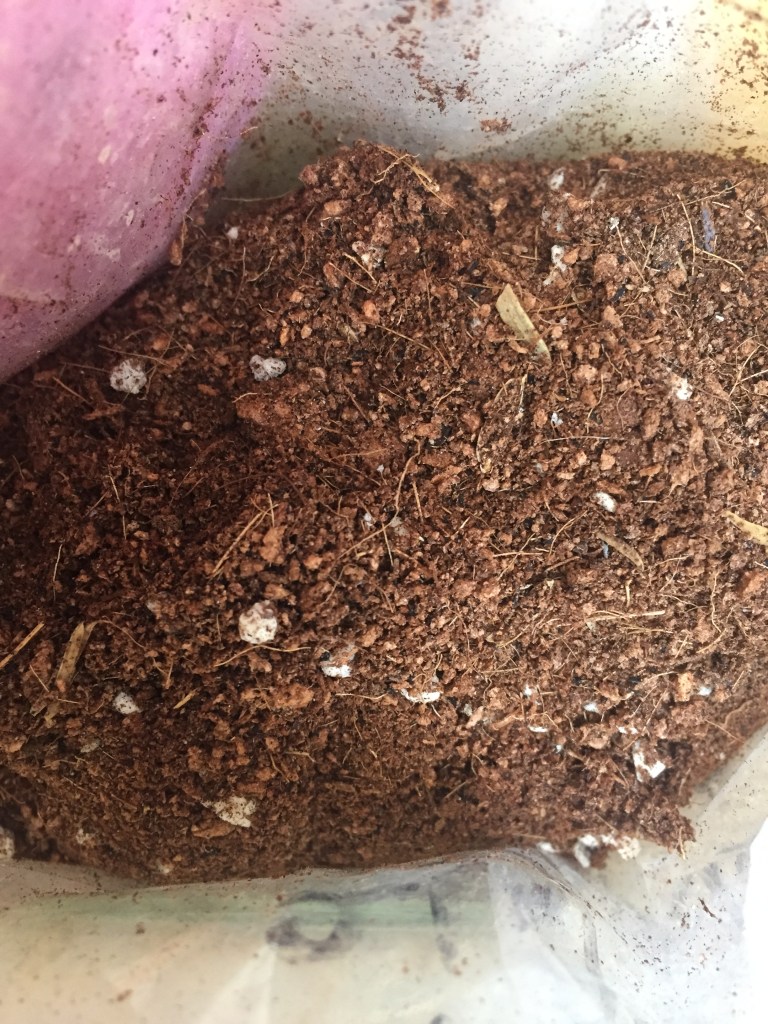
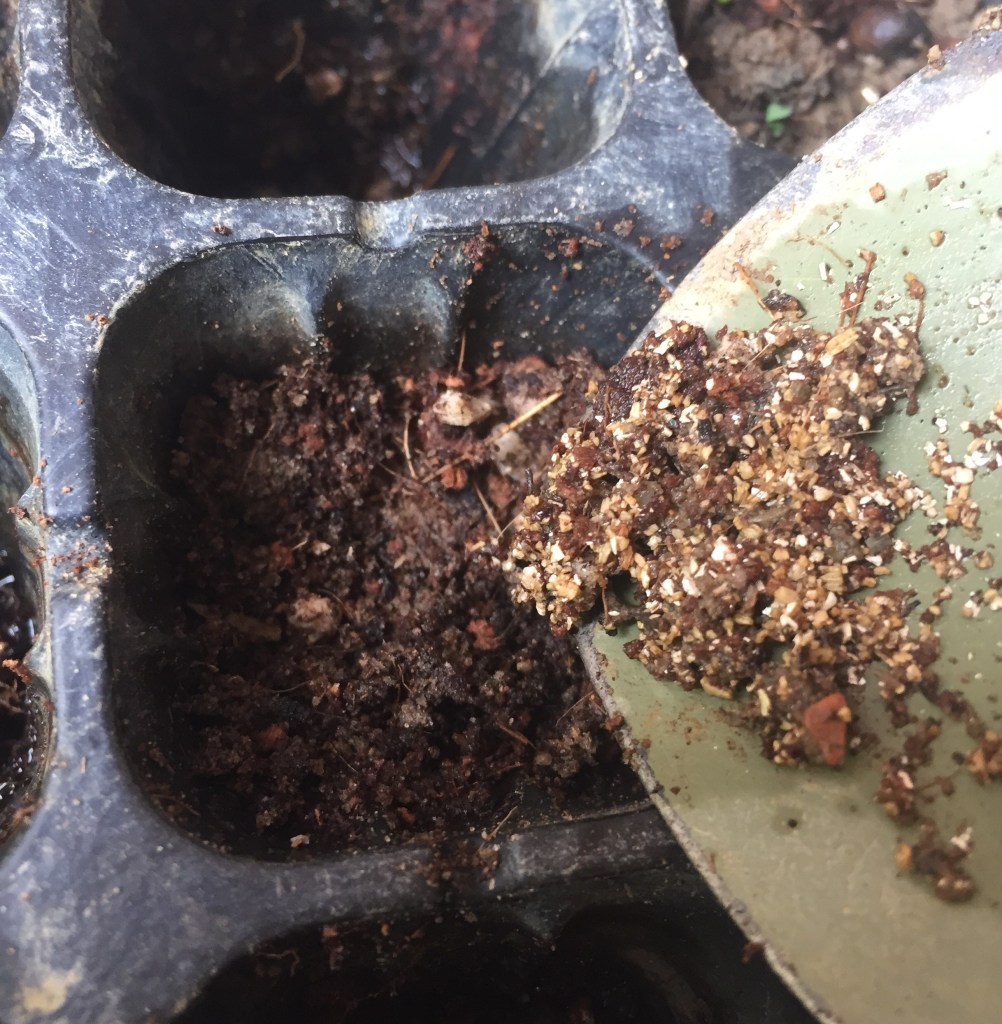
Put the germination medium into the seed tray. Pat it down gently so that the surface is smooth and even. The thickness of germination medium is 1-2 cm, depending on size of the seeds. Smaller seeds need thinner medium. Leave enough space above the medium in seed trays to cover the seeds and permit watering. If seed bed is used, add 5-10 cm of germination medium on top of it. Gently rake the medium to level it.

Sowing
For smaller seeds, scatter them evenly over the surface of germination medium. For seeds that are large enough to pick up, sow the seeds individually and space them out at 2-3 times their diameter.

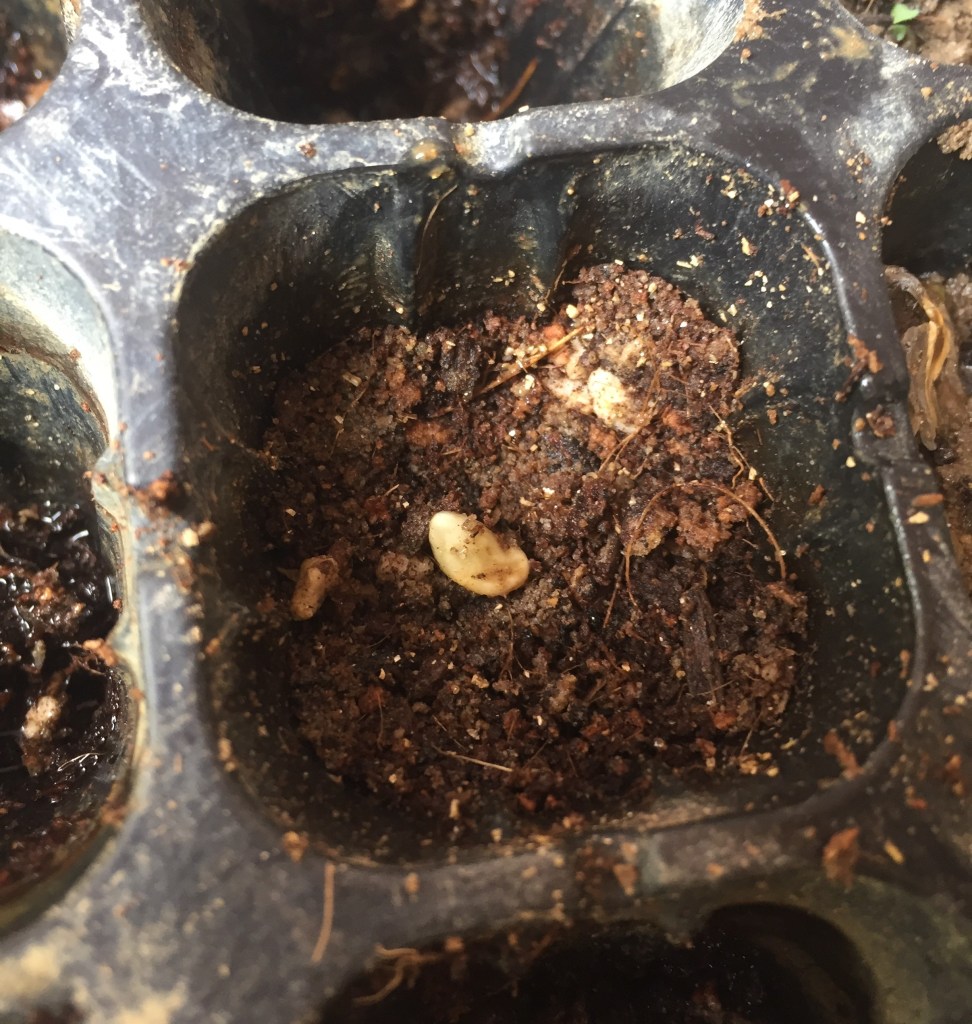
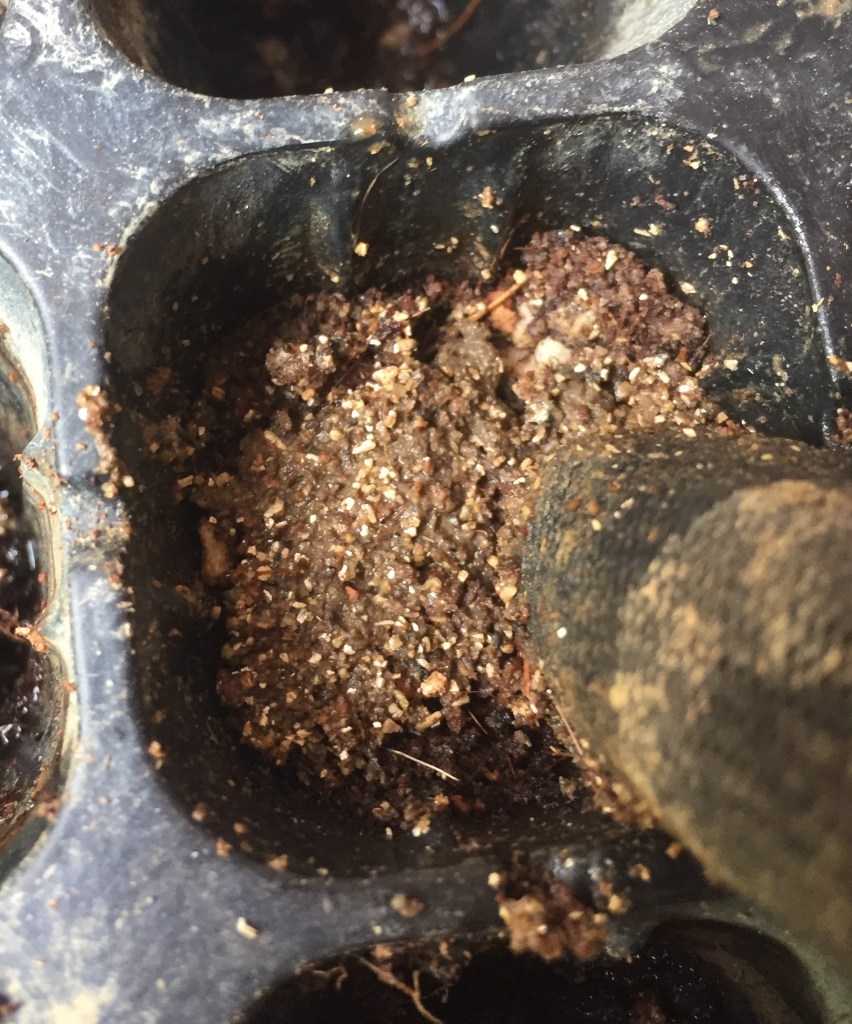
Cover the seeds with more germination medium or a mixture of coarse sand and fine gravel (2-4mm diameter).
Do not cover seeds with fine soil particles or lumps of earth as the former impedes drainage while the later restricts emergence of young shoots. The thickness of covering depends on seed size:
Seeds less than 2 mm diameter: just enough to cover them;
Seeds 2–5 mm across: cover with about 4 mm;
Seeds larger than 5 mm: use about the same depth as the seed diameter.
There are some seeds that require light to germinate. In such cases, the covering should be thin enough to allow light penetration.

Watering
If the germination medium is moist enough and the seeds contain enough water for germination, do not water the seeds immediately. Sprinkle the seeds with fine droplets if watering is needed.
Cover the seed tray with transparent plastic sheet to slow down drying. However, check the seeds regularly and remove the sheet as soon as the shoots emerge.

Signs of good germination
The seeds germinate well if the seedlings pop up. Emerging seedlings often have their shoots bent over like a hook. The shoots then straighten out in the light.

Seed leaves either remain below ground or emerge and turn green. The first foliage leaves of seedlings usually look different from the leaves produced later. Therefore, be careful not to remove them when weeding.
Categories
Rare fruit trees
What are rare fruits?
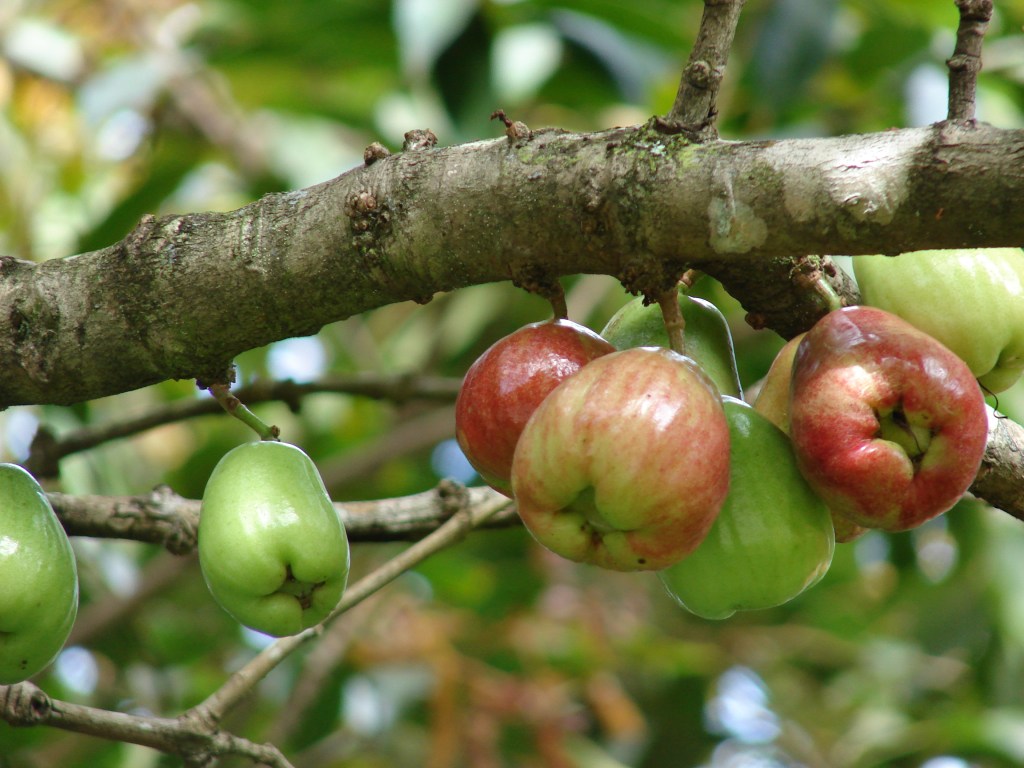
Known as buah-buahan nadir in Malay, rare fruits are fruits that are not commercially cultivated. They are difficult to find nowadays. Many of them exist naturally in wild environments. Some of these rare fruits trees are mixed with other fruit trees in orchards. Sometimes, people plant these trees as shade trees around their houses.
Why do we need to plant rare fruit trees?
Rare fruits are important food sources for wild animals. They not only feed the animals in the forest, they also provide food for animals that live in close proximity to humans. Most of the rare fruit trees are native. Therefore, they adapt to local climate and environment. Many of them are used as canopy trees to create shady environment for shade-loving plants. Certain fruit trees such as Petai (Parkia speciosa) and Belinjau (Gnetum gnemon) improve nutrient availability in soil. They work with underground microbes to fix nitrogen. This benefits their neighbouring plants as the plants can use the nutrients in soil. Some rare fruits trees are close relatives of the common fruit trees. They are used as rootstock (lower portion of grafted plant) for disease resistance and fast maturity. These rare fruit trees are genetic reservoir for crop improvement.

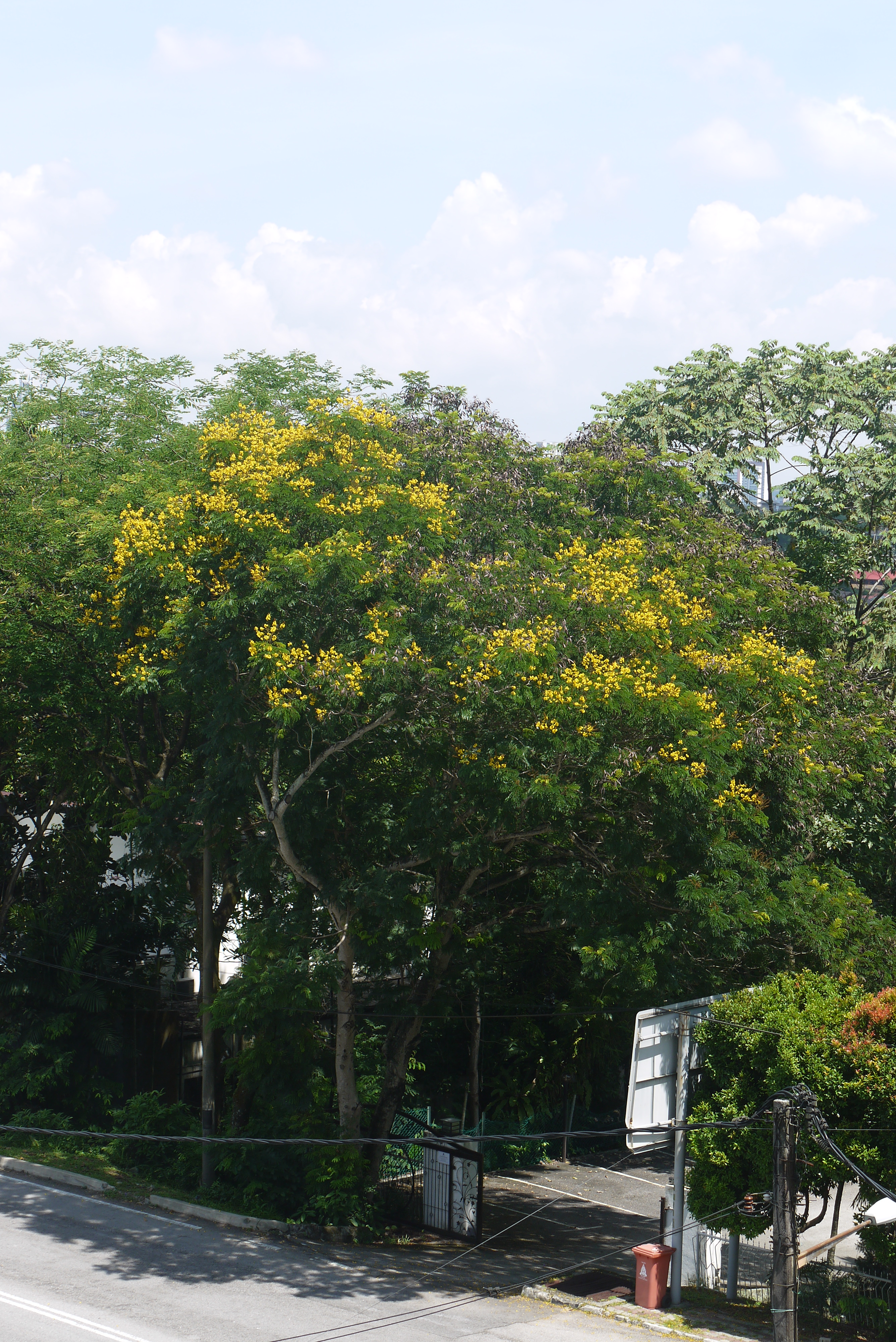
Common name: Yellow Flame, Yellow Flamboyant, Copper Pod
Malay name: Batai Laut
Scientific name: Peltophorum pterocarpum
Conservation Status: Cultivated, Native to Malaysia
Description
A medium-sized tree that grows up to 35 m tall. The tree sheds leaves seasonally. Tree crown is umbrella-shaped. Leaves are doubly divided. Flowers are fragrant particularly at night, bright yellow and arranged in clusters on upright stalks. The petals of flowers are crinkled and have reddish brown marks in the center. Bear flat, winged seedpods. The seedpods are red initially and turn black when ripe.
Habit: Perennial tree
Cultivation: It is planted by seeds, cuttings or grafting
Ecological function: The flowers attract pollinators. The tree itself provides shade. It is nitrogen-fixing i.e. able to convert atmospheric nitrogen into more usable form in soil.
Pollinator: Bees, insects
Soil: Sand, loam, clay. It can tolerate heavy clay and saline soils
Moisture: Moist, well-drained soils
Shade: No shade
Use: Ornamental, timber

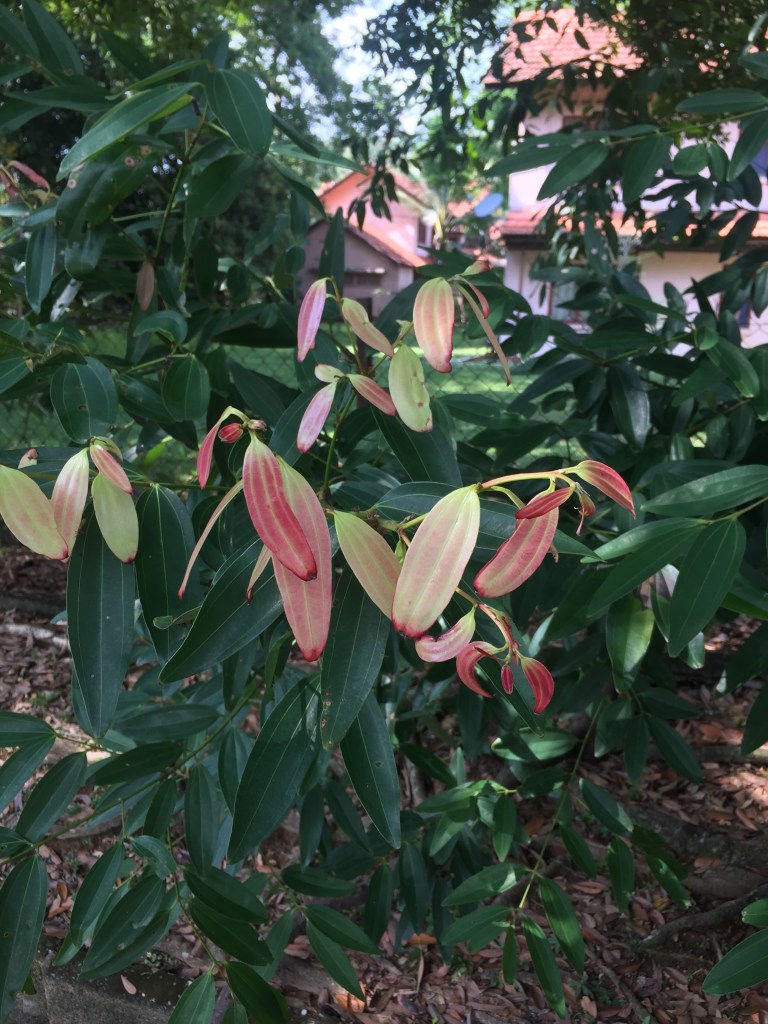
Common name: Wild Cinnamon
Malay name: Kayu Manis Hutan
Scientific name: Cinnamomum iners
Conservation status: Least concern, Cultivated, Native to Malaysia
Description
A small, evergreen tree of 10-15 m tall. It has a bushy, round tree crown. The bark of tree has a light, cinnamon-like fragrance. Leaves are pinkish when young but turn dark green eventually. Leaf shape is elliptic to oblong. Crushed leaves emit a cinnamon-like fragrance. Flowers are cream white, pungent and clustered. Bear round, fleshy berries that are initially dark green and turn purplish black at maturity.
Habit: Perennial tree
Cultivation: It is planted by seeds or cuttings
Ecological function: The fruits are eaten by squirrels, bats and birds. It is a host plant (food plant of caterpillar) for Common Mime (Chilasa clytia clytia) and Common Bluebottle (Graphium sarpedon luctatius).
Pollinator: Hoverflies, small beetles and other small insects
Soil: Fertile loamy soils
Moisture: Well-drained soils
Shade: No shade
Use: Spice (leaf, wood), timber
Categories
5 Easy-to-grow Garden Plants
Home gardening brings a couple of benefits to gardener as well as to environment. Here are some hardy, useful garden plants that require little maintenance:
- Kangkung
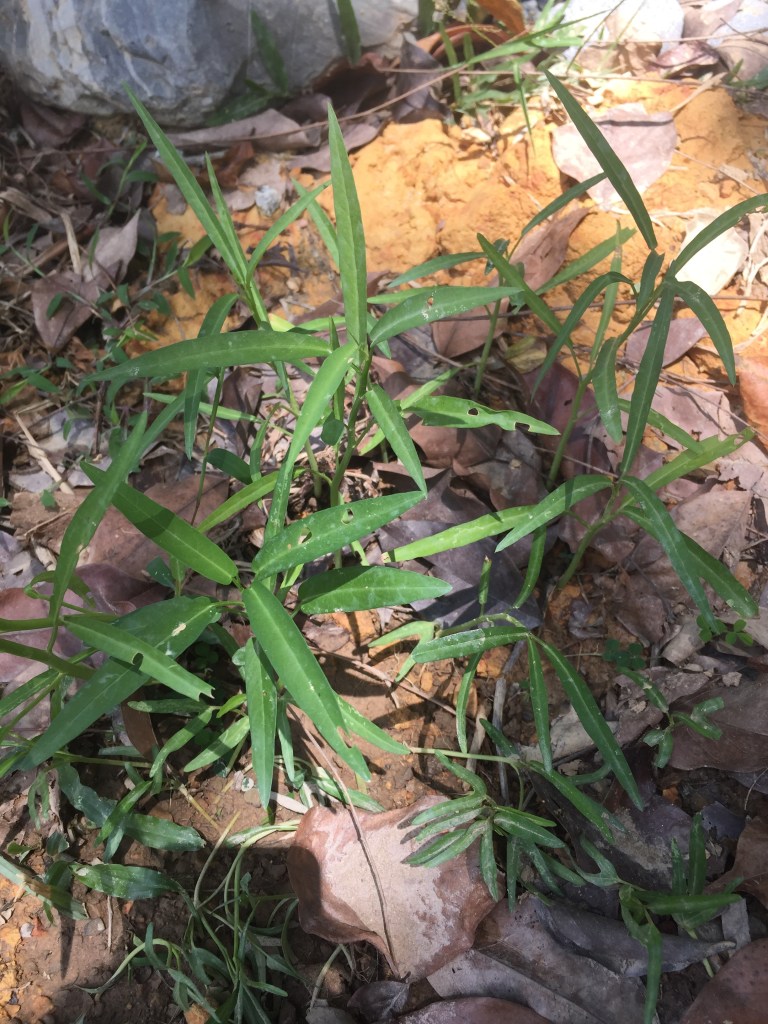
Common name: Water spinach, Swamp morning glory
Malay name: Kangkung
Scientific name: Ipomoea aquatica
Distribution: South and Southeast Asia, tropical Africa, South and Central America and Oceania
Conservation status: Least concern, Cultivated, Native to Malaysia
Description
A perennial creeping plant growing up to 3 m long. Its stems are hollow and contain milky sap. Leaves are lanced-shaped, with 3 – 14 cm-long leafstalks. It produces funnel-shaped, whitish flowers. Fruits are round to egg-shaped, turn woody and brown when mature.
Precaution
The plants accumulate heavy metals when planted in polluted water.
Uses
Kangkung is a popular vegetable in Asia. Its leaves and young shoots are often cooked or eaten raw.
Planting
Kangkung survives in a wide range of soils, including heavy clays. It can grow in water. The plant needs a sunny position. It can be propagated by seeds or stem cuttings. Stems produce roots at nodes that come in contact with water or moist soil. It takes 2 to 3 weeks to develop lateral branches after sowing.
Biodiversity Benefits
The plant is pollinated by bees and butterflies. The plants are known to remove excess phosphorus from water bodies.
2. Ubi kayu

Common name: Tapioca, Cassava
Malay name: Ubi kayu
Scientific name: Manihot esculenta
Distribution: Tropics and subtropics worldwide
Status: Cultivated, Naturalised, Introduced (South America)
Description
A semi-woody shrub that grows up to 2 m tall. It has tuberous roots as storage organs. Leaves are palmately lobed and alternately arranged. Leafstalks are red and up to 60 cm long. Flowers are clustered and less attractive. It produces round, ridged fruits.
Precaution
The leaves of this plant contain a harmful chemical known as linamarin. This chemical can release the toxic hydrocyanic acid in the presence of the enzyme linase. Linamarin can be destroyed by heat.
Uses
Its young leaves and tubers are cooked as vegetables.
Planting
The plant can grow in either full shade, partial shade or no shade. Generally, a sand or sandy loam is preferred for growing this plant. It grows well in moist, well-drained soil. It can be propagated by seeds or cuttings. The plant can be harvested throughout the year. The roots take about six months to mature.
Biodiversity Benefits
The plant is pollinated by insects. A mulch of leaves and stems of this plant repels root knot nematodes.
3. Serai
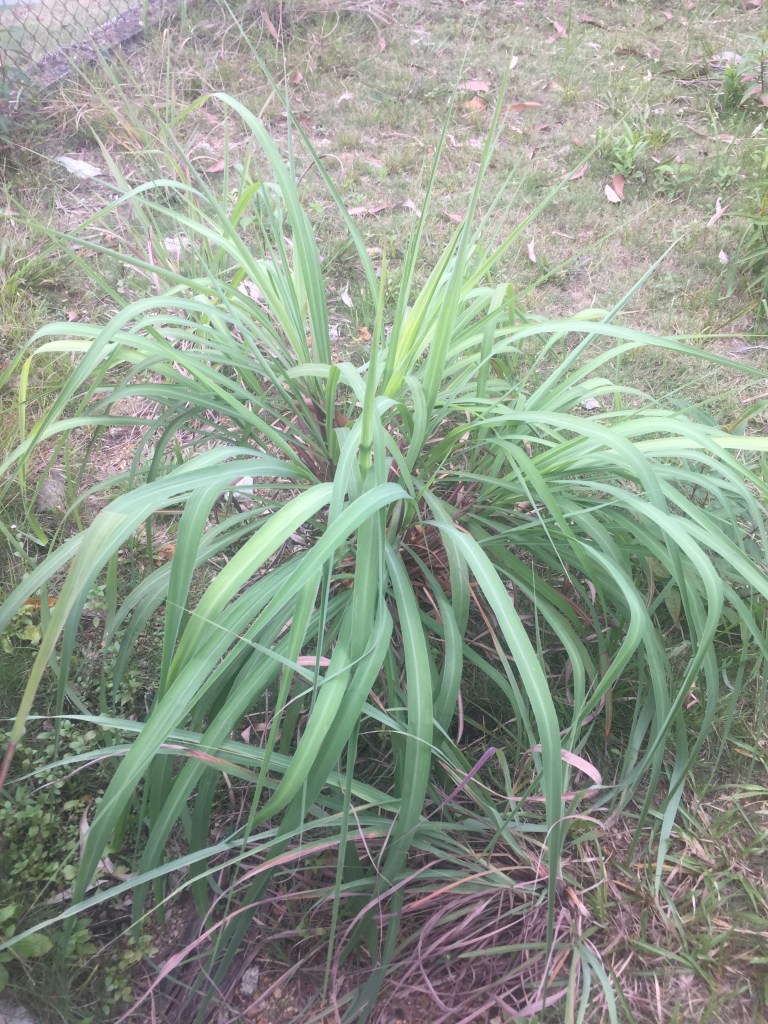
Common name: Lemongrass, Oil Grass, Fever Grass
Malay name: Serai
Scientific name: Cymbopogon citratus
Distribution: Africa, South and Central America, the West Indies, China and Southeast Asia
Conservation status: Cultivated, Native to Malaysia
Description
A clump-forming grass that grows up to 1-2 m tall when in flower. Leaf blades are strap-shaped and light green in colour. Crushed leaves emit a lemony scent. Small, brownish florets are hold together on drooping flowering clusters.
Precaution
–
Uses
Stalks are crushed and used as flavouring in a variety of Southeast Asian dishes such as curries and Tom Yam Soup. Leaves can be boiled to make tea. Essential oil extracted from the leaf stalks is used in cosmetics, pharmaceuticals and perfumery.
Planting
The plant needs a full sun position. It can grow in sand, loam or clay. It grows well in well-drained soils. The plant is propagated by seeds, divisions or stem cuttings.
Biodiversity Benefits
The plant can be used as groundcover.
4. Pandan
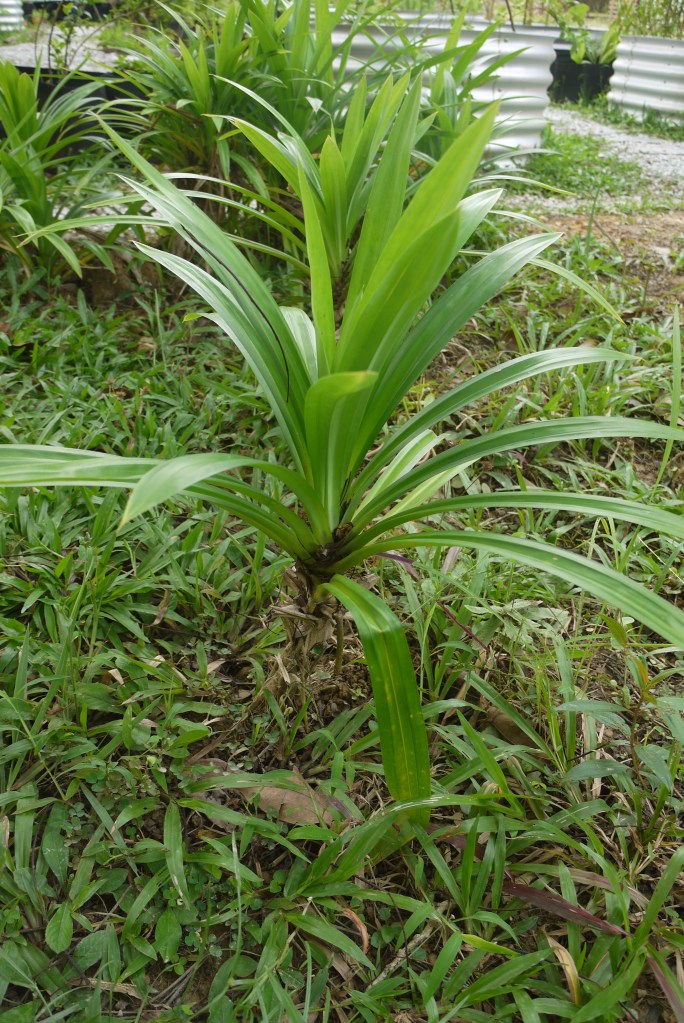
Common name: Screwpine
Malay name: Pandan
Scientific name: Pandanus amaryllifolius
Distribution: Sri Lanka, Thailand, Vietnam, Malaysia, Indonesia (including Irian Jaya) and the Philippines
Conservation status: Cultivated, Native to Malaysia
Description
A shrub or small tree with long, linear, slightly pleated leaves. Leaves are spirally arranged.
Precaution
–
Uses
Young leaves of this plant are cooked and eaten. They are also used as food flavouring, colouring and wrapping material. Chopped leaves are mixed with flowers to make potpourris. People weave the leaves into baskets and sleeping mats. The essential oil extracted from the leaves has insect-repellent activity.
Planting
Pandan is planted by suckers i.e. side shoots that emerge from the base or lateral bud of a plant. The plant grows well in fertile, well-drained loamy soils. It needs a full sun or partially sheltered environment. Harvesting may start about 6 months after planting and may continue for several years.
Biodiversity Benefits
Pandan is food plant for caterpillars.
5. Kadok
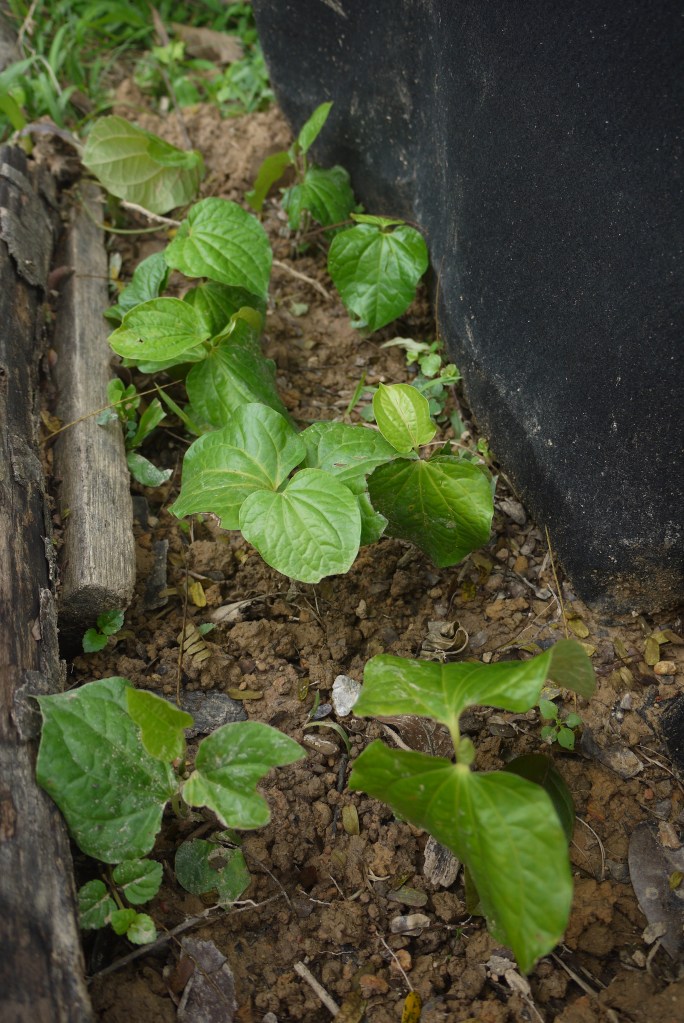
Common name: Wild Pepper, Wild Betel
Malay name: Kadok
Scientific name: Piper sarmentosum
Distribution: Andaman Islands, southern China, Southeast Asia (from the Philippines southward to the Moluccas.)
Conservation status: Cultivated, Native to Malaysia
Description
A creeping plant that form mounds of up to 60 cm in height. Stems are erect and slightly hairy. Leaves are glossy, dark green, heart-shaped and alternately arranged. Crushed leaves emit a peppery scent. Flowers are white, without petal, borne on cylindrical flowering shoots. It produces small, dark green fruits.
Precaution
–
Uses
The leaves of this plant are either eaten raw or cooked. They give a nice peppery flavour. Larger leaves are lightly steamed and used as food wraps. Fruits and stems are also edible.
Planting
Kadok is propagated by seeds or transplanting. It needs shady environment. It grows well in moist, well-drained, fertile loamy soils. The plant needs spaces to roam and crawl.
Biodiversity Benefits
Kadok is pollinated by animals. It can grow as an understory shrub (a branched, woody plant between forest canopy and forest floor) or groundcover.
Categories
Common fruit trees

Some fruits that often appear on our dining tables are commonly found in our home gardens. These fruit trees bear edible fruits and provide shade for people. Actually, common fruit trees are beneficial to environment as well.
Animals use different parts of the trees to feed, rest and lay eggs. Some fruit trees such as Limau Kasturi (Citrus × microcarpa) and Rambutan (Nephelium lappaceum L.) provide food for caterpillars of various butterflies and moths. Fruit-eating animals like to visit fruit trees such as Mango (Mangifera indica), Papaya (Carica papaya L.) and Cempedak (Artocarpus integer).

Aside from animals, common fruit trees also create suitable growing conditions for other plants. Some large, densely crowned trees allow saplings and shade-loving plants to grow underneath. Deep-rooted plants like Nangka (Artocarpus heterophyllus Lam.) help to maintain soil structure.
Many common fruit trees are native to Malaysia. They grow naturally in the forest. For example, the wild bananas (Musa spp.) are relatives of domesticated bananas. Their fruits are less edible to humans. However, these wild species are important genetic resources as they can contribute beneficial traits e.g. pest or disease resistance for improving production of cultivated bananas.


Categories
Palms as keystone species
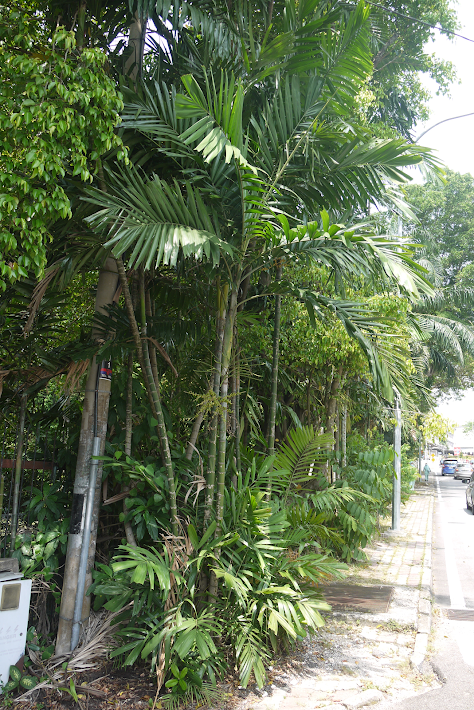
Like figs, palms produce fruit several times throughout a year. In between the fruiting seasons of other trees, palms make up a large portion of the diet of many urban fruit eating animals, especially birds.
Many palm fruit are adapted to be eaten by birds, these are usually small in size, round and dark blue black to red in colour. The seeds of these palms are often spread by the birds that feed on them, making them very common in wild patches all over the city.
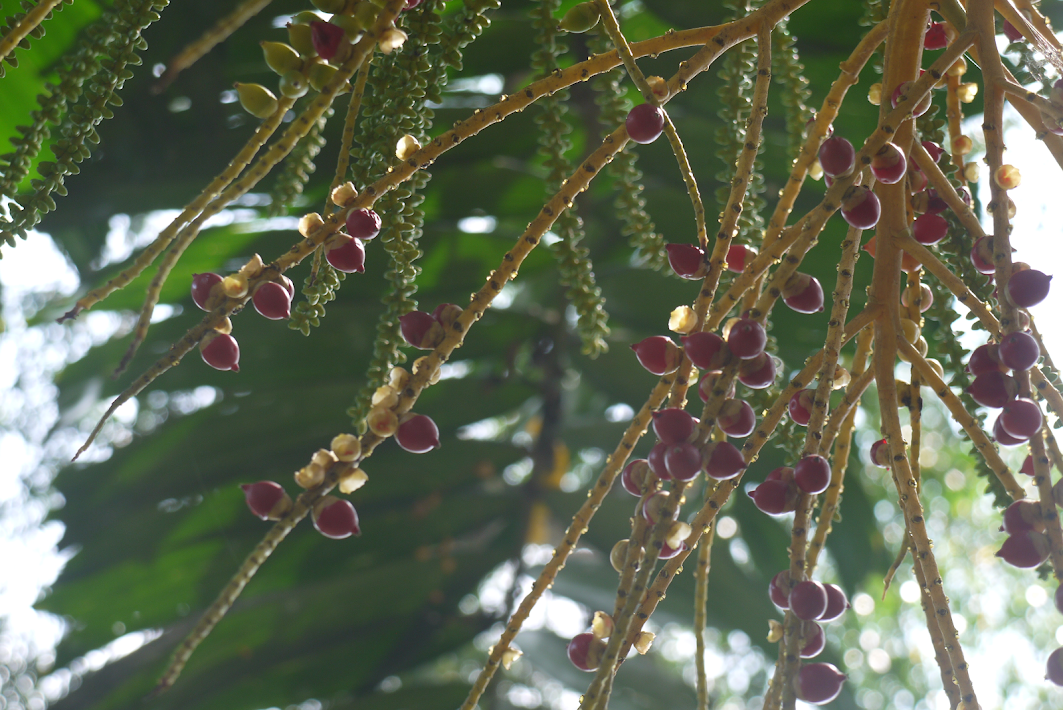
Even invasive palms such as oil palm can have ecosystem function for bird and mammal life. Fruiting trees are often visited by starlings, green pigeons, tree shrews and squirrels.
Palm flowers are also beneficial to many pollinators. These flowers grow in large pollen-rich clusters that often attract pollen feeders such as stingless bees. Coconut palms are often grown near stingless bee farms because of the food that they supply to the bee colonies.
These features make palms a keystone species in supporting wildlife in urban environments. Fortunately, many palms are grown as ornamental plants, and in many wild patches throughout the city they are sown by birds and make up large portion of our urban forests.
 Urban Biodiversity Initiative (UBI)